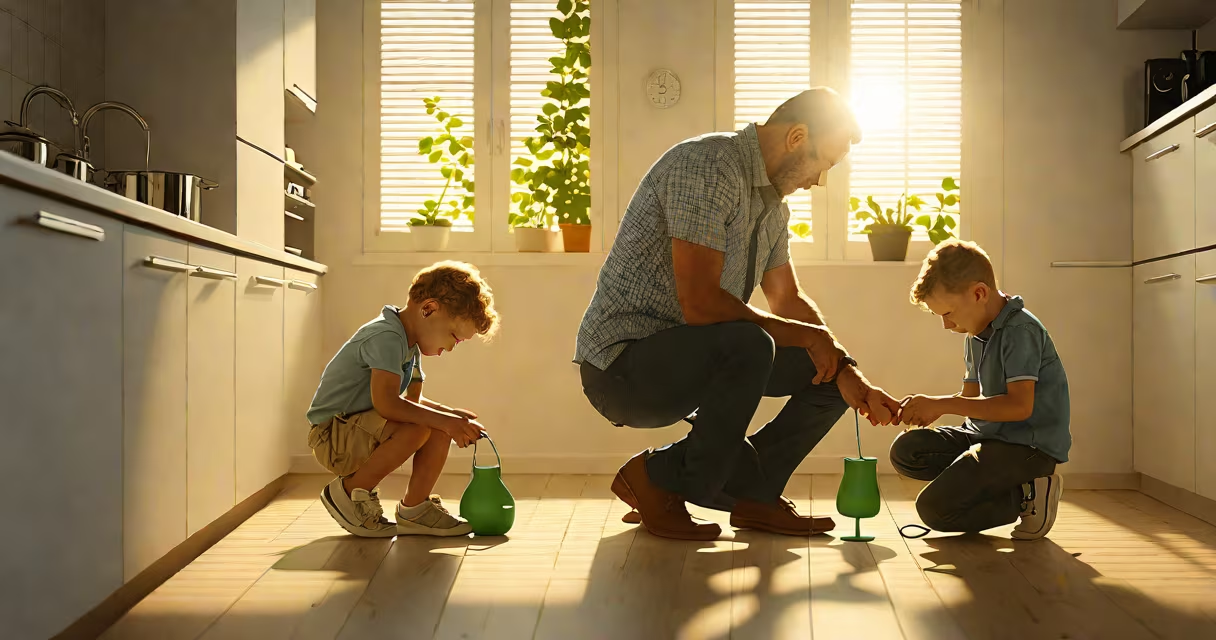
Being a father means actively shaping a child's development through sustained emotional support, practical care, and moral guidance-not just by sharing DNA or holding a title. It involves showing up consistently, especially during hard moments, and making decisions that prioritize the child's well-being over convenience.
Fatherhood is not defined by perfection. It's measured in small, repeated acts: listening when a child speaks, stepping in during a crisis, setting boundaries with empathy. A father's role includes managing household responsibilities, supporting a partner's efforts, and modeling respectful behavior. These actions build trust and stability, which research shows reduce anxiety and improve academic performance in children.
The American Psychological Association notes that involved fathers contribute to their children's cognitive and social development. Children with engaged fathers are more likely to graduate high school and report higher self-esteem. This impact is not limited to biological dads-stepfathers, adoptive fathers, and mentors in caregiving roles fulfill similar functions.
Fatherhood operates through routine interactions that reinforce safety and belonging. A father who checks in on his child's homework each evening, even briefly, signals that education matters. One who attends school events, even if late, communicates value. These aren't grand gestures-they're consistency in action.
Emotional availability is central. A father who listens without interrupting, who acknowledges frustration without dismissing it, teaches emotional literacy. A 2020 study published in *Child Development* found that boys whose fathers expressed warmth and engaged in conversation had lower rates of behavioral issues by age 12. The effect was stronger than maternal involvement in some domains, particularly around impulse control.
Practical responsibilities include financial provision, health management, and conflict mediation. A father who ensures regular doctor visits, monitors screen time, and mediates sibling disputes creates a structured environment. These tasks aren't optional extras-they form the foundation of security.
Fathering styles vary widely, but research identifies four core models based on responsiveness and demandingness:
| Style | Responsiveness | Demandingness | Outcome |
|---|---|---|---|
| Authoritative | High | High | Best outcomes: emotional regulation, academic success |
| Permissive | High | Low | Higher risk of impulsivity and poor decision-making |
| Authoritarian | Low | High | Increased anxiety, lower self-worth in children |
| Uninvolved | Low | Low | Strongest association with delinquency and low achievement |
Authoritative fathering-warm but firm-is linked to the most positive long-term results. It balances emotional connection with clear expectations. An uninvolved father may live in the same home but rarely engages in daily routines, missing opportunities to build trust and influence behavior.
Non-biological fathers often face unique challenges. A stepfather raising a child from a previous relationship may struggle with authority. But research from the National Institute of Child Health and Human Development shows that children raised by committed stepfathers show similar developmental progress to those with biological fathers-when the stepfather is emotionally present and consistent.
Many assume fatherhood is automatic. That simply being male and related to a child qualifies someone as a father. This is false. Biology doesn't guarantee care. A man may be legally recognized as a father but absent emotionally or physically. Courts have ruled that "father" status requires active participation, not just paperwork.
Another myth is that fathers are less capable of nurturing than mothers. Data from the U.S. Census Bureau shows that 68% of fathers report helping with childcare daily, including feeding, bathing, and playing. This contradicts outdated stereotypes. Fathers are not inherently less sensitive-they are often discouraged by cultural norms that equate masculinity with stoicism.
A lesser-known fact: fathers' mental health affects children more than previously understood. A 2021 study in *The Lancet Psychiatry* found that paternal depression correlates strongly with childhood anxiety and attention problems-even when the mother is mentally healthy. The absence of a father's emotional engagement disrupts attachment formation, regardless of income level or education.
Consider David, a 38-year-old software engineer and single father of a 7-year-old daughter. He wakes at 6:15 a.m., prepares breakfast, and walks her to the bus stop. He checks her backpack before school, ensuring she has lunch and homework. At work, he takes a 15-minute break to call her teacher about a behavioral concern.
After work, he picks her up, stops for groceries, and cooks dinner. They eat together while discussing her day. He helps with math homework, even though he struggles with fractions. He says, "I don't know the answer, but we'll figure it out." Later, he reads her a bedtime story and stays until she falls asleep.
David isn't perfect-he forgets her school play once and misses a parent-teacher meeting. But he makes amends. He shows up. His daughter scores above average in reading and math, and reports feeling safe and supported. Her school counselor notes her resilience during family transitions.
This example illustrates that fatherhood isn't about flawlessness-it's about reliability. Consistent effort outweighs occasional mistakes.
I once observed a father at a playground who didn't speak much. He sat on a bench, watching his son climb. When the boy fell, the father didn't rush in. Instead, he waited. The boy got up, wiped his knee, and ran back to the slide. The father smiled. Later, I asked him why he didn't intervene. He said, "He needed to learn how to fall." That moment clarified something: being a father isn't about solving every problem. It's about knowing when to step in-and when to stand back.
Societal shifts have changed how fatherhood is perceived. More men are taking paternity leave. Shared custody is common. The expectation of emotional labor among fathers is rising. According to Pew Research Center, 73% of American fathers say they are "very involved" in their children's lives-up from 53% in 1997.
Yet many still feel unprepared. A 2022 survey by the National Fatherhood Initiative found that 41% of new fathers reported feeling overwhelmed in the first year. Support systems are critical. Fathers benefit from peer groups, counseling, and access to parenting resources.
Understanding what being a father means helps dismantle myths and encourages better preparation. It's not about gender roles-it's about responsibility, presence, and growth.