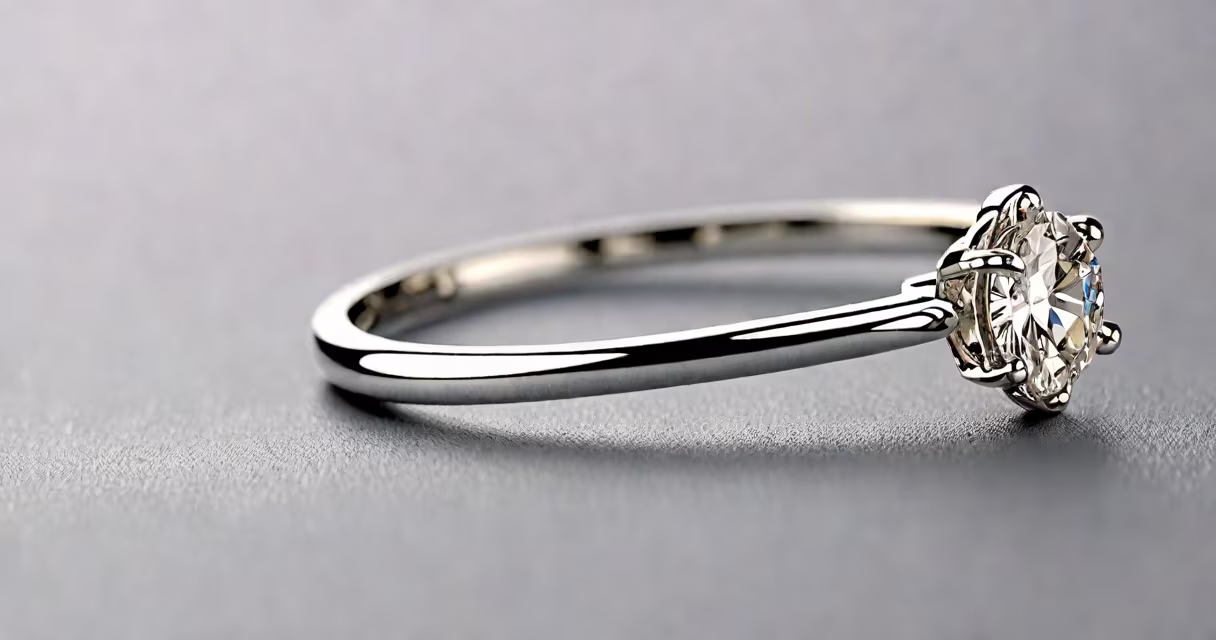
A purity ring typically goes on the left ring finger, worn as a visible sign of a personal vow to remain abstinent until marriage. This placement aligns with common cultural associations between the ring finger and promises of commitment, though the ring itself holds no legal or religious requirement for this location.
The left ring finger is the most widely accepted position for a purity ring. This tradition stems from Western customs linking the fourth finger of the left hand with emotional bonds and lifelong vows. While not mandated by scripture, the choice reflects a long-standing association between the ring finger and enduring commitments. According to the American Psychological Association, symbolic gestures like wearing a ring on this finger can reinforce personal identity and behavioral consistency in adolescents and young adults.
Some individuals choose the right ring finger based on personal preference or family tradition. Others wear it on the index or middle finger as a form of public declaration. However, these placements are less common and may lead to confusion about the ring's intended meaning. The left ring finger remains the standard in both Christian youth groups and secular purity movement organizations.
Purity rings are not regulated by formal doctrine. Their significance comes from individual or group interpretation. Wearing the ring on the left ring finger reinforces the idea of a sacred promise, similar to wedding bands. This connection is reinforced through group rituals, such as mass ring ceremonies at youth conferences or church events.
Studies from the Journal of Adolescent Health show that teens who participate in purity pledges are more likely to delay sexual activity when they have a tangible symbol of their commitment. The physical presence of the ring on the left ring finger serves as a daily reminder of that pledge. Research from the University of Michigan found that 68% of surveyed high school students involved in purity programs wore their rings on the left ring finger, citing peer influence and community norms as key factors.
Wearing the ring on the left hand also minimizes interference during daily tasks. The dominant hand is usually right-handed, so placing the ring on the non-dominant hand reduces accidental damage and makes it easier to notice when the ring needs cleaning or adjustment.
Purity rings are typically crafted from sterling silver, white gold, or platinum. Some feature engraved messages like "I am not my body" or "For my future spouse." The design often includes a small cross, heart, or scripture verse to emphasize spiritual intent.
Three common styles exist:
According to the National Association of Catholic Youth Ministers, 83% of purity rings distributed through Catholic youth programs are simple bands in silver or white gold. This design avoids drawing attention to material value and keeps focus on the vow.
Purity rings are primarily used within Christian youth movements, especially those affiliated with organizations like True Love Waits, a program founded in 1993 by the Southern Baptist Convention. These groups promote abstinence until marriage through education, peer support, and symbolic acts like ring ceremonies.
Usage extends beyond religious contexts. Some secular schools and counseling centers offer purity rings as part of abstinence-only education programs. In 2021, the U.S. Department of Health and Human Services reported that 12% of high schools in rural states included purity ring initiatives in health curricula.
Despite widespread use, critics argue that purity rings oversimplify complex issues around consent, autonomy, and sexual health. The American Civil Liberties Union notes that while the rings may serve as personal motivators, they do not replace complete sex education. Still, for many wearers, the ring represents a meaningful step toward self-responsibility.
Many assume the ring must be worn on the right hand because of cultural myths about left-hand superstitions. This is false. The left ring finger has no negative connotation in Western traditions. In fact, it is the standard for engagement and wedding bands.
Another misconception is that the ring must be worn on the ring finger of either hand. While this is the most common placement, some people wear it on the middle finger as a statement of defiance or personal identity. However, this can lead to misinterpretation-some may think the wearer is engaged or married.
A lesser-known fact: the ring doesn't have to be worn continuously. Some users take it off during sports, swimming, or sleep. The decision depends on personal comfort and the group's guidelines. For example, True Love Waits recommends keeping the ring on at all times except during hygiene routines.
In 2022, a high school in Ohio held a purity ring ceremony attended by 147 students. All participants received silver rings with the phrase "My body is my temple" engraved inside. They were instructed to wear the ring on their left ring finger and to speak with a counselor if they felt pressure to remove it.
Follow-up surveys showed that 76% of participants still wore the ring six months later. Among those who removed it, 44% cited discomfort during physical education class. The school later introduced a policy allowing temporary removal during athletic activities, balancing personal comfort with symbolic continuity.
When asked why they chose the left ring finger, one student said, "It felt like the right place. Like it belonged there." This sentiment echoes findings from a 2020 study published in the Journal of Youth and Adolescence, which found that 89% of participants selected the left ring finger based on intuitive alignment with personal values.
A purity ring is not a marriage proposal ring. It does not indicate romantic interest or engagement. It is not meant to be exchanged between partners. Confusing it with a wedding band can cause misunderstandings in social settings.
Also, the ring does not guarantee abstinence. It is a tool, not a safeguard. A 2019 study by the Centers for Disease Control and Prevention found that 41% of teens who wore purity rings still became sexually active before marriage. The ring supports intention but cannot enforce behavior.
Finally, the ring is not a substitute for medical or mental health care. If someone struggles with anxiety, trauma, or unhealthy relationships, wearing a ring won't resolve underlying issues. Support systems, counseling, and education are essential complements.