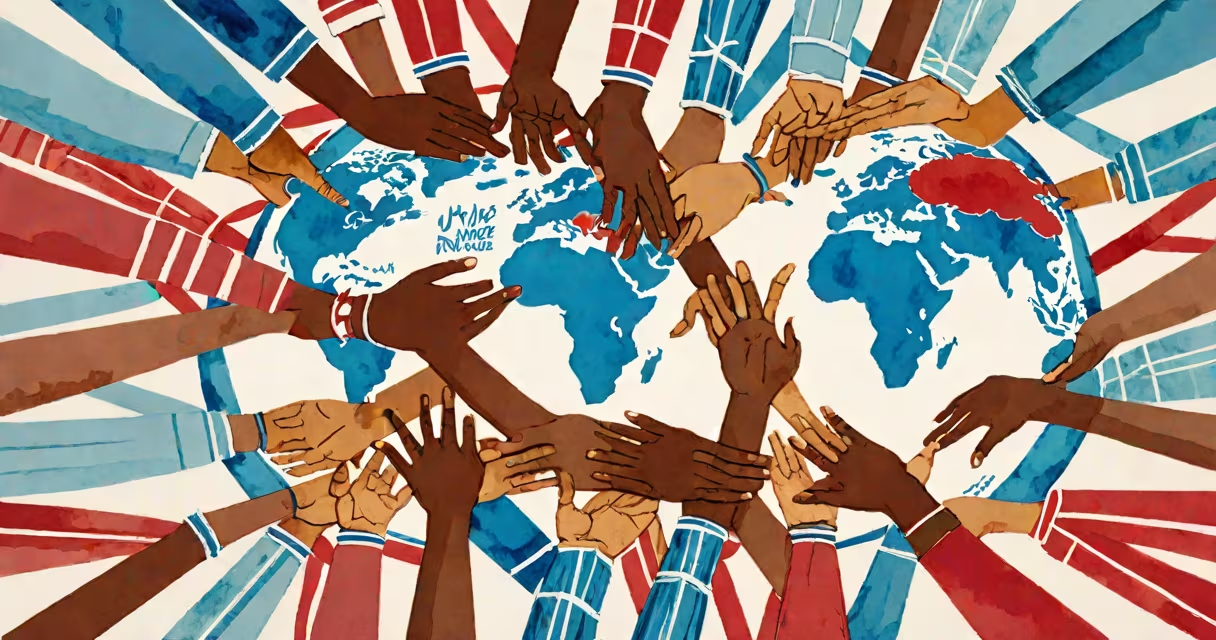
World Marrow Donor Day is an annual observance held on June 16 to promote awareness of bone marrow and stem cell donation, show the critical need for donors, and encourage people to register as potential donors worldwide.
Each year, thousands of patients diagnosed with blood cancers like leukemia, lymphoma, and sickle cell disease rely on matched donors for curative transplants. World Marrow Donor Day focuses attention on the gap between patient need and donor availability, especially among underrepresented ethnic groups.
The day was established by the World Marrow Donor Association (WMDA) in 2005 to unify global efforts and spotlight the life-or-death impact of donor registries. It is observed in over 70 countries, with events ranging from public education campaigns to donor registry drives.
When a patient needs a transplant, doctors search international donor databases to find a genetically compatible match. The most common match comes from unrelated donors, which is why global registries exist.
Donors undergo a simple blood test to determine their human leukocyte antigen (HLA) profile-the genetic markers that predict compatibility. Once registered, they remain in the database until a match is found. If selected, donors may give peripheral blood stem cells (PBSC) via apheresis or bone marrow through a minor surgical procedure.
Donation is safe. PBSC donation involves a five-day process of daily injections to boost stem cell count, followed by four hours of blood filtration. Bone marrow donation requires a 1-2 hour outpatient procedure under anesthesia. Most donors recover within days and report minimal long-term effects.
There are two primary methods of stem cell collection:
| Method | Process | Recovery Time | Donor Risk Level |
|---|---|---|---|
| Peripheral Blood Stem Cells (PBSC) | Injected with filgrastim for 5 days; blood filtered through a machine to collect stem cells | 1-3 days | Low |
| Bone Marrow | Harvested from pelvic bones under anesthesia; 1-2 hours | 1-2 weeks | Low to moderate |
Matching relies on HLA typing. A perfect match is rare-only about 30% of patients find a match within their family. For the rest, the chance depends on the diversity of the donor pool. Patients from African, Asian, Hispanic, and Indigenous backgrounds face higher difficulty due to lower representation in registries.
A 2022 study published in *Blood Advances* found that patients of mixed ethnicity have a 40% lower chance of finding a match compared to those of European descent. This disparity underscores the urgency of expanding donor diversity.
World Marrow Donor Day is used to drive national and regional donor recruitment campaigns. Countries like Germany, Japan, and South Africa run mass registration events during June, often partnering with hospitals, schools, and community centers.
In the U.S., Be The Match coordinates national outreach. In 2023, they reported 1.5 million new registrants during the month of June, a 22% increase from the previous year. The spike correlates directly with World Marrow Donor Day activities.
One non-obvious fact: many donors don't realize they're helping patients beyond their country. The WMDA maintains a network of 50+ national registries. A donor in Canada may match a patient in Kenya. Over 30% of transplants in low-income nations depend on international donors.
People often mistake bone marrow donation for a high-risk surgery. In reality, it's a routine outpatient procedure with a 99.8% safety rate, according to the National Marrow Donor Program (NMDP).
Another misconception: that donors must be young and healthy. While age 18-44 is ideal, individuals up to age 60 can register. Health conditions like controlled hypertension or mild asthma do not disqualify applicants.
Some believe donation causes long-term pain. Clinical follow-up shows 95% of donors return to normal activity within one week. Only 1% report persistent discomfort, usually related to anesthesia recovery.
In 2021, a 12-year-old girl in Brazil with acute myeloid leukemia had no family match. Her doctor searched the WMDA registry and found a 28-year-old teacher from Finland with a 10/10 HLA match. The donor underwent PBSC donation after five days of filgrastim injections.
Within 14 days, the stem cells were infused into the girl. She achieved remission six months later. The donor later wrote, "I didn't know her name, but knowing she's alive-that's enough."
This case illustrates how a single registration can save a life across continents. The odds of being called as a donor are low-about 1 in 800-but the impact is profound.
I registered as a donor in 2019 after attending a World Marrow Donor Day event at a university health fair. My HLA profile was entered into the Be The Match registry. Two years later, I received a call: a 34-year-old woman in Texas needed a match. After testing confirmed compatibility, I donated PBSC. The process took four hours. I returned to work the next Monday.
When I saw her follow-up letter-"My daughter is walking again"-I realized the scale of difference one person can make. I've since spoken at three campus events to encourage others to register.
While not directly linked, events like Gay Day at Disney World raise visibility for LGBTQ+ communities, who face higher rates of certain blood disorders and greater barriers to care. Awareness days collectively build inclusive health ecosystems.
World Marrow Donor Day is not just a date-it's a call to action. With over 18 million people registered globally, the need remains urgent. Every new donor increases the chance of a match. Registration takes 10 minutes online. A swab kit arrives in the mail. The act is free, anonymous, and potentially life-saving.
Join the movement. Register. Be the match.