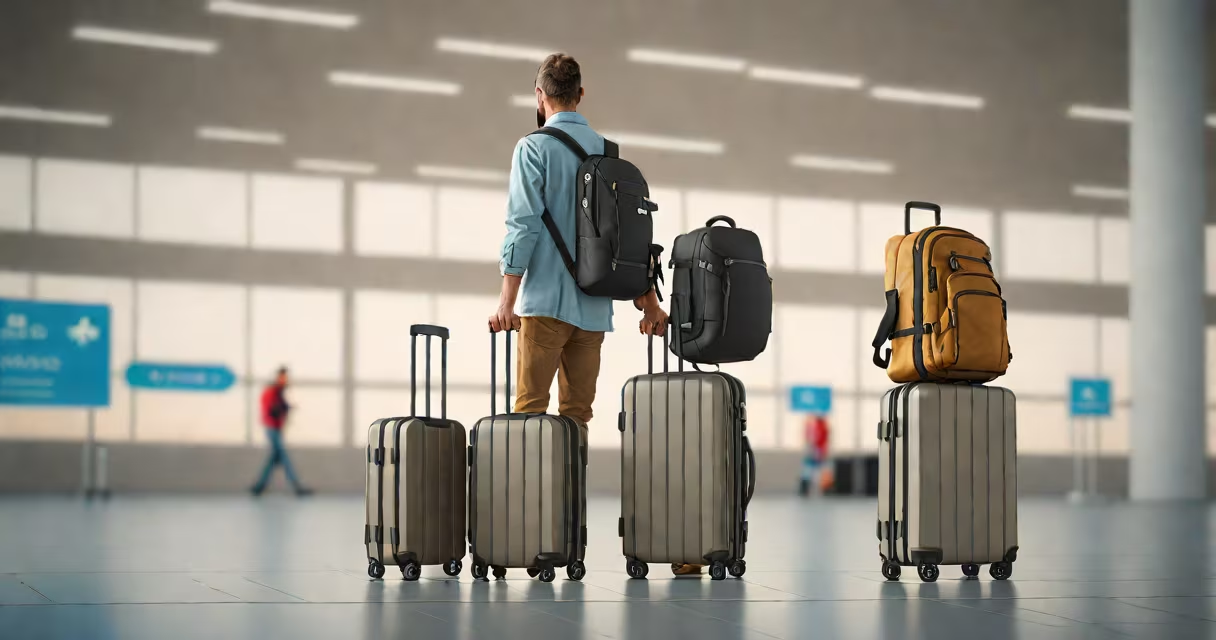
Baggage allowance is the maximum amount of luggage-measured by weight, size, and number of pieces-an airline permits passengers to check or carry on for free, based on ticket class, route, and fare type. It sets the boundaries for what travelers may bring without paying extra fees.
Each airline defines its own baggage allowance policies. These vary widely depending on international, traveling economy, business, or first class, and whether you've purchased a basic or premium ticket. For example, a standard economy ticket on Delta might allow one 50-pound checked bag, while a premium fare on Lufthansa includes two 70-pound bags and priority handling.
Understanding baggage allowance prevents unexpected fees at the gate or check-in counter. A passenger who brings a 60-pound bag on a low-cost carrier with a 50-pound limit pays a $50 overweight fee. Knowing the rules in advance avoids this cost.
Airlines set baggage allowances using three core factors: weight, dimensions, and piece count. Weight is measured in pounds or kilograms. Dimensions refer to the sum of length, width, and height. Piece count limits how many bags you can check or carry on.
For checked baggage, most U.S.-based airlines allow one bag up to 50 pounds (23 kg) for economy class on domestic flights. International routes often permit 23 kg per bag, but some long-haul carriers allow 32 kg. Overweight bags incur fees-typically $100 or more for bags exceeding 50 pounds.
Carry-on bags must fit in the overhead bin or under the seat. Most airlines require carry-ons to be no larger than 22 x 14 x 9 inches (56 x 35 x 23 cm). Airlines enforce this through bin clearance checks. A bag that exceeds size limits gets sent to the hold, even if it's labeled "carry-on."
Baggage allowances differ between airlines and flight types. Budget carriers often offer minimal free baggage, while legacy carriers include more. International flights typically allow more than domestic ones due to longer travel times and higher operational costs.
| Airline | Fare Class | Checked Baggage Allowance | Carry-On Allowance |
|---|---|---|---|
| Delta | Economy | 1 bag, 50 lb (23 kg) | 1 bag, 22 x 14 x 9 in |
| Southwest | Any | 2 bags, 50 lb each | 1 bag, 22 x 14 x 9 in |
| JetBlue | Economy | 1 bag, 50 lb (23 kg) | 1 bag, 22 x 14 x 9 in |
| EasyJet | Basic | 0 bags included | 1 small bag, 10 x 10 x 10 in |
| British Airways | First | 2 bags, 70 lb (32 kg) each | 1 bag, 24 x 16 x 10 in |
Some airlines charge for every checked bag. Ryanair allows one personal item only unless you pay for a bag. Others, like Alaska Airlines, include two checked bags on most domestic tickets, but charge for a third.
International flights often have different rules. For example, a flight from New York to Paris on Air France allows one 23 kg checked bag and one 10 kg carry-on for economy. The hand baggage allowance is strict-any bag over 115 cm total dimensions gets rejected.
Many travelers assume that all airlines follow the same standards. This is false. A bag that fits on United may exceed size limits on American Airlines. Even within the same airline, rules change by destination. A domestic flight from Chicago to Miami allows 50 pounds, but the same route internationally requires 23 kg.
Another mistake is assuming that a "free" bag means unlimited size. A 50-pound bag on Delta is acceptable, but if it measures 30 x 20 x 15 inches, it won't fit in the overhead bin. The airline doesn't care about weight-it cares about space. Overhead bins fill quickly during peak travel times.
Some believe that buying a ticket online automatically includes baggage. Not true. Basic economy fares often exclude checked bags entirely. You must select baggage at booking or pay later. On Spirit Airlines, adding a bag after booking costs $60 one way.
Consider a traveler flying from New York to London on British Airways in economy. The baggage allowance is one 23 kg (50.7 lb) checked bag and one 10 kg (22 lb) carry-on. The carry-on must not exceed 56 x 35 x 23 cm (22 x 14 x 9 in).
The traveler packs a 25 kg suitcase. At check-in, the bag is weighed and found to exceed the limit. The fee is £100 (about $120). To avoid this, they repack into two bags-one at 23 kg and one at 2 kg-and pay nothing extra.
They also bring a laptop bag and a jacket. The laptop bag fits under the seat. The jacket goes in the overhead bin. All items comply with the carry-on allowance. No additional fees apply.
Had they booked a premium economy ticket, they'd have received two checked bags at 23 kg each. The difference in cost was $180 for the upgrade, but saved $120 in baggage fees. The net savings were $60.
Overweight or oversized bags lead to delays, extra fees, and lost time. A 2023 study by the International Air Transport Association (IATA) found that 14% of checked bags are delayed or misplaced annually. Knowing your baggage allowance reduces risk.
Passengers with medical equipment, sports gear, or musical instruments may qualify for special allowances. Airlines like Emirates allow one golf bag free on international flights. Delta permits one wheelchair or mobility aid as checked baggage with no weight limit.
When planning travel, always verify baggage allowance on the airline's official website. Third-party booking sites sometimes list outdated or incomplete details. Always confirm the rules for your specific route and fare type.
For those managing multiple trips, understanding baggage allowance helps compare options. A traveler choosing between JetBlue and Delta for a New York to Miami flight finds both allow one 50-pound bag. But JetBlue includes two bags on all domestic tickets, while Delta charges $30 for a second bag. The choice depends on baggage needs.
Knowing what is included in your baggage allowance saves money and stress. It ensures your trip runs smoothly from departure to arrival. Check the rules early-especially for international travel-to avoid surprises at the airport.