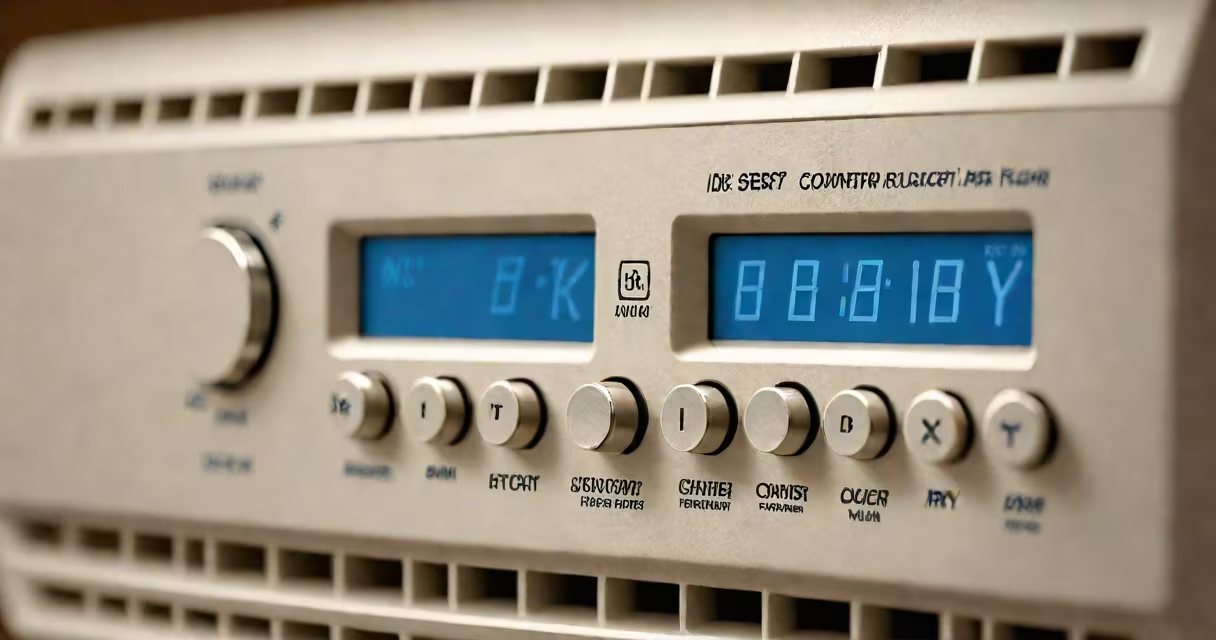
Dry mode on an air conditioner reduces indoor humidity by running the fan and compressor at low levels, extracting moisture from the air without aggressively cooling the room. It's designed to improve comfort in high-humidity environments while using less energy than standard cooling.
Unlike cooling mode, which lowers temperature by cycling the compressor on and off, dry mode maintains a steady low airflow and runs the compressor intermittently to prevent condensation buildup. This makes it ideal for muggy days when the air feels heavy but the temperature isn't excessively hot.
The U.S. Department of Energy notes that dehumidification can make a space feel 2-3°F cooler even if the thermostat remains unchanged. Dry mode leverages this effect by targeting moisture rather than heat, reducing the need for full cooling cycles.
Dry mode activates the air conditioner's internal fan and compressor at reduced capacity. The system draws warm, moist air over cold evaporator coils. As the air cools below its dew point, water vapor condenses into liquid and drains away through a built-in drip tray.
Once enough moisture is removed, the compressor shuts off briefly to avoid freezing the coils. The fan continues running slowly to circulate air and maintain a balanced indoor environment. This cycle repeats until the desired humidity level is reached.
For example, a typical residential unit set to dry mode in a 78°F room with 70% relative humidity may reduce humidity to 50% within 30 minutes. The temperature stays nearly constant, but the air feels drier and less sticky.
Use dry mode during humid seasons, especially in coastal areas or basements prone to dampness. It's effective in rooms where cooling isn't needed but musty odors or clammy skin are issues.
According to the American Society of Heating, Refrigerating, and Air-Conditioning Engineers (ASHRAE), indoor humidity above 60% increases mold risk and allergen presence. Dry mode keeps levels between 40% and 50%, improving indoor air quality without overcooling.
Common scenarios include:
Not all dry modes operate identically. Some units offer manual humidity settings, others auto-adjust based on sensor feedback. Here's how they differ:
| Type | Operation | Best For |
|---|---|---|
| Basic Dry Mode | Fixed low-speed fan, intermittent compressor | General humidity reduction, low energy use |
| Smart Humidity Control | Adjusts fan speed and compressor run time based on sensor readings | Rooms with fluctuating humidity, such as bathrooms or laundry areas |
| Auto-Dry with Timer | Runs for a set duration (e.g., 2 hours), then stops automatically | Short-term dehumidification, like after a shower or during a storm |
Some models, like the LG Dual Inverter series, use AI-driven algorithms to detect humidity spikes and adjust fan speed dynamically. These systems can reduce humidity by up to 35% in under an hour, according to manufacturer testing.
Dry mode is not a substitute for a dedicated dehumidifier in very wet conditions. A standalone dehumidifier can remove up to 50 pints of moisture per day, while most window or portable AC units manage 10-20 pints. Using dry mode in a flooded basement may leave residual dampness.
Also, dry mode doesn't clean air. It removes moisture but doesn't filter dust, pollen, or pet dander. For air purification, pair it with a HEPA filter or an air purifier.
A common mistake is confusing dry mode with "fan-only" mode. Fan-only circulates air without cooling or dehumidifying. Dry mode actively extracts moisture. On a 75°F day with 75% humidity, fan-only leaves the air unchanged; dry mode reduces humidity by 15-20 percentage points in 45 minutes.
In a New York City apartment near the East River, a resident uses a 21000 BTU air conditioner during summer. The unit has a dry mode labeled "Drying."
On a typical July day, outdoor temperature is 82°F, indoor humidity reaches 72%. The resident sets the AC to dry mode at 70% humidity threshold. The unit runs for 40 minutes, cycling the compressor every 12 minutes. After 40 minutes, indoor humidity drops to 54%. The room feels noticeably fresher, and the resident reports less fatigue and fewer allergy symptoms.
Using dry mode instead of cooling saves approximately 25% in energy compared to continuous cooling. Over a month, this translates to $12-$18 in electricity savings, depending on local rates.
Many users think dry mode is ineffective because the room temperature doesn't drop. But that's intentional. The goal is moisture removal, not cooling. If the temperature falls unexpectedly, it may indicate a faulty thermostat or incorrect mode selection.
Another issue: frost forming on the evaporator coil. This happens when the coil gets too cold due to prolonged operation in high-humidity conditions. Most modern units have anti-frost sensors that pause the compressor when ice forms. If the unit freezes, turn it off, wait 30 minutes, then restart in dry mode.
Dry mode on an air conditioner is a targeted solution for high humidity, not a replacement for cooling. It operates efficiently, uses less power than standard cooling, and improves comfort in muggy conditions. Understanding its purpose prevents misuse and maximizes effectiveness.
For larger spaces or persistent dampness, consider pairing a 21000 BTU air conditioner with a dehumidifier. The combination handles both temperature and moisture more effectively than either device alone.
When used correctly, dry mode delivers measurable comfort gains without unnecessary energy use. It's not a gimmick-it's a well-engineered feature designed for real-world humidity challenges.