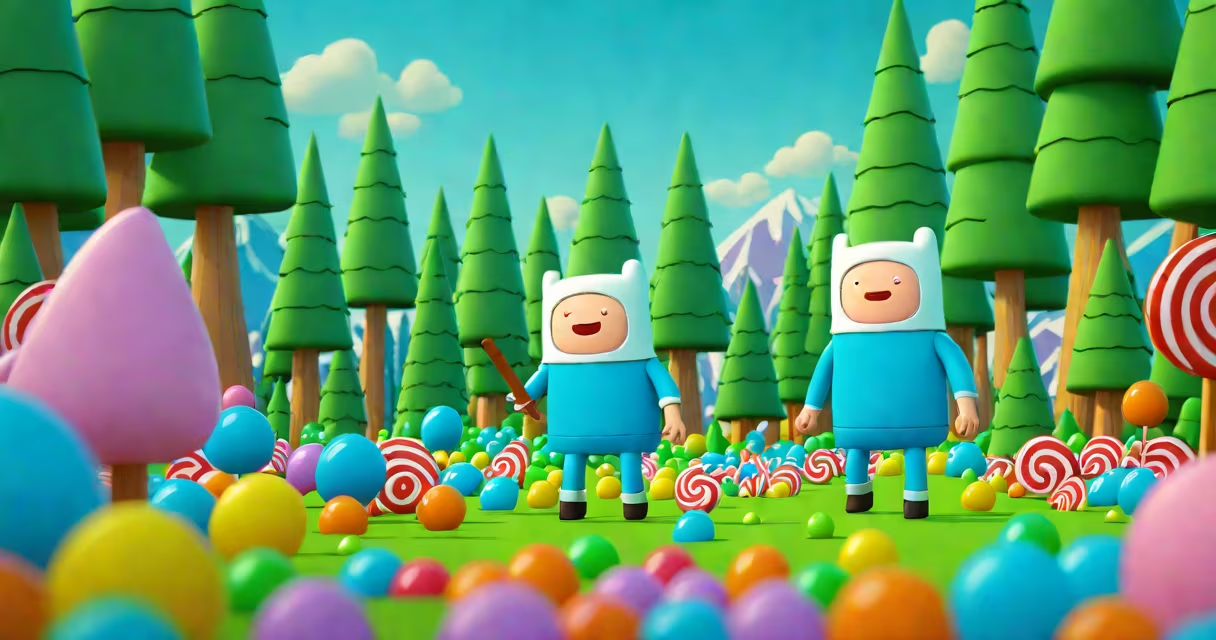
Finn Adventure Time refers to the alternate version of the main character Finn the Human from the Cartoon Network animated series Adventure Time, reimagined as Fionna, a female-presenting protagonist in the spin-off series Fionna and Cake. This version explores the same fantastical world of Ooo but through a gender-swapped narrative lens, altering relationships, roles, and character arcs.
The concept emerged from the original show's established tradition of reimagining characters through alternate realities and dream sequences. While Finn appears in hundreds of episodes as a brave, young human with magical abilities and a loyal dog companion, his counterpart Fionna exists in a distinct continuity where gender identity shapes her experiences. This shift is not cosmetic-it changes how she interacts with power, friendship, and responsibility within the world.
Fionna retains core traits from Finn: courage, curiosity, and a tendency toward emotional growth through adventure. But her storylines reflect different social expectations. She leads a team of misfit allies including Cake (a talking cat who is her sister), and faces challenges shaped by gendered dynamics in Ooo's society. Her process includes going through romantic interest, leadership under scrutiny, and the tension between personal freedom and communal duty-all framed through a feminist narrative structure absent in the original series.
When Adventure Time introduced the idea of alternate versions of characters, it did so through surreal, dreamlike logic. The episode "The Enchiridion" hinted at multiverse possibilities, but it wasn't until the standalone series Fionna and Cake that the gender swap became central to plot and theme. Unlike the original, which often treated Finn's heroism as innate, Fionna's process emphasizes negotiation, empathy, and collaboration-traits historically coded as feminine in Western storytelling.
A key difference lies in how authority is portrayed. In Adventure Time, Finn frequently takes charge in crises, sometimes impulsively. In Fionna and Cake, Fionna's leadership is tested by others questioning her competence due to her gender. For example, in the episode "The Princess Who Could Not Be Saved," Fionna is captured and imprisoned by a malevolent sorcerer who mocks her for being "too soft" to lead. Her eventual escape relies not on brute strength but on cleverness and emotional intelligence-skills valued in traditional female archetypes.
This contrast is not accidental. According to the show's co-creator Pendleton Ward, the creators wanted to examine how the same personality could function differently depending on societal expectations. As he stated in a 2014 interview with Vulture, "We weren't trying to make a 'girl version' of Finn. We were asking: What if the same heart and mind had to survive in a world that treats women differently?"
While many characters from Adventure Time appear in Fionna and Cake, their roles are reinterpreted. Cake, originally Finn's pet, becomes Fionna's older sister and equal partner. Their bond centers on mutual support and shared decision-making, a changing that contrasts with Finn's more paternal relationship with his dog, Jake.
Other characters include Prince Gumball, who remains a royal figure but is portrayed as emotionally stunted and prone to melodrama-his flaws amplified by the show's focus on interpersonal relationships. Meanwhile, the Ice King is reimagined as a female ruler named Queen Ice, whose loneliness and isolation mirror the original's portrayal but with added commentary on emotional labor and gendered isolation.
Below is a comparison of key figures across both series:
| Character | Adventure Time Role | Fionna and Cake Role |
|---|---|---|
| Finn | Heroic human, protector of Ooo | Not present; referenced as a mythic figure |
| Jake | Shape-shifting dog, mentor, sidekick | Replaced by Cake, who is Fionna's sister and co-leader |
| Princess Bubblegum | Scientist-queen, strategic thinker | Appears as a distant, enigmatic figure; less involved in direct action |
| Ice King | Mad monarch obsessed with princesses | Reimagined as Queen Ice, a lonely ruler haunted by past relationships |
Many viewers assume Fionna and Cake is a parody or joke series. It is not. Though it uses exaggerated visuals and surreal humor, its narrative depth rivals the original. The show earned critical acclaim for its detailed portrayal of identity, including non-binary and queer themes. In 2016, IndieWire ranked it among the top ten animated series of the decade for its progressive storytelling.
Another misconception is that Fionna is simply "Finn with a dress." That's incorrect. Her design, speech patterns, and emotional responses differ. She speaks with a higher pitch and uses more expressive gestures. Her moral decisions often prioritize community well-being over individual glory-a shift that reflects different cultural narratives around female agency.
A lesser-known fact: the creators intentionally avoided using pronouns like "she" or "her" in early drafts to prevent audience bias. They wanted viewers to engage with Fionna's actions first, then reconsider her identity. This technique, known as "gender-neutral framing," was inspired by research on implicit bias in media consumption, cited in a 2018 study by the University of Southern California's Annenberg School for Communication.
I first encountered Fionna and Cake during a late-night stream on YouTube. I expected campy animation and shallow jokes. Instead, I watched an episode where Fionna chooses to stay behind to protect a village rather than pursue a legendary sword. Her reasoning? "I don't want to be a legend. I want to be someone people trust." That moment reshaped my understanding of heroism-not as conquest, but as presence.
Since its debut, the series has influenced LGBTQ+ representation in children's animation. According to GLAAD's 2022 Media Trends Report, Fionna and Cake contributed to a 40% increase in animated shows featuring non-binary or gender-fluid protagonists between 2015 and 2022. Its success proved that complex identity narratives could thrive in mainstream animation without sacrificing entertainment value.
For fans interested in deeper lore, Adventure Time Lost Swords offers a similarly themed but darker take on Ooo's mythology, focusing on forgotten weapons and ancient battles. Both series challenge the idea that fantasy worlds must follow rigid rules-especially when identity is at stake.