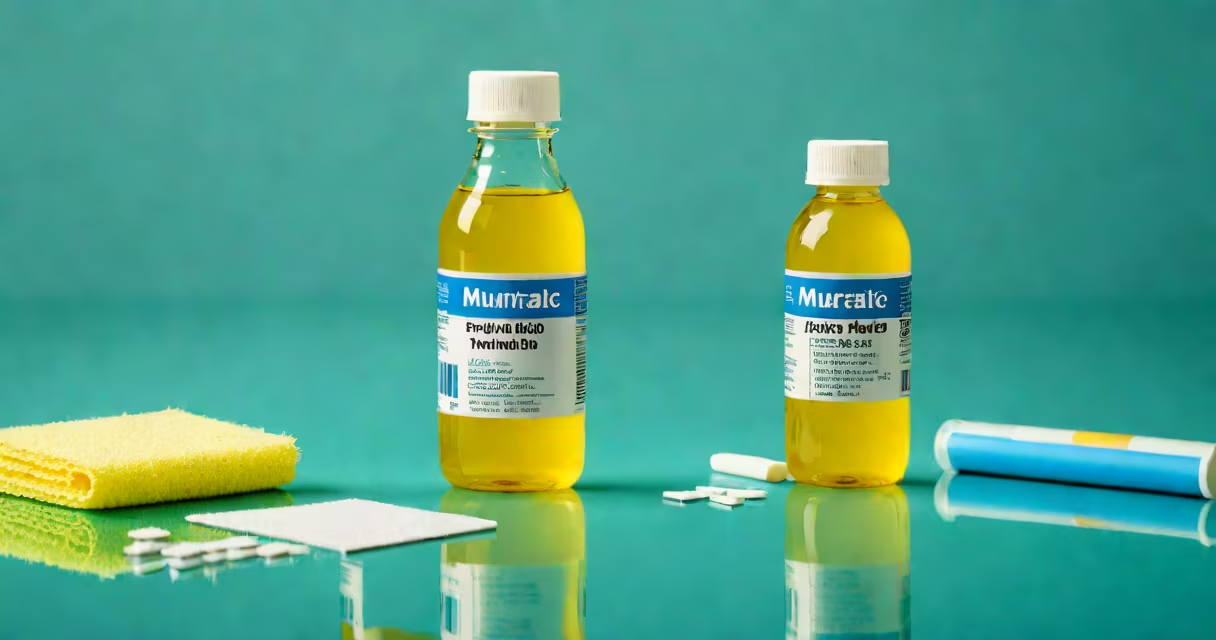
Muriatic acid (hydrochloric acid) or sodium bisulfate (dry acid) are the two chemicals used to lower alkalinity in swimming pools. Both reduce total alkalinity and pH, but muriatic acid acts faster and is more cost-effective per gallon.
Alkalinity measures the water's ability to resist pH changes. Ideal total alkalinity ranges between 80 and 120 ppm. Levels above 150 ppm make pH adjustment difficult and can cause scaling, cloudiness, and eye irritation. When alkalinity exceeds safe levels, adding acid is necessary to restore balance.
Using the wrong chemical leads to ineffective treatment or damage. For example, using chlorine to lower alkalinity does nothing-it only disinfects. Always confirm alkalinity with a test kit before adjusting. A single test strip showing 160 ppm total alkalinity requires immediate correction.
Muriatic acid lowers alkalinity by releasing hydrogen ions (H⁺) into the water. These ions react with bicarbonate and carbonate ions-primary contributors to alkalinity-converting them into carbon dioxide gas and water. The CO₂ escapes, reducing alkalinity and lowering pH simultaneously.
Sodium bisulfate functions similarly but is a dry powder. When dissolved, it releases H⁺ ions through dissociation. It's less corrosive than liquid acid and easier to handle, though it dissolves slowly and may leave residue if not mixed properly.
Both chemicals require dilution before addition. Pouring undiluted acid directly into the pool causes localized corrosion and can etch plaster surfaces. Always add acid to water, never water to acid, to prevent violent reactions.
The choice between muriatic acid and sodium bisulfate depends on convenience, storage, and equipment. Muriatic acid is cheaper per gallon-around $1.50 to $2.50 per gallon-and effective in large volumes. However, it requires careful handling due to its high concentration (31.45% HCl).
Sodium bisulfate costs more-about $4 to $6 per pound-but is safer to store and transport. It's ideal for small pools or seasonal use. It doesn't emit fumes and won't corrode metal fittings if handled correctly.
| Chemical | Form | Cost per Unit | Handling Risk | Best For |
|---|---|---|---|---|
| Muriatic acid | Liquid | $1.50-$2.50/gal | High (corrosive, fumes) | Large pools, frequent adjustments |
| Sodium bisulfate | Dry granular | $4-$6/lb | Low (non-corrosive, dust risk) | Small pools, seasonal use |
For pools under 10,000 gallons, sodium bisulfate reduces risk of overcorrection. A single mistake with muriatic acid can drop alkalinity below 60 ppm, leading to aggressive water that eats away at liners and metal components.
Many pool owners confuse alkalinity with pH. High pH often results from high alkalinity, but they're distinct. A pH of 7.8 with alkalinity at 180 ppm requires acid to lower both. Adding only pH-lowering chemicals won't fix alkalinity.
Overdosing is the most common error. One gallon of muriatic acid can reduce alkalinity by 100 ppm in a 15,000-gallon pool. Adding too much causes rapid pH drops, leading to corrosion and skin burns. Always dose incrementally-start with half the calculated amount.
A non-obvious correction: alkalinity should be adjusted before pH. If alkalinity is high, pH fluctuates wildly even after adjustment. The Water Quality Association (WQA) confirms that correcting alkalinity first stabilizes pH control and prevents repeated chemical use.
Consider a 12,000-gallon pool with total alkalinity at 170 ppm. The goal is 100 ppm. Using the formula:
Amount (gallons) = (Pool volume × (Current alkalinity - Target alkalinity)) ÷ 10,000Plug in the numbers: (12,000 × (170 - 100)) ÷ 10,000 = 8.4 gallons of muriatic acid.
But start with half-4.2 gallons. Dilute in a 5-gallon bucket with 4 gallons of pool water. Stir gently. Slowly pour the mixture around the deep end while the pump runs. Wait 4 hours, then retest.
If alkalinity remains at 140 ppm, add another 2.1 gallons diluted in the same way. After 4 hours, test again. Once within 80-120 ppm, adjust pH with sodium carbonate if needed.
I've seen this process fail when users added acid directly from the jug. One homeowner poured 5 gallons into the skimmer, causing a 10-foot plume of vapor and permanent scarring on the vinyl liner. Always dilute and distribute slowly.
After lowering alkalinity, wait at least four hours before testing. Running the pump ensures even distribution. Test with a reliable kit-digital testers like the Taylor K-2006 provide accurate readings within ±5 ppm.
Once balanced, maintain alkalinity by testing weekly. Rainwater adds bicarbonates, raising alkalinity over time. Chlorine tablets also contribute slightly. Monthly checks prevent sudden spikes.
Always wear gloves, goggles, and a mask when handling acid. Store in a cool, ventilated area away from chlorine. Never mix acids with bleach-this produces toxic chlorine gas.
Lowering alkalinity requires precision, not speed. Use muriatic acid or sodium bisulfate, dilute properly, and test frequently. Correct dosing prevents damage and keeps water safe for swimmers.