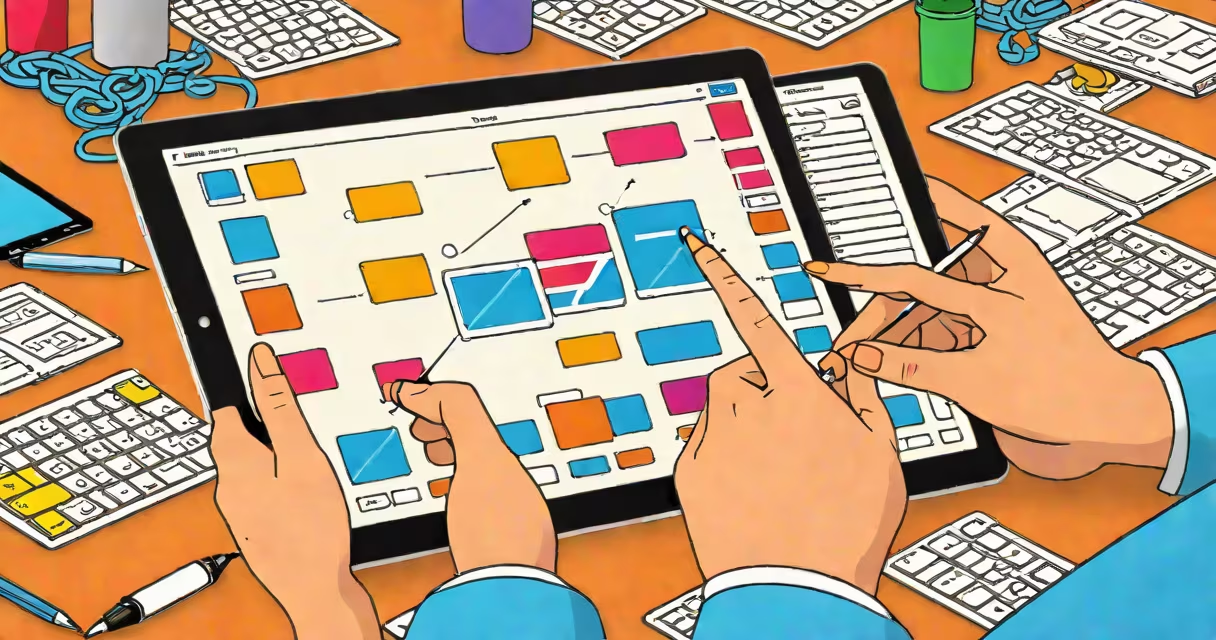
Custom mobile applications are software programs developed specifically for a business or organization's unique workflows, data systems, and operational goals. Unlike generic apps from app stores, they are built from the ground up to solve a particular problem or improve a specific process.
These applications run on smartphones or tablets and integrate directly with internal databases, cloud services, or hardware such as barcode scanners or printers. They are not sold to the public but deployed internally or to a targeted group of users, such as field staff, sales teams, or warehouse operators.
For example, a logistics company might use a custom mobile app to track delivery routes in real time, capture proof of delivery via photo, and sync updates instantly to a central dashboard. This level of integration is not possible with standard navigation or task management apps.
They begin with a clear requirement: a business process that lacks automation, is error-prone, or depends on paper-based systems. Developers then design the app's structure, user interface, and backend logic based on that need.
The app connects to existing systems through APIs (application programming interfaces), allowing it to pull customer data from a CRM, push inventory changes to an ERP system, or send alerts to a team chat platform. Data is stored securely, often in encrypted form, either on company servers or in private cloud environments.
Once built, the app is tested across multiple device models and operating systems (iOS and Android). After approval, it is distributed via enterprise app stores or direct installation using mobile device management (MDM) tools.
Custom mobile applications vary by function, complexity, and deployment model. The most common types include:
| Type | Use Case | Example |
|---|---|---|
| Field service apps | Technicians document repairs, access manuals, schedule follow-ups | A utility company's app lets linemen log outage details and upload photos from remote sites |
| Inventory and asset tracking | Real-time monitoring of equipment, materials, or shipments | A hospital uses a custom app to scan and locate medical devices across departments |
| Internal communication tools | Secure messaging, task assignment, status reporting | A construction firm's app sends daily safety checklists to site supervisors |
| Customer-facing tools | Order entry, appointment booking, feedback collection | A dental clinic's app allows patients to book visits, view treatment plans, and pay online |
Each app includes core components: a user interface (UI), business logic (rules for processing actions), data storage, authentication (login security), and connectivity (network protocols).
For instance, a retail chain's custom app might require offline mode so store associates can update stock levels during network outages. The app saves changes locally and syncs when connection returns-a feature not found in most consumer apps.
Off-the-shelf apps often lack the flexibility to handle complex workflows. A standard project management tool may not support a manufacturing plant's shift handover checklist or a nonprofit's donor engagement tracking system.
According to Gartner, 70% of organizations that implement custom mobile applications report improved data accuracy and reduced operational delays within six months. These gains come from eliminating manual data entry and reducing reliance on email or spreadsheets.
One client I worked with, a regional agricultural cooperative, replaced a paper-based system for tracking pesticide usage across 12 farms. Their custom app required GPS tagging, photo uploads, and compliance verification against state regulations. After rollout, inspection errors dropped by 62% in the first quarter.
Many assume custom mobile applications are expensive and slow to develop. While large-scale projects can take months, smaller tools-like a field technician's inspection checklist-can be built in four to six weeks with agile development methods.
Another misconception is that they're only for large enterprises. Small businesses with specialized operations-such as mobile pet groomers or tour guides-also benefit. A travel agency in Portland built a custom app to manage guided tours, including real-time location sharing and automated itinerary updates based on weather conditions.
Some confuse custom apps with web apps or responsive websites. Web apps run in browsers and aren't installed on devices. They lack access to native features like camera roll, GPS, or push notifications unless explicitly enabled. Custom mobile apps use native code or cross-platform frameworks (like Flutter or React Native) to access device capabilities directly.
Standard apps are designed for broad audiences. They prioritize ease of use, visual appeal, and compatibility across devices. Custom apps prioritize reliability, data integrity, and integration with internal systems.
For example, a fitness tracker app may display step counts and heart rate trends. A custom version for a sports medicine clinic would include patient-specific recovery benchmarks, clinician notes, and secure HIPAA-compliant data handling.
Security is another differentiator. Off-the-shelf apps may share data with third parties for analytics or advertising. Custom apps are typically built with privacy-first architecture, with data retention policies and access controls defined by the business.
One non-obvious fact: many custom mobile applications are not "new" software-they are adaptations of existing systems. A company might take a legacy desktop application and rebuild it as a mobile interface. This reduces development risk and ensures consistency with established processes.
Custom mobile applications are not a luxury. They are operational tools designed to close gaps between business needs and available technology. When standard software fails to meet specific requirements, building a tailored solution becomes necessary.
They deliver measurable results: faster workflows, fewer errors, better compliance, and improved user adoption. The decision to build one should be based on workflow complexity, data sensitivity, and long-term scalability-not just cost or convenience.
Understanding custom mobile applications means recognizing them as strategic assets, not just IT projects. They enable organizations to operate with precision, adaptability, and control-qualities essential in today's changing business environment.