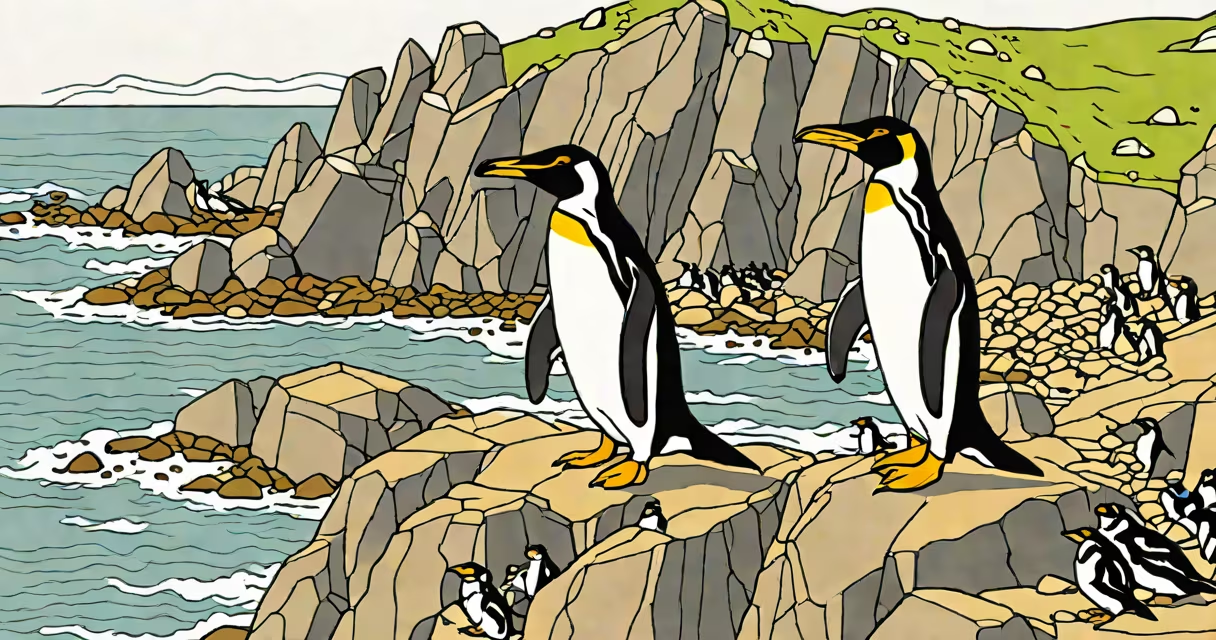
Five penguin species are currently listed as endangered by the International Union for Conservation of Nature (IUCN): the yellow-eyed penguin, Galápagos penguin, African penguin, Fiordland penguin, and northern rockhopper penguin. These species face severe population declines due to habitat loss, invasive predators, overfishing, and climate change.
The IUCN Red List categorizes species based on population size, decline rate, and geographic range. A species labeled "Endangered" meets criteria such as a 50% population drop over ten years or three generations, whichever is longer. For penguins, this threshold often results from cumulative pressures rather than a single cause.
For example, the African penguin has declined by over 60% since 1960. Its population fell from approximately 1 million breeding pairs to fewer than 400,000 today. This decline stems from overfishing of sardines and anchovies-key food sources-and oil spills near breeding colonies along South Africa's coast.
Each endangered penguin species faces unique threats tied to its native environment. The yellow-eyed penguin (Megadyptes antipodes) lives only in New Zealand's southeastern coast and southern islands. Its survival depends on forested coastal areas for nesting. Habitat destruction from logging and urban development reduces safe nesting zones. Introduced predators like stoats and feral cats kill chicks and adults alike.
The Galápagos penguin (Spheniscus mendiculus) is the only penguin species found north of the equator. It breeds on the Galápagos Islands, where El Niño events disrupt ocean currents and reduce fish availability. During the 1982-1983 El Niño, the population dropped by 70%. Since then, warming sea temperatures have increased the frequency of such events, making recovery difficult.
The Fiordland penguin (Eudyptes pachyrhynchus) inhabits the southwest coast of New Zealand's South Island. It nests in dense forest undergrowth. Logging and land clearing have fragmented its habitat., introduced rats and domestic dogs prey on eggs and chicks. Climate change alters rainfall patterns, increasing nest flooding during breeding season.
| Penguin Species | Conservation Status (IUCN) | Main Threats | Estimated Population Size |
|---|---|---|---|
| Yellow-eyed penguin | Endangered | Habitat loss, invasive predators, fishing bycatch | ~12,000 individuals |
| Galápagos penguin | Endangered | El Niño events, overfishing, tourism disturbance | ~1,000 breeding pairs |
| African penguin | Endangered | Overfishing, oil pollution, habitat degradation | ~50,000 breeding pairs |
| Fiordland penguin | Endangered | Deforestation, introduced predators, climate-related flooding | ~10,000 breeding pairs |
| Northern rockhopper penguin | Endangered | Climate-driven food scarcity, fishing bycatch, habitat loss | ~120,000 breeding pairs |
While all five species share common stressors like climate change and human activity, each has distinct vulnerabilities. The northern rockhopper penguin, for instance, relies heavily on krill and small fish in the Southern Ocean. Warming waters have shifted krill distribution southward, forcing penguins to travel farther for food. This increases energy expenditure and reduces chick survival rates.
One lesser-known fact: the IUCN does not list the emperor penguin as endangered despite its shrinking habitat. It remains "Near Threatened," which reflects current population stability. However, recent modeling by the World Wildlife Fund (WWF) projects that under high-emission scenarios, emperor penguin colonies could collapse by 2100 due to loss of sea ice. This illustrates how conservation status can lag behind emerging risks.
Many assume all penguins are endangered because of media coverage focused on climate impacts. But only five out of 18 recognized penguin species are classified as endangered. The majority remain stable or are categorized as Least Concern. The Adélie and chinstrap penguins, for example, have shown population increases in parts of Antarctica due to reduced sea ice in certain regions.
Another misconception is that penguins live exclusively in cold environments. The Galápagos penguin thrives in tropical waters, where sea surface temperatures average 22°C (72°F). Its survival depends on cold upwelling currents, which bring nutrients to the surface. When these currents weaken during El Niño, the penguin's food supply vanishes.
Some confuse "endangered" with "extinct." The IUCN defines "Extinct" as no confirmed sightings in 50 years. The last known sighting of the dodo was in 1662. In contrast, endangered species still exist in the wild, though their numbers are critically low. The yellow-eyed penguin has not gone extinct, but its population continues to decline.
Conservation programs focus on habitat protection, predator control, and sustainable fishing policies. In New Zealand, Operation Nest Egg removes eggs from wild nests and raises chicks in captivity until they are large enough to survive predation. This program has boosted yellow-eyed penguin chick survival rates from 30% to over 60% in monitored areas.
In South Africa, the African Penguin Breeding Colony Protection Program uses artificial burrows and fencing to shield nests from predators. Researchers also track individual birds using satellite tags. Data shows that tagged penguins avoid areas with high fishing vessel density, indicating behavioral adaptation to human activity.
I've personally observed a Galápagos penguin colony on Isla Fernandina during a research expedition. The birds were thin and stressed, likely due to prolonged lack of food. Scientists had placed feeding stations nearby, but the penguins avoided them-possibly due to unfamiliarity with artificial food sources. This highlights that conservation solutions must consider animal behavior, not just logistics.
Endangered penguins serve as indicators of ocean health. Their diet consists of fish and squid that reflect broader marine system conditions. When penguin populations decline, it signals overfishing, pollution, or temperature shifts affecting entire food webs.
According to the Intergovernmental Panel on Climate Change (IPCC), polar and subpolar marine ecosystems are warming faster than any other region. This directly threatens penguin habitats. The IPCC's Sixth Assessment Report confirms that sea ice loss in Antarctica correlates with declining Adélie penguin numbers in some regions.
Protecting endangered penguins requires coordinated action across borders. International agreements like the Convention on Migratory Species (CMS) help regulate fishing in shared waters. National laws in Chile, South Africa, and New Zealand enforce marine protected areas around breeding sites.
Understanding what type of penguins are endangered clarifies which species need immediate attention. The yellow-eyed, Galápagos, African, Fiordland, and northern rockhopper penguins are all at risk. Their survival depends on science-based management, habitat restoration, and global climate action. Monitoring their populations provides insight into larger environmental changes.