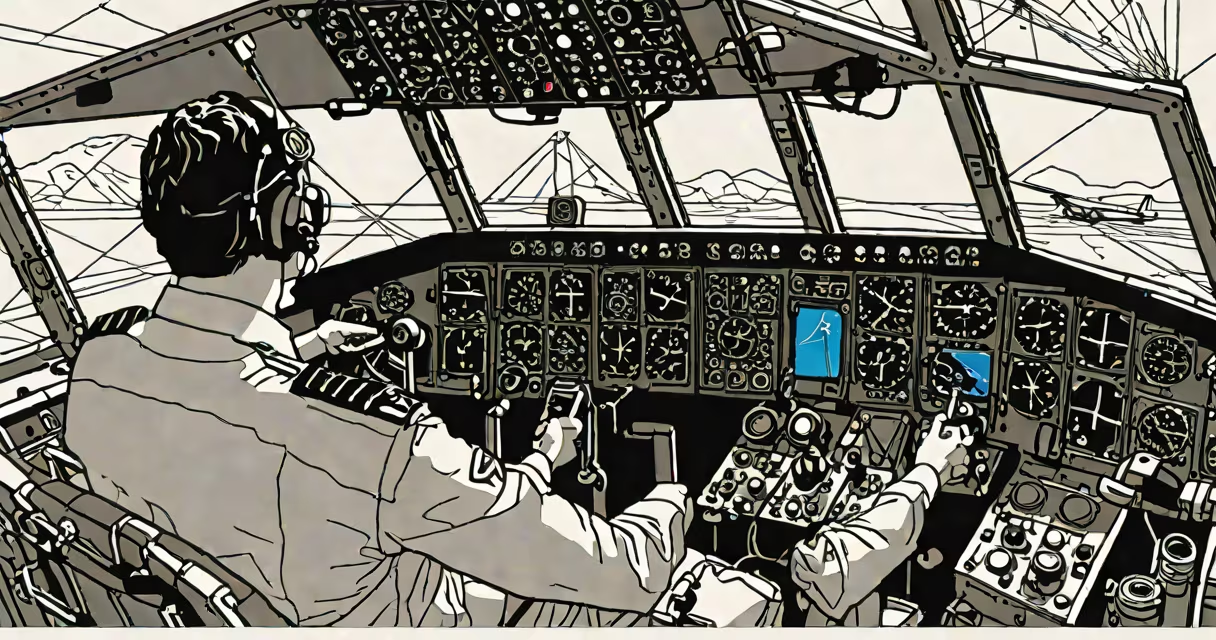
To become a pilot in the United States, you must meet Federal Aviation Administration (FAA) requirements including passing a medical exam, completing a minimum number of flight hours, passing written and practical exams, and holding a valid pilot certificate. These standards apply to all civilian pilots, whether pursuing private, commercial, or airline transport pilot licenses.
The FAA governs all pilot certification in the U.S. through Part 61 of the Federal Aviation Regulations. This structure outlines the training, testing, and documentation required to earn each level of pilot license. All applicants must complete ground school, flight training under a certified flight instructor (CFI), and pass both written and oral exams.
Each license builds on the last. A private pilot certificate allows you to fly for personal enjoyment. A commercial pilot certificate permits flying for compensation. An airline transport pilot (ATP) certificate is required to serve as a captain on scheduled airline flights. The process is progressive, not optional.
For example, a student beginning flight training must log at least 40 hours of flight time to qualify for a private pilot license. Of those, 20 hours must be with a CFI. The remaining 20 hours can include solo flight time. After meeting time requirements, the candidate takes a 60-question multiple-choice test covering airspace rules, weather, navigation, and aircraft systems.
Pilot certification requires four key elements: medical fitness, flight experience, knowledge, and skill. Each is verified through official documentation and examiner evaluation.
Medical Certificate: All pilots must hold a valid FAA medical certificate. Class III (for private pilots) requires vision correctable to 20/20, normal color perception, and no history of seizures or heart conditions requiring surgery. Pilots with certain chronic conditions may still qualify under special issuance waivers.
Flight Time: Minimum flight hours vary by license. Private pilots require 40 hours. Commercial pilots need 250 hours. ATP candidates must have 1,500 hours. These numbers are non-negotiable. The FAA enforces them strictly during checkrides.
Written Exam: The FAA administers standardized tests at approved testing centers. Scores must be 70% or higher to pass. Topics include aerodynamics, meteorology, federal regulations, and emergency procedures. Retakes are allowed after a 24-hour waiting period.
Practical Test (Checkride): The final step involves a flight evaluation with an FAA-designated examiner. The candidate performs maneuvers such as stalls, steep turns, and emergency landings. The examiner evaluates decision-making, communication, and precision. Failure results in a detailed report and a mandatory wait before retaking.
There are three primary pilot certificates issued by the FAA. Each has distinct training goals, time commitments, and operational privileges.
| License Type | Minimum Flight Hours | Required Medical Certificate | Privileges |
|---|---|---|---|
| Private Pilot (PPL) | 40 | Class III | Non-commercial flying, single-engine aircraft, day VFR only |
| Commercial Pilot (CPL) | 250 | Class II | Flying for hire, multi-engine aircraft, night and instrument operations |
| Airline Transport Pilot (ATP) | 1,500 | Class I | Captain of large commercial aircraft, international routes |
Some applicants pursue a sport pilot certificate instead. It requires only 20 hours of flight time and allows operation of light-sport aircraft. However, it restricts flying to daylight, visual flight rules (VFR), and non-towered airports. This option is not suitable for careers in aviation.
Non-obvious fact: The FAA does not issue licenses directly. Instead, it designates examiners who conduct checkrides. These individuals are typically retired airline captains or experienced flight instructors with FAA approval. Their evaluations carry equal weight to those of government employees.
Many assume that a college degree is required to become a pilot. That is false. While some airlines prefer candidates with bachelor's degrees, the FAA does not mandate academic credentials. You can enter flight training with only a high school diploma or GED.
Another misconception is that flight schools offer "guaranteed" jobs. No flight school can promise employment. Airlines recruit based on experience, performance, and availability. A 2023 FAA report found that 68% of new airline hires had between 1,000 and 1,500 flight hours prior to joining a major carrier.
I once observed a student fail his private pilot checkride due to poor radio communication. He understood the maneuvers but failed to respond to air traffic control instructions. The examiner noted, "This is not a technical failure-it's a procedural breakdown." After six weeks of focused radio practice, he passed on the second attempt. This illustrates that piloting is as much about clear communication as it is about mechanical skill.
Even after earning a license, ongoing training is mandatory. Pilots must complete recurrent training every 12 months, including simulator sessions and emergency scenario drills. The FAA requires at least 10 hours of instrument time annually for those operating in controlled airspace.
Some pilots pursue additional certifications, such as instrument rating (IR), which allows flying in low visibility. Others seek multi-engine ratings or type ratings for specific aircraft like the Boeing 737. These add-ons increase job opportunities and pay.
For mental health and long-term readiness, pilots are encouraged to maintain wellness logs. The FAA's Aviation Safety Action Program (ASAP) allows anonymous reporting of fatigue, stress, or equipment concerns. Data from 2022 shows that 92% of participating pilots reported improved situational awareness after using the program.