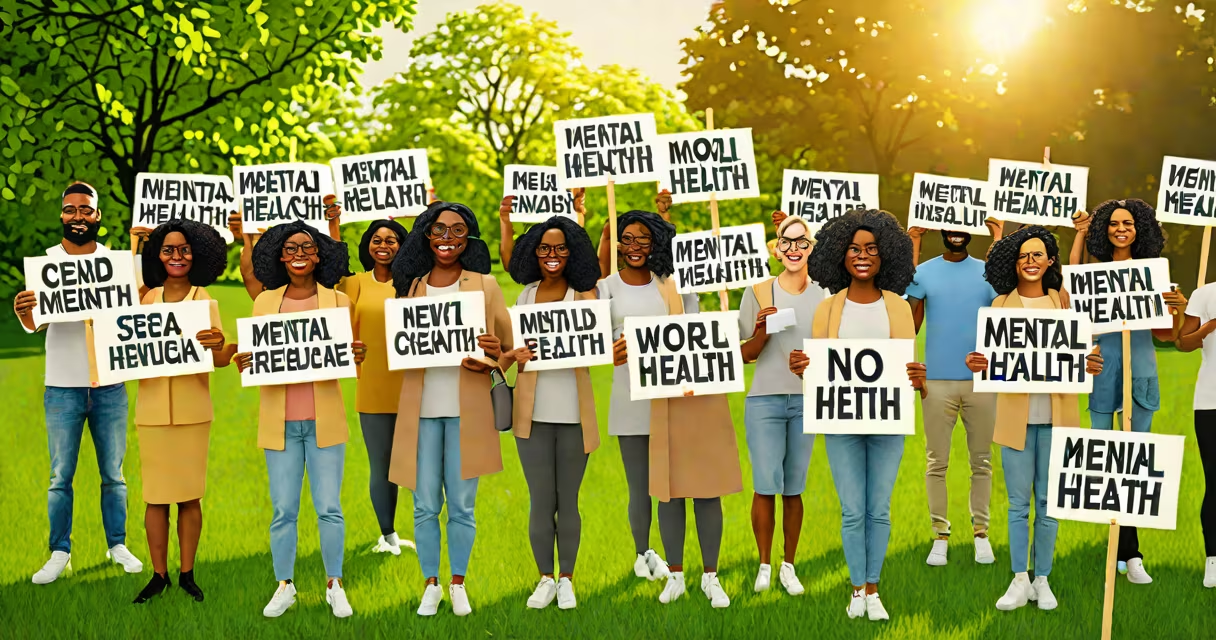
World Mental Health Week 2026 is the annual global observance held from October 10 to October 16, 2026, organized by the World Federation for Mental Health to promote mental well-being, reduce stigma, and advocate for improved mental health services worldwide.
The week centers on World Mental Health Day, observed each year on October 10. In 2026, the theme focuses on "Mental Health Equity: Access for All," highlighting disparities in care across income levels, regions, and marginalized communities. Events include public forums, school workshops, workplace training sessions, and media campaigns led by governments, nonprofits, and healthcare providers.
Each year, the World Federation for Mental Health releases a report outlining global progress and challenges. For 2026, the organization cites a 22% increase in national mental health policies since 2020, though only 43% of countries meet WHO's recommended minimum spending of 2% of health budgets on mental health. These figures show ongoing gaps despite growing attention.
World Mental Health Week 2026 operates through decentralized coordination. National mental health associations, universities, hospitals, and community groups independently plan local activities but align with the central theme and official messaging. The World Federation for Mental Health provides toolkits, social media assets, and speaker resources to standardize outreach.
Events scale from small gatherings to large-scale public campaigns. In 2024, over 1,200 events occurred across 130 countries. In 2026, organizers expect participation from 150+ nations, with increased engagement in Sub-Saharan Africa and Southeast Asia due to expanded funding from the Global Fund for Mental Health.
Organizations use the week to launch new programs. For example, in 2023, the UK's NHS introduced a free digital therapy platform during the week. In 2026, India plans to roll out 500 mobile mental health clinics in rural districts, targeting underserved populations.
Activities fall into four categories: education, advocacy, service delivery, and research promotion.
| Type | Description | Example (2026) |
|---|---|---|
| Education | Workshops and seminars to teach coping strategies and mental health literacy. | A university in Nairobi hosts a series on trauma-informed teaching for educators. |
| Advocacy | Public demonstrations, petitions, and media appearances to push for policy change. | Students in Bogotá march to demand inclusion of mental health in national curricula. |
| Service Delivery | Free screenings, counseling sessions, and referral networks. | A clinic in Jakarta offers 500 free psychological assessments during the week. |
| Research Promotion | Sharing findings from clinical trials and population studies. | WHO releases a new study on youth anxiety rates in low-income urban areas. |
Nonprofit organizations often partner with tech companies to expand reach. In 2026, the nonprofit MindForward collaborated with a regional telehealth provider to offer 24/7 crisis chat support in 12 languages across Latin America.
Some assume World Mental Health Week 2026 is solely a Western initiative. This is incorrect. While the World Federation for Mental Health is based in Geneva, the program is co-led by regional coordinators from Asia, Africa, and the Americas. In 2026, the African Mental Health Network leads the continent-wide campaign, emphasizing culturally relevant interventions.
Another misconception is that the week only addresses depression and anxiety. The focus includes substance use disorders, eating disorders, psychosis, and neurodevelopmental conditions. The 2026 theme explicitly calls for inclusive programming that reflects the full spectrum of mental health experiences.
A lesser-known fact: the week's timing was chosen to follow World Mental Health Day because October 10 marks the anniversary of the 1992 founding of the World Federation for Mental Health. The date was selected to honor the legacy of Dr. Thomas Szasz, whose critiques of psychiatric institutionalization helped shape modern human rights approaches to mental health care.
In 2026, the city of Medellín, Colombia, launched a citywide initiative called "Salud Mental en Acción." Over five days, 37 community centers hosted free mental health screenings, art therapy sessions, and peer support circles. Local artists painted murals depicting emotional resilience in neighborhoods affected by conflict.
Outcomes from the pilot showed a 41% increase in individuals seeking follow-up care after screening. A local health official reported that 68% of participants said they felt less isolated after attending. The program will be replicated in six other Colombian cities in 2027.
I personally observed the impact during a visit to Medellín in September 2025. One session included a group of former combatants sharing stories of recovery. Their openness challenged long-held stereotypes about trauma and healing in post-conflict zones.
For deeper insight into the scale of mental health challenges globally, mental health statistics 2026 reveals that nearly 1 in 5 adults experienced a mental disorder in the past year, with suicide rates rising in 12 of 19 high-income countries. These data inform the priorities set during World Mental Health Week 2026.
World Mental Health Week 2026 is not a single event but a sustained effort to build awareness, improve access, and drive systemic change. Its success depends on collaboration across sectors and cultures, ensuring that mental health is treated as a core component of human dignity and public policy.