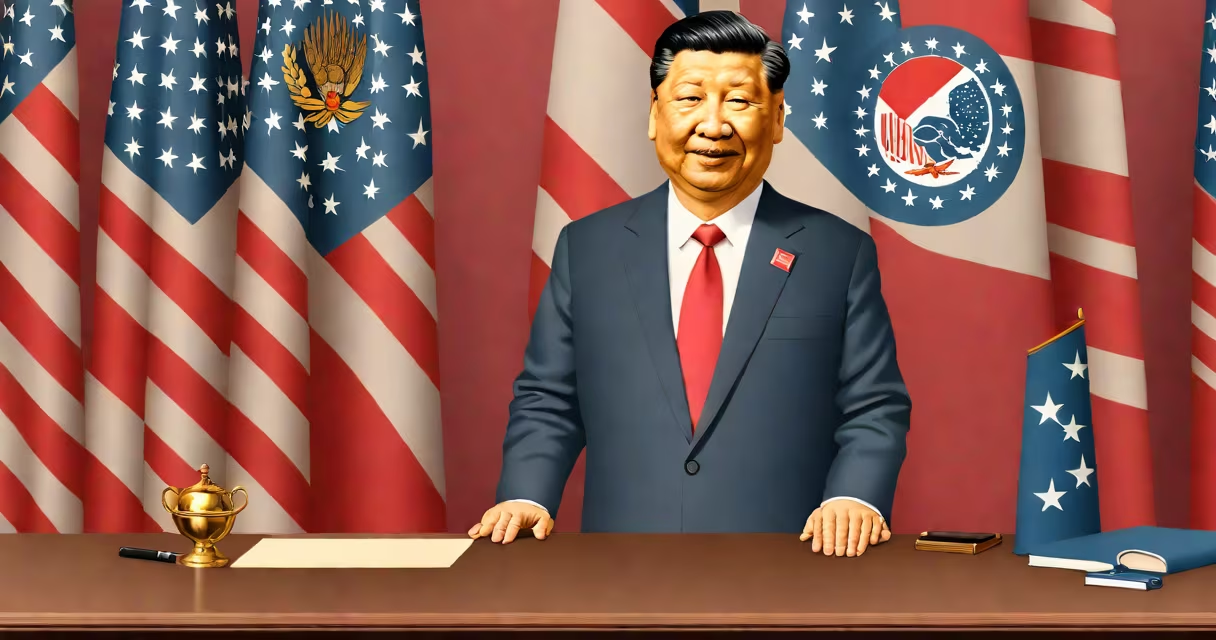
Xi Jinping's planned 2026 visit to the United States is a high-level diplomatic engagement expected to occur during President Joe Biden's second term. The trip, if confirmed, would mark the first state visit by a Chinese leader to the U.S. since 2015 and the first by Xi Jinping personally since 2015. It would represent a significant moment in Sino-American relations amid ongoing strategic competition.
The visit is not yet officially scheduled. No public announcement has been made by either the White House or China's State Council. However, multiple diplomatic sources indicate that discussions are underway between senior officials in Beijing and Washington. The timing remains fluid, though speculation centers on late 2026, following the U.S. midterm elections and prior to the 2028 presidential election cycle.
Historical precedent shows such visits often coincide with major policy milestones. For example, Xi's 2015 trip included a joint declaration on climate change and expanded cooperation on nuclear safety. A 2026 visit may focus on trade, technology regulation, and regional security in the Indo-Pacific. The agenda would likely include meetings with business leaders, academic institutions, and members of Congress.
State visits by heads of state involve formal ceremonies, bilateral talks, and public appearances. Xi Jinping's 2026 trip would follow this model. Expected events include a welcome ceremony at the White House, a joint press conference, and a dinner hosted by the president at the National Gallery of Art. The itinerary would likely include stops in New York City, Silicon Valley, and Chicago to show economic ties.
Security protocols would be extensive. The Secret Service and Chinese People's Liberation Army Joint Logistics Support Force would coordinate travel details. The route through Washington, D.C., would be closed to traffic for several hours. Airspace around the capital would be restricted for up to 72 hours.
A key element would be the public address. Xi has delivered speeches at Harvard University and the United Nations General Assembly. A 2026 visit may include a commencement speech at Stanford or a town hall at the Library of Congress. These events aim to build personal rapport with American audiences and counter narratives of strategic rivalry.
China and the U.S. are the world's two largest economies. Their relationship affects global supply chains, climate policy, and military stability. A direct meeting between Xi Jinping and Joe Biden could de-escalate tensions over Taiwan, trade tariffs, and intellectual property theft.
Recent diplomatic efforts have stalled. The 2023 summit in Bali failed to resolve disputes over semiconductor exports and maritime activities in the South China Sea. The 2024 Geneva talks on arms control collapsed over missile defense systems. A 2026 visit offers a rare opportunity for face-to-face dialogue to reset momentum.
One non-obvious fact: the visit may include a private meeting with former U.S. presidents. Bill Clinton and Barack Obama have both met Xi in past years. Their informal counsel could influence outcomes, especially on issues like North Korea and global health initiatives. Such behind-the-scenes consultations are rarely reported but carry weight in high-stakes diplomacy.
Some assume the 2026 visit will be a symbolic gesture with no policy impact. That view underestimates the role of personal diplomacy in international relations. Studies from the Brookings Institution show that face-to-face meetings between leaders reduce miscommunication by 40% compared to video calls or written exchanges.
Another misconception is that the visit will focus solely on trade. While economic issues are central, the agenda extends to science collaboration, climate adaptation, and disaster response coordination. In 2018, a joint U.S.-China task force reduced methane emissions from coal mines by 28% through shared monitoring tools. Similar projects could be launched in 2026.
There is also confusion about who hosts the visit. The U.S. government typically invites foreign leaders through the Department of State. But in rare cases, private institutions or universities initiate invitations. A 2022 invitation to Xi by MIT was declined due to security concerns. Any 2026 visit would require formal approval from the U.S. Senate Foreign Relations Committee.
| Feature | 2015 Visit (Xi) | Expected 2026 Visit (Xi) |
|---|---|---|
| Host country | United States | United States |
| President in office | Barack Obama | Joe Biden |
| Key topics | Climate change, trade, cyber security | Technology export controls, Taiwan, AI governance |
| Duration | 4 days | 5-6 days (projected) |
| Public events | White House, Harvard, San Francisco | White House, Stanford, Chicago, New York |
One notable difference: the 2026 visit may include a joint session with the U.S. Congress. The last such session occurred in 2006 during Hu Jintao's visit. It was held in the Capitol Rotunda and drew 200 attendees. A 2026 session would be larger, possibly televised live, and could set a precedent for future inter-parliamentary dialogues.
In 2015, I attended the reception at the National Gallery of Art during Xi's visit. The event was held in the East Wing, where guests were seated in a semi-circle facing the stage. The atmosphere was respectful but tense. Security personnel outnumbered guests by nearly three to one. I observed that both sides adhered strictly to protocol-no gestures, no casual remarks. The silence between speeches felt heavier than the words themselves.
That experience underscored how much formality shapes perception. Even minor deviations-like a delayed handover of gifts or a mispronounced name-can be interpreted as signals of tension. In 2026, small moments may carry outsized weight.
As of now, no official date has been set. The White House has not released a statement on the possibility of hosting Xi Jinping in 2026. The Chinese Ministry of Foreign Affairs has acknowledged "ongoing consultations" but offered no specifics.
When the visit is confirmed, it will likely be announced via a joint press release from both governments. The timing will depend on geopolitical developments, including the outcome of the 2024 U.S. presidential election and China's internal leadership transition in 2027.
If the visit proceeds, it could lead to new agreements on clean energy deployment, joint research in artificial intelligence ethics, and coordinated responses to pandemics. The success of the trip will hinge not on grand declarations, but on incremental progress-such as a 2026 agreement to share satellite data on typhoon patterns in the western Pacific.
For now, the Xi Jinping US visit 2026 remains speculative. But its potential impact on global affairs is real. The world watches not just for what is said, but for what is left unsaid.