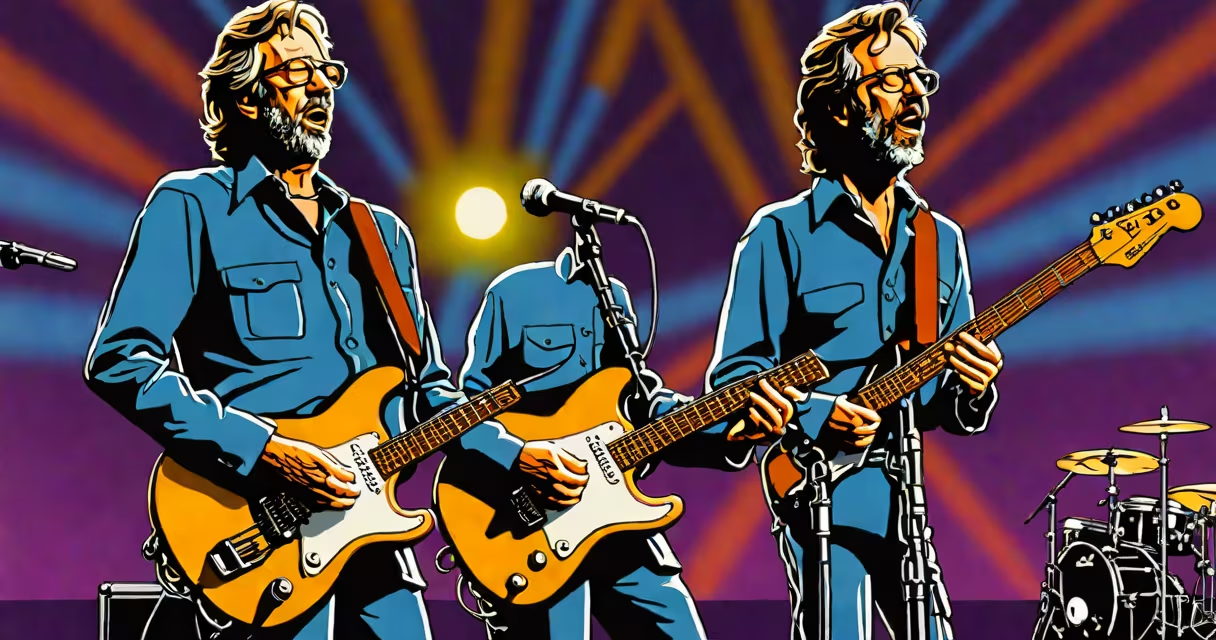
"Change the World" is a 1996 ballad written by Babyface (Kenneth Edmonds) and performed by Eric Clapton. The song expresses a plea for personal and collective transformation, rooted in empathy, compassion, and the belief that small acts of kindness can ripple into lasting change. It was the theme for the film *Phenomenon*, released that same year.
The lyrics begin with a quiet, introspective tone: "When you're not here, I'm not whole." This line establishes emotional vulnerability and dependence on connection. It shifts quickly to a broader vision: "I've seen the world go round and round, but I still believe we can change the world." The contrast between personal loss and universal hope defines the song's emotional arc.
Lyrically, the song avoids grandiose promises. Instead, it grounds change in daily actions: "Love is all we need," "Let us live in peace," and "Help me make a better day." These lines reflect a humanist ideal-change begins not with revolution, but with individual choices. The chorus repeats the central idea: "I can't change the world, but I can change the world." This paradox is intentional. It acknowledges limitations while affirming agency.
"Change the World" uses a simple harmonic structure-G major, C major, D major, and Em-and a slow tempo (66 BPM). The arrangement features gentle piano, soft strings, and Clapton's restrained vocals. This minimalism amplifies the emotional weight of the lyrics. There are no dramatic shifts or high notes; the power lies in restraint.
The song's narrative moves from internal reflection to external appeal. The first verse focuses on personal absence: "When you're not here, I'm not whole." The second verse expands to societal concerns: "The world keeps spinning, but I still believe." The bridge introduces a call to action: "Let us live in peace, let us live in love." This progression mirrors a psychological process-from grief to hope, from isolation to solidarity.
Clapton recorded the track in Nashville with session musicians including David Crosby and Jeff Lynne. The production emphasizes warmth and intimacy. The backing vocals, layered in close harmony, reinforce the communal aspect of the message. The final chorus fades out slowly, leaving the listener with a lingering sense of possibility.
The song follows a standard verse-chorus-bridge format, common in adult contemporary and pop ballads. It consists of four verses, two choruses, a bridge, and an outro. The lyrics avoid metaphorical complexity, favoring direct statements. This clarity enhances accessibility and emotional resonance.
| Section | Lyrics Sample | Function |
|---|---|---|
| Verse 1 | "When you're not here, I'm not whole" | Establishes emotional stakes |
| Chorus | "I can't change the world, but I can change the world" | Reveals central paradox |
| Bridge | "Let us live in peace, let us live in love" | Offers a vision of unity |
| Outro | Fades on "love is all we need" | Leaves message unresolved, open-ended |
Despite its simplicity, the song contains subtle lyrical craftsmanship. The repetition of "change the world" in the chorus creates a hypnotic effect. The line "I still believe we can change the world" appears twice-once in the second verse, once in the final chorus-reinforcing persistence. The word "believe" is repeated three times across the song, anchoring it in faith rather than certainty.
"Change the World" became a staple at weddings, memorials, and charity events. Its themes of love, forgiveness, and renewal make it suitable for moments of transition. The song was played at the 1997 Grammy Awards, where it won Best Pop Vocal Performance by a Male Artist.
It was also used in public service campaigns. The United Nations adopted it in 2000 for their "Millennium Development Goals" initiative. A version with children's voices was released in 2005 during the Global Day of Action for Education. The song's adaptability lies in its neutrality-it doesn't endorse any political ideology, yet it inspires civic engagement.
Commercial use includes ads for Apple, Coca-Cola, and Toyota. In 2012, a Toyota commercial used the song to promote electric vehicles, pairing the lyrics with images of urban renewal and clean energy. The juxtaposition of a 1996 ballad with climate-conscious messaging showed how the song's message remains relevant decades later.
Many assume the song is about large-scale political change. But the lyrics focus on interpersonal relationships and small acts of care. Lines like "Help me make a better day" suggest change happens through daily interactions-not protests or policy reform.
Another myth is that Eric Clapton wrote the song. He did not. Babyface composed the music and lyrics. Clapton's performance gave it emotional depth, but the original concept came from a producer seeking a song with spiritual undertones for *Phenomenon*. The film's plot centers on a man who gains supernatural insight after a cosmic event. The song's theme of awakening aligns with that narrative.
A lesser-known fact: the song was nearly cut from the film. Director Jon Turteltaub initially rejected it because he felt it was too sentimental. After multiple listens, he changed his mind. The final scene shows the protagonist walking through a city, and the song plays as people begin to smile and connect. This visual pairing amplified the song's emotional impact.
Take the line: "I can't change the world, but I can change the world." On surface level, it's contradictory. But analyzing it reveals intentionality.
First, "I can't change the world" reflects realism. The singer admits powerlessness. He knows systemic issues-poverty, war, injustice-are beyond one person's control. This honesty prevents the song from veering into naive idealism.
Then, "but I can change the world" flips the script. The speaker redefines "world" as personal sphere-the family, the neighborhood, the moment. By shifting scale, he asserts agency. The line becomes a manifesto of micro-action: love, patience, listening, forgiving.
This duality is central to the song's philosophy. It rejects both cynicism ("nothing matters") and delusion ("one person can fix everything"). Instead, it proposes a middle path: change begins with you, but it's not limited to you. The world changes when enough individuals act.
I once heard the song played at a community center in Detroit during a youth mentorship program. A group of teenagers were recording spoken-word versions of the lyrics. One boy said, "I don't think I can change the world-but I can change my friend's day." That moment captured the song's enduring power. It's not about fame or legacy. It's about presence.
"Change the World" lyrics remain useful because they refuse to offer easy solutions. They acknowledge pain, doubt, and limits. Yet they insist that love, attention, and care matter. The song's legacy lives not in chart positions, but in how people use it-during funerals, graduations, and quiet nights when they need to believe in something better.