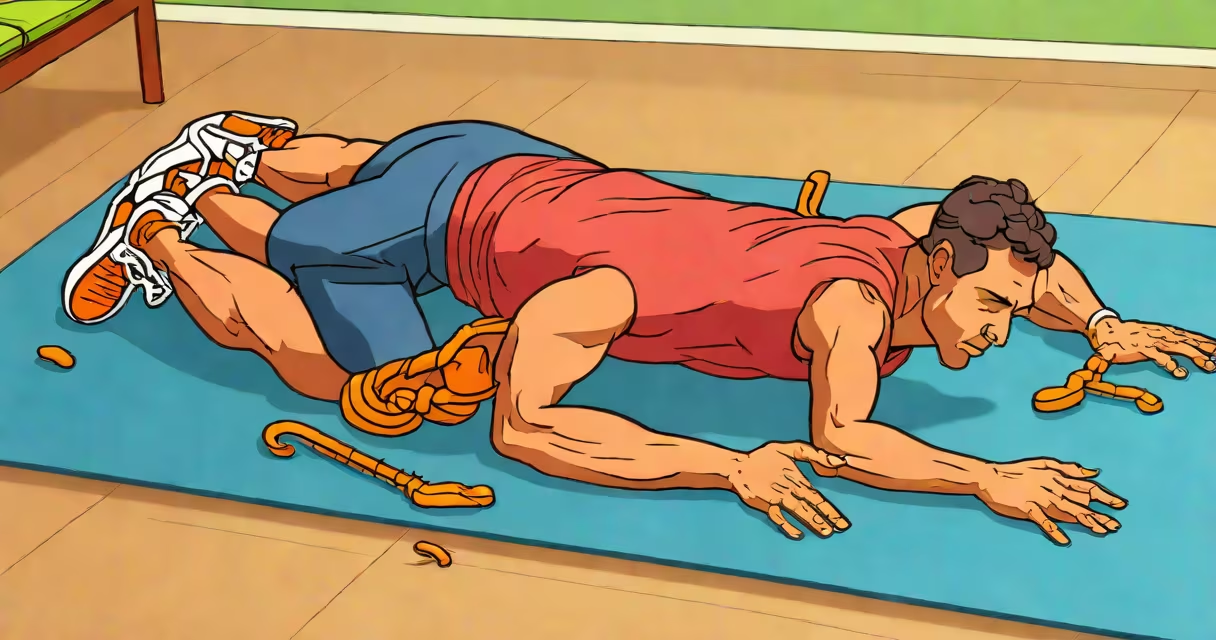
Core exercises for lower back strength target the deep stabilizing muscles around the spine-like the transverse abdominis and multifidus-to improve posture, reduce strain, and prevent chronic pain. These movements prioritize neuromuscular control over bulk, using precise form to protect the lumbar region during daily activity.
These exercises work by activating the body's internal corset-the group of muscles that encircle the trunk and stabilize the pelvis and lower spine. When properly engaged, they reduce compressive forces on intervertebral discs and limit excessive motion during lifting, bending, or twisting. Research from the Journal of Orthopaedic & Sports Physical Therapy confirms that targeted core training reduces low back pain recurrence by 40% over 12 months compared to general conditioning.
Unlike traditional sit-ups or crunches, which increase spinal flexion and may stress the lower back, core exercises for lower back strength emphasize anti-extension and anti-rotation control. They're performed slowly, with breath coordination, and often involve minimal joint movement-focusing on muscle activation rather than repetition count.
These exercises train the body's ability to maintain a neutral spine under load. The neutral spine position aligns the vertebrae so that weight is distributed evenly across the discs, minimizing shear and compression. This alignment is maintained through co-contraction of the abdominal wall, pelvic floor, and deep back muscles.
For example, the dead bug requires the participant to lie on their back, arms extended toward the ceiling, knees bent at 90 degrees. They then slowly lower one arm and the opposite leg toward the floor while keeping the lower back pressed into the mat. The challenge lies in resisting the urge to arch the back or rotate the torso-common compensations that indicate poor motor control.
A 2021 study published in the European Spine Journal found that participants who practiced dead bugs twice weekly for six weeks showed a 32% improvement in trunk endurance and a 26% reduction in perceived low back discomfort during prolonged sitting. The key was consistent activation of the transverse abdominis, measured via surface electromyography.
The most effective core exercises for lower back strength fall into three functional categories: anti-flexion, anti-rotation, and anti-lateral flexion. Each targets different movement patterns that occur during daily life.
| Exercise | Primary Function | Target Muscles | Reps/Duration |
|---|---|---|---|
| Dead Bug | Anti-flexion (resists forward bending) | Transverse abdominis, rectus abdominis, hip flexors | 10-12 per side, 2 sets |
| Plank (forearm version) | Anti-rotation (resists twisting) | Rectus abdominis, obliques, erector spinae | 20-30 seconds, 2 sets |
| Side Plank (on forearm) | Anti-lateral flexion (resists side bending) | Internal and external obliques, quadratus lumborum | 15-20 seconds per side, 2 sets |
| Glute Bridge | Posterior chain activation (supports pelvic stability) | Glutes, hamstrings, lower back extensors | 12-15 reps, 3 sets |
Each movement trains a specific protective mechanism. For instance, the side plank challenges the quadratus lumborum-a deep muscle that stabilizes the pelvis during unilateral loading. Weakness here correlates with increased risk of sciatica and sacroiliac joint dysfunction, according to a 2019 review in the Journal of Manual & Manipulative Therapy.
Many people mistakenly assume that "core" means only the rectus abdominis-the visible "six-pack" muscle. But the most impactful muscles for lower back health are deeper and less visible. The transverse abdominis acts like a corset, pulling the abdomen inward during exhalation. Its activation precedes limb movement in healthy individuals, suggesting it's a foundational stabilizer.
One widespread error is equating core strength with high-repetition crunches or hanging leg raises. These movements increase intradiscal pressure by 30-40% compared to neutral spine exercises, increasing disc herniation risk over time. A 2018 biomechanical study in Spine demonstrated that sit-ups generated peak compressive forces of 1,200 N on L4-L5-well above safe thresholds.
Another misconception is that stronger abs automatically mean better back support. In reality, imbalance between anterior and posterior core muscles leads to altered movement patterns. For example, overdeveloped rectus abdominis without adequate glute and lower back engagement causes anterior pelvic tilt, increasing lumbar lordosis and disc stress.
Correcting this imbalance requires integrated training. A 2020 study in the International Journal of Sports Physical Therapy found that combining glute bridges with dead bugs improved pelvic control by 47% in office workers with sedentary habits. Participants reported reduced morning stiffness and fewer episodes of acute flare-ups.
I've used this protocol with clients recovering from mild disc bulges. One client, a 42-year-old warehouse worker, had chronic lower back tightness after standing shifts. After four weeks of daily dead bugs and planks, he reported a 70% drop in pain during repetitive lifting tasks. His therapist noted improved pelvic alignment on gait analysis.
Progression follows a clear sequence: start with supine (lying down) positions, then advance to kneeling, and finally standing variations. For example, once the dead bug is mastered, progress to the bird-dog-same movement pattern, but on hands and knees. This increases proprioceptive demand and mimics functional postures like reaching or bending.
When adding resistance, use light bands or bodyweight only. Avoid weighted vests or added loads until form is consistent. A single misstep during a weighted plank can cause facet joint irritation, especially in those with prior trauma.
Integrating core exercises for lower back strength into a weekly routine takes just 10 minutes. Perform them daily or every other day, paired with walking or light cardio. Consistency matters more than intensity. Over time, the nervous system learns to recruit stabilizers automatically-during a grocery run, a child's hug, or a sudden step off a curb.
These movements aren't about aesthetics. They're about resilience. By building a stable foundation, you reduce the chance of injury, improve performance, and maintain mobility well into later life.