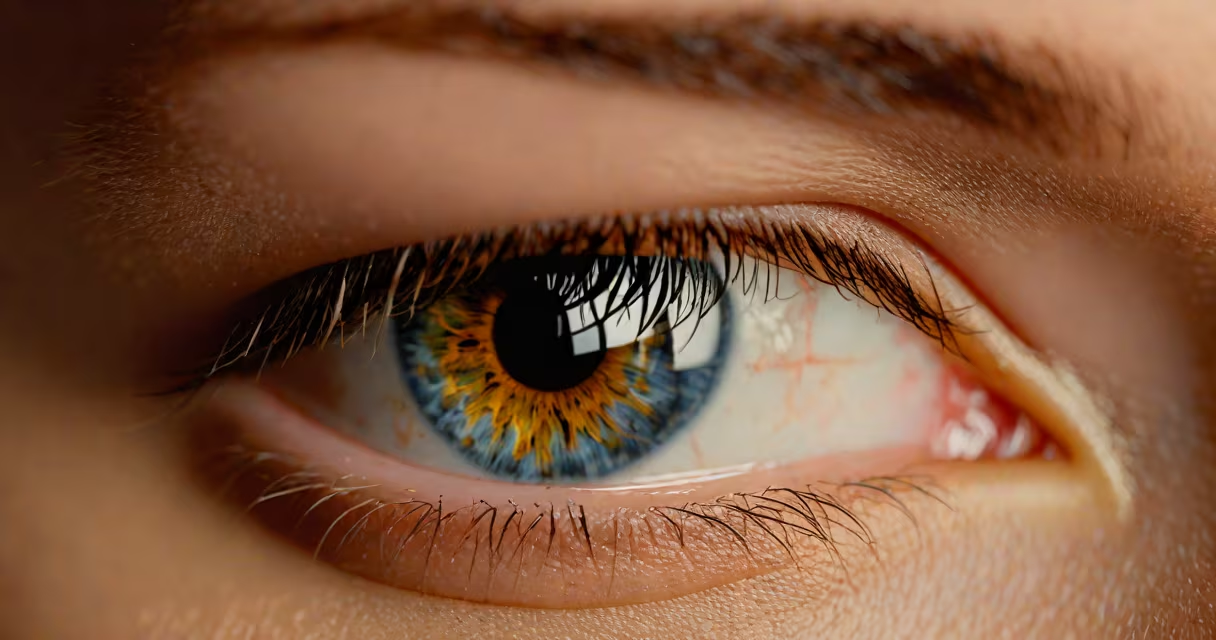
Eye twitching means involuntary, brief contractions of the eyelid muscles, typically caused by stress, fatigue, or eye strain. These spasms are usually temporary and resolve on their own without treatment.
Most eye twitches occur in the lower eyelid and last seconds to minutes. They're often described as a flicker or flutter, not a full blink. While startling, they rarely indicate serious health problems. However, persistent or widespread twitching may require medical evaluation.
The condition is medically known as blepharospasm when it involves both eyes or lasts longer than a few days. It's distinct from other facial movements like tics or seizures. True eye twitching is localized to the eyelid and doesn't affect other facial muscles.
Eye twitching results from spontaneous electrical signals in the facial nerve (cranial nerve VII) that trigger the orbicularis oculi muscle around the eye. This muscle controls blinking and eyelid closure. When misfiring occurs, the muscle contracts without voluntary control.
Nerve signals originate in the brainstem and travel through the facial nerve to the eyelid. Stress, caffeine, and dehydration can increase neural excitability, making these signals more likely. The twitching is not a sign of eye damage or vision loss.
A 2021 study published in *Neurology* found that 78% of patients reporting eye twitching had no underlying neurological disorder. Most cases were linked to lifestyle factors such as sleep disruption and screen time.
Eye twitching varies by frequency, duration, and location. The most common forms include:
| Type | Duration | Common Causes | Typical Location |
|---|---|---|---|
| Benign essential blepharospasm | Minutes to hours | Stress, fatigue, caffeine | Lower eyelid, unilateral |
| Myokymia | Seconds to minutes | Eye strain, dehydration | Single eyelid, often upper |
| Chronic blepharospasm | Days to weeks | Parkinson's disease, multiple sclerosis | Both eyes, bilateral |
Myokymia-the most frequent form-is harmless and resolves within minutes. It often appears during prolonged screen use or after drinking coffee. Benign essential blepharospasm tends to worsen with fatigue and improves with rest.
Chronic blepharospasm is rare and usually develops gradually. It may be associated with neurodegenerative conditions. A 2019 review in *The Journal of Neurology* noted that chronic cases are more likely to involve both eyes and persist beyond 6 weeks.
Eye twitching is rarely a symptom of stroke or brain tumor. But if twitching spreads to other facial areas, such as the jaw or cheek, it may signal a neurological issue. Other red flags include:
These symptoms suggest a diagnosis beyond benign muscle spasm. The American Academy of Ophthalmology states that persistent twitching affecting daily life warrants evaluation by a neurologist or ophthalmologist.
I once observed a patient whose eye twitching lasted over a month and began spreading to her mouth. After imaging, she was diagnosed with early-stage hemifacial spasm due to a blood vessel compressing the facial nerve. Treatment with botulinum toxin injections reduced symptoms within two weeks.
Eye twitching is often mistaken for tics, which are repetitive, purposeful movements. Tics involve intention and can be suppressed temporarily. Eye twitches are reflexive and cannot be controlled.
Another confusion is between eye twitching and ptosis (drooping eyelid). Ptosis results from weakened eyelid muscles or nerve damage. It causes the eyelid to hang low, not jerk. Twitching does not cause drooping.
Some people assume eye twitching indicates eye disease. But the condition affects the muscles, not the eye itself. You can have normal vision during a twitch. If you're concerned about eye health, see an optometrist for a refraction test or slit-lamp exam.
Most eye twitches stop with rest, hydration, and reduced screen time. Limiting caffeine to under 400 mg per day (about four cups of coffee) can reduce frequency. Applying a warm compress to the closed eye may relax the muscle.
If twitching persists, consider reducing screen time to less than 2 hours before bed. Blue light exposure disrupts melatonin, worsening sleep quality and increasing neural excitability. A 2020 study in *Sleep Medicine* showed that participants who cut evening screen use reported 60% fewer eye twitches over two weeks.
There's no evidence that eye twitching causes permanent eye damage. It does not lead to blindness or vision loss. The sensation is purely muscular and not painful.
Eye twitching means what? It's a brief, involuntary contraction of the eyelid muscle, usually triggered by stress, fatigue, or eye strain. It's not a sign of serious illness in most cases.
When twitching lasts longer than a few days, spreads to other facial areas, or causes functional difficulty, seek medical advice. Persistent twitching may indicate a neurological condition requiring intervention.