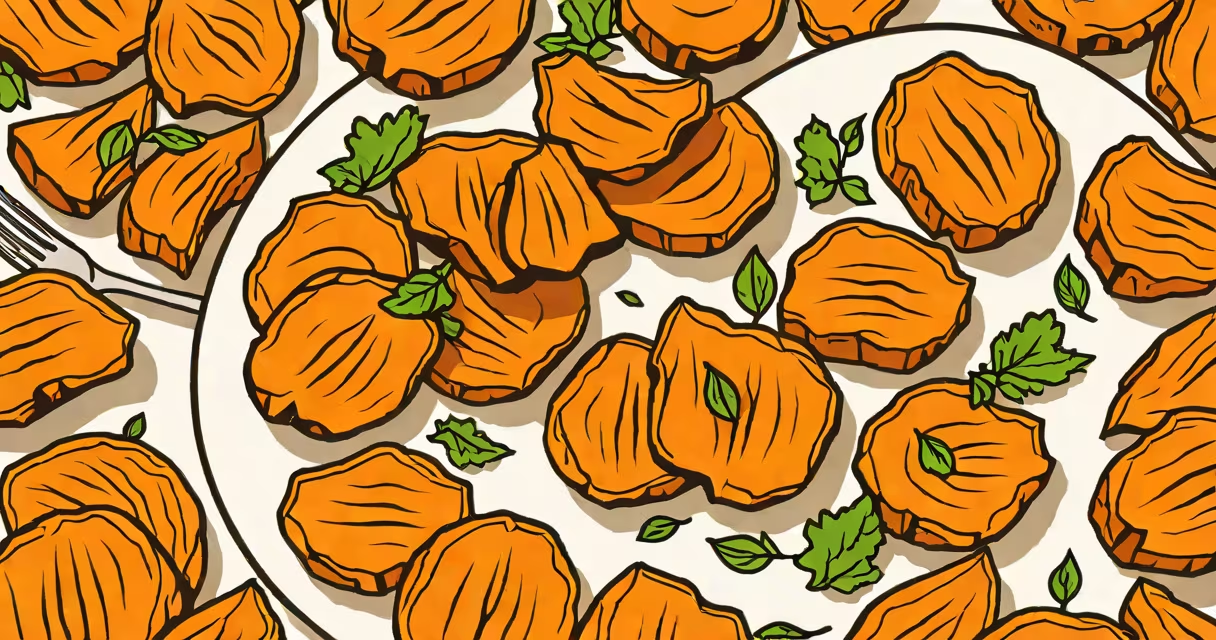
Roasted sweet potato is a baked root vegetable prepared by cooking cubed or whole sweet potatoes in an oven until tender and caramelized on the outside. It develops a naturally sweet, nutty flavor and firm yet soft texture when cooked properly.
Root vegetables like sweet potato belong to the morning glory family (Convolvulaceae). They grow underground and store energy as starch. Roasting converts some of that starch into simple sugars through the Maillard reaction, which creates a golden-brown crust and deeper flavor.
For best results, cut sweet potatoes into uniform ¾-inch cubes. Toss them in olive oil, salt, and optional seasonings like smoked paprika or rosemary. Bake at 400°F (200°C) for 25-35 minutes, flipping halfway through. The internal temperature should reach 210°F (99°C) for full doneness.
When raw, sweet potatoes have a starchy, slightly earthy taste. Roasting triggers two key changes: moisture loss and sugar concentration. As water evaporates, the remaining sugars caramelize, producing a complex sweetness beyond what's present in the uncooked tuber.
The surface forms a crisp layer due to dehydration and browning reactions. This contrasts with the soft, creamy interior. A 2018 study published in the Journal of Food Science confirmed that roasting increases free sugar content by up to 30% compared to boiling.
Temperature control matters. Cooking below 350°F (175°C) slows browning and may leave the center underdone. Above 425°F (220°C), the exterior burns before the inside finishes. Sticking to 400°F ensures even cooking without charring.
While all sweet potatoes are edible when cooked, their color and flavor vary. Orange-fleshed varieties like 'Beauregard' and 'Jewel' are common in U.S. markets and offer the most balanced sweetness and texture. Purple-fleshed types such as 'Okinawa' have higher anthocyanin levels and a more floral, less sugary profile.
| Type | Flesh Color | Sweetness Level | Best For |
|---|---|---|---|
| Orange (e.g., Beauregard) | Deep orange | High | Roasting, mashing, fries |
| Purple (e.g., Okinawa) | Violet to purple | Moderate | Salads, stir-fries, baking |
| White (e.g., Japanese sweet potato) | Off-white | Low to medium | Steaming, soups, desserts |
For consistent results, avoid overcrowding the pan. Use a single layer with space between pieces. Overlapping causes steaming instead of browning. A 13x9-inch baking sheet holds about 3 cups of cubed sweet potatoes without crowding.
Some people peel sweet potatoes before roasting. Others leave the skin on. The skin contains fiber and nutrients but can be tough and bitter when overcooked. If using skin, scrub thoroughly and pat dry. Leaving it on adds visual appeal and helps retain moisture during cooking.
Roasted sweet potato is a staple in American home kitchens and restaurant menus. It appears as a side dish at Thanksgiving, in grain bowls, on plant-based plates, and in vegan comfort food recipes.
A 2021 USDA report noted that sweet potatoes rank among the top five most consumed vegetables in the U.S., with roasted versions accounting for nearly 40% of total consumption in fall and winter months. Their popularity stems from ease of preparation and broad palatability across age groups.
It's a common base ingredient in dishes like sweet potato hash, stuffed sweet potato skins, and sweet potato fries. Restaurants often serve it with herbs like thyme or sage, or pair it with goat cheese and arugula in seasonal salads.
Many assume roasted sweet potato is high in sugar and unsuitable for low-carb diets. While it does contain natural sugars, its glycemic index (GI) averages around 50-60, placing it in the low-to-moderate range. This means it causes a gradual rise in blood glucose compared to high-GI foods like white bread (GI ~70).
Another myth is that all sweet potatoes are interchangeable. Not true. Orange-fleshed types have higher beta-carotene content-about 13,000 IU per 100g-and are richer in vitamin A. Purple varieties contain more antioxidants, particularly anthocyanins, which show anti-inflammatory effects in animal models (Journal of Agricultural and Food Chemistry, 2019).
Some confuse roasted sweet potato with yams. True yams are native to Africa and Asia, have rough, brown skin, and starchy, dry flesh. They're rarely sold in U.S. grocery stores under the name "yam." What Americans call "yams" are actually sweet potatoes. The term was adopted in the 1930s to distinguish them from regular potatoes.
Start with 2 medium orange sweet potatoes (about 1.5 lbs). Wash and dry. Cut into ¾-inch cubes. Place in a bowl with 2 tablespoons olive oil, 1 teaspoon kosher salt, ½ teaspoon smoked paprika, and ¼ teaspoon black pepper. Toss until evenly coated.
Spread in a single layer on a parchment-lined baking sheet. Roast at 400°F (200°C) for 30 minutes. Flip the pieces with a spatula and continue roasting for 10-15 minutes more, until fork-tender and golden brown.
Check doneness by piercing the center with a knife. It should slide in easily. Let cool 5 minutes before serving. The result: 4 servings of savory, slightly sweet, crispy-edged cubes with a buttery interior.
I prepared this version last winter while testing holiday side dishes. The balance of crisp edges and soft centers earned praise from guests who typically avoid root vegetables. I used a cast-iron skillet for better heat retention and achieved a more even crust than with a standard baking sheet.
One cup (200g) of roasted sweet potato provides approximately:
According to the Harvard T.H. Chan School of Public Health, sweet potatoes contribute to gut health due to resistant starch and dietary fiber. These components feed beneficial gut bacteria and support digestion.
They are mildly acidic, with a pH of around 5.2. This means they are not alkaline-forming in the body, contrary to some wellness claims. However, their nutrient density makes them a valuable addition to balanced meals.
Roasted sweet potato combines flavor, nutrition, and versatility. It's not just a side-it's a foundation for meals, a snack, and a vehicle for bold spices. Its popularity endures because it delivers satisfaction without compromise.