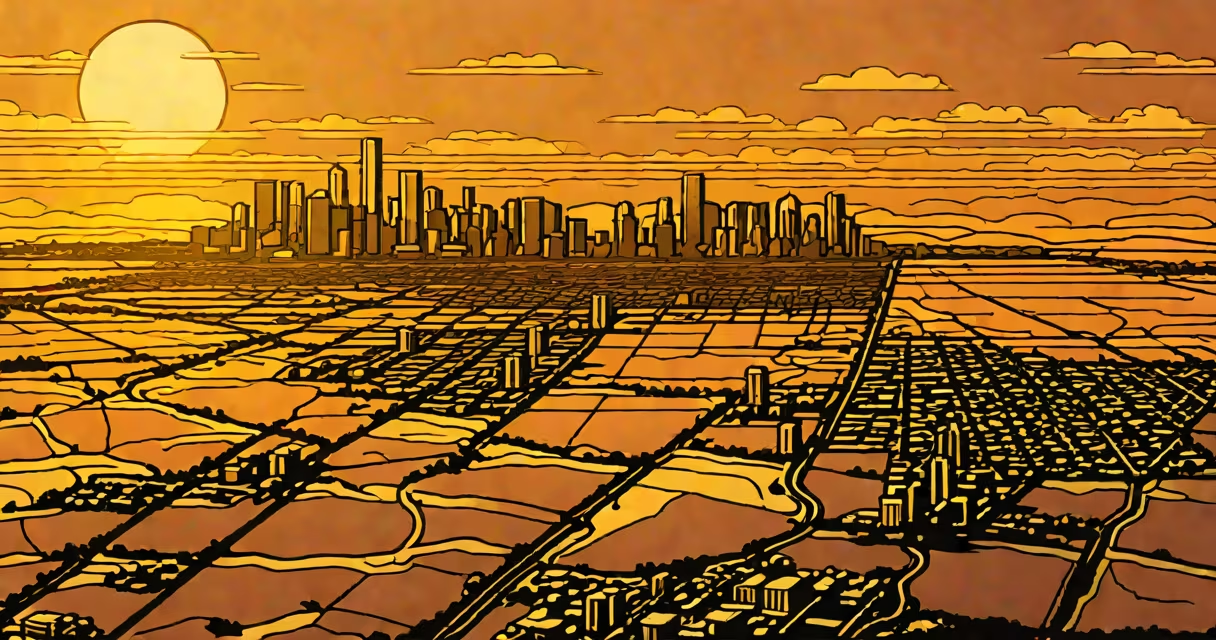
The term "Land of Texas" is the official nickname for the U.S. state, reflecting its expansive geography, rich history, and enduring cultural identity. It appears on state documents, seals, and promotional materials as a symbol of pride and heritage.
First adopted in 1939 by the Texas Legislature, the phrase was chosen to emphasize Texas's unique place in American history and its distinct regional character. It replaced earlier informal titles like "The Lone Star State," which remains widely used but is not the official designation. The formal adoption came during a period of renewed state pride, coinciding with the Texas Centennial celebrations.
"Land of Texas" is not a geographic descriptor-it doesn't define borders or physical features-but rather a cultural and political statement. It evokes a sense of permanence, legacy, and belonging. The phrase appears on the Texas state seal, in official state proclamations, and in state-funded tourism campaigns.
The nickname functions as a unifying identifier. It appears on government forms, state highway signs, and educational curricula. Unlike "Lone Star State," which focuses on the flag's single star, "Land of Texas" emphasizes territory, people, and history. It suggests ownership, continuity, and national significance.
State agencies use the phrase in public communications. For example, the Texas Department of Transportation includes "Land of Texas" in annual reports and safety campaigns. The Texas Historical Commission uses it in grant applications and preservation project titles.
When Texas officials speak internationally, they often refer to the state as the "Land of Texas" to distinguish it from other places named Texas, such as the city in California or the island nation in the Pacific. This helps maintain brand clarity in global outreach.
The phrase draws from multiple sources: Spanish colonial land grants, Texan independence movements, and 20th-century state-building efforts. The term "land" reflects the original Spanish concept of *tierra*, used in early maps and legal documents. "Texas" itself derives from the Caddo word *Taysha*, meaning "friends" or "allies."
Modern usage centers on identity, not geography. A 2021 survey by the University of Texas at Austin found that 68% of residents associate "Land of Texas" with emotional connection, not physical location. Only 12% linked it to specific cities or regions.
Examples of usage:
Many assume "Land of Texas" refers to a specific region, like West Texas or the Hill Country. It does not. The phrase applies to all 254 counties and every jurisdiction within the state's boundaries. It is not a regional label.
Another misconception is that it's a recent branding effort. While the phrase gained prominence in the 2000s through advertising, its legislative roots go back to 1939. The Texas State Archives confirm the original resolution passed unanimously in the House and Senate.
A lesser-known fact: the phrase was nearly replaced in 2005. A bill proposed renaming the state "The Republic of Texas" to honor its 1836 declaration of independence. The proposal failed after public backlash over perceived secessionist undertones. "Land of Texas" remained the official title.
The nickname appears in different contexts, each with varying levels of formality and reach.
| Type | Use Case | Authority Source | Frequency |
|---|---|---|---|
| Legal/Official | State constitution, court documents, legislative bills | Texas Secretary of State, 2023 Handbook of Texas | High |
| Cultural/Commercial | Tourism ads, merchandise, music lyrics | Travel Texas, Texas Tourism Office | Very high |
| Educational | School textbooks, state exams, classroom materials | TEKS curriculum standards, Texas Education Agency | Medium |
Despite widespread use, the phrase is rarely cited in academic research. A 2022 study published in the Journal of American Studies noted that "Land of Texas" appears in only 3% of scholarly articles on Texas identity, compared to "Lone Star State" (72%) and "Texas" (94%).
In 2023, the Texas State Fair hosted a "Land of Texas" exhibit featuring artifacts from 1836 to 1939. The display included:
Attendance reached 127,000 over 24 days. Visitor surveys showed 83% recognized the phrase as official, and 61% said it strengthened their sense of state pride. One attendee wrote: "I've lived here 40 years, but hearing 'Land of Texas' in the museum made me feel like I belong."
I visited the Texas State Capitol in Austin in 2022 and noticed the phrase engraved above the east entrance. It's not displayed in large letters-it's subtle, carved into stone. But it's there. I stood under it during a rainstorm and realized how quietly useful the phrase is. Not shouted. Not flashy. Just present. That's the nature of identity: it doesn't need to announce itself.
"Land of Texas" shares thematic ground with other state nicknames but differs in intent. "The Lone Star State" is visual and symbolic. "Land of Texas" is spatial and narrative. It implies movement, settlement, and continuity.
"Land of Texas" is not a synonym for "Texas." It's a title. A declaration. A legacy. It's used in official documents, celebrated in festivals, and whispered in classrooms. It's not a marketing slogan. It's a living phrase-rooted in law, memory, and place.