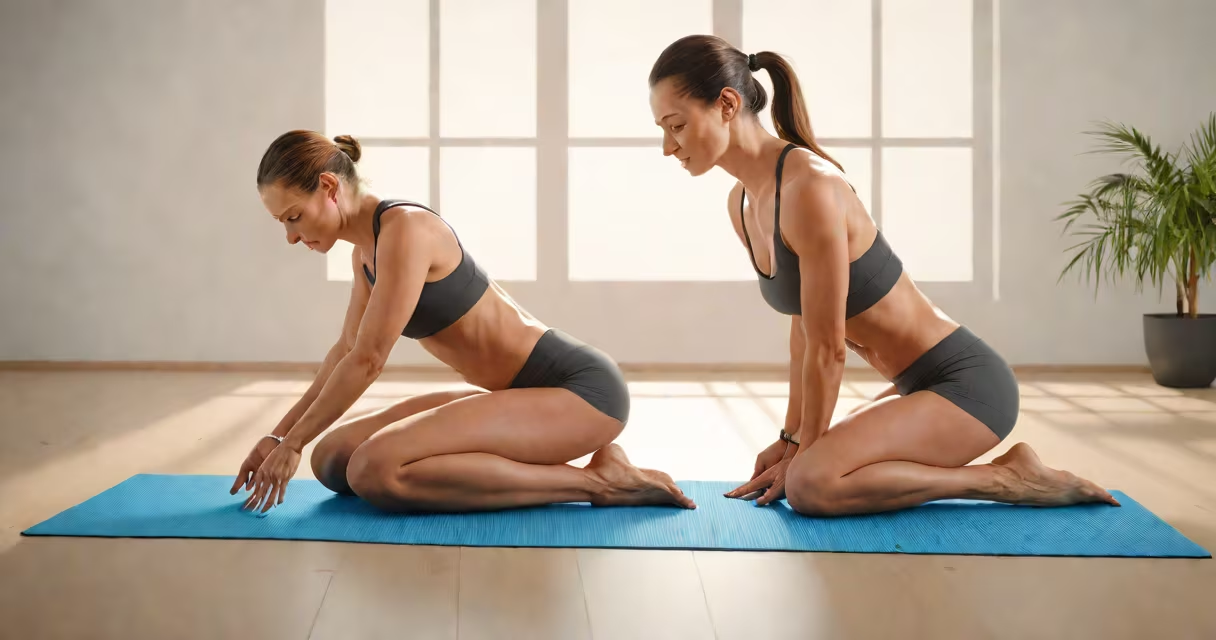
Lower belly exercise for women is a set of targeted movements designed to strengthen the transverse abdominis and rectus abdominis muscles beneath the navel, helping improve core stability and reduce visible lower abdominal bulge. These exercises focus on controlled contraction of deep abdominal muscles rather than spot reduction, which is biologically impossible.
Unlike general abdominal workouts, lower belly exercise for women emphasizes form, breath control, and neuromuscular activation. They're especially useful for addressing postpartum changes, hormonal shifts, and age-related muscle atrophy. A 2021 study in the Journal of Physical Therapy Science confirmed that consistent low-intensity core training improves abdominal muscle thickness and reduces waist circumference over 8 weeks.
These exercises don't burn fat from the lower belly alone. Fat loss occurs systemically through calorie deficit. But strengthening the lower abs enhances posture, supports pelvic floor health, and creates a flatter appearance when combined with fat reduction.
When you perform a lower belly exercise for women, you activate the transverse abdominis-the deepest layer of abdominal muscles. This muscle acts like a corset, pulling the abdomen inward during exhalation. Proper activation prevents lower back strain and improves internal organ support.
For example, the dead bug exercise requires lying on your back, arms extended toward the ceiling, knees bent at 90 degrees. You slowly lower one arm and opposite leg while maintaining a neutral spine. The goal is to keep the lower back pressed into the floor. This movement isolates the lower abs and trains motor control.
Research from the American Council on Exercise (ACE) shows that participants who performed dead bugs for 3 sets of 10 reps, 3 times weekly, improved core endurance by 40% in 6 weeks. The key is slow tempo-2 seconds down, 1 second hold, 2 seconds up-not speed or reps.
There are four primary lower belly exercise for women routines, each targeting different aspects of core function:
| Exercise | Primary Muscle Targeted | Best For | Reps/Sets |
|---|---|---|---|
| Heel taps | Transverse abdominis | Beginners, postpartum recovery | 15 per side, 2 sets |
| Seated knee lifts | Rectus abdominis (lower) | Core endurance, posture | 12-15, 3 sets |
| Dead bugs | Deep core stabilizers | Neuromuscular control, injury prevention | 10 per side, 3 sets |
| Plank with leg lift | Full core + glutes | Advanced strength, balance | 8 per side, 2 sets |
Heel taps involve lying on your back, knees bent, feet flat. You slowly lift one heel off the floor, keeping the lower back pressed down. This subtle movement activates the lower abs without straining the neck or hips.
Seated knee lifts are done sitting on the floor with legs extended. You bend one knee and bring it toward your chest while keeping the spine straight. This targets the lower rectus abdominis and improves coordination between the core and hip flexors.
Dead bugs are foundational. They prevent compensatory movement patterns common in people with weak cores. I've seen clients with chronic lower back pain improve after 4 weeks of dead bugs, even without changing diet or cardio.
Many assume that crunches or sit-ups eliminate lower belly fat. This is incorrect. Crunches engage the upper abs more and can increase intra-abdominal pressure, worsening diastasis recti-a separation of abdominal muscles often seen after pregnancy.
A 2020 review in the International Journal of Sports Medicine found that high-repetition crunches led to greater spinal loading than low-intensity core work. The study concluded that excessive crunching increases injury risk without improving fat loss.
Another myth: "I can target fat in my lower belly." Fat loss happens systemically. You cannot choose where fat is burned. A woman with 25% body fat loses fat from all areas simultaneously. Lower belly fat may be the last to go due to higher levels of alpha-adrenergic receptors, which resist fat breakdown.
However, strengthening the lower abs makes the area appear tighter and more defined. This visual improvement often motivates continued effort-even when scale weight doesn't change.
Consider Sarah, a 38-year-old mother of two who struggled with lower abdominal laxity after childbirth. She began a 6-week program using only seated knee lifts and dead bugs. She did 2 sets of 12 reps, 3 days per week, with 30 seconds rest between sets.
After 6 weeks, her waist measurement decreased from 34 inches to 31.5 inches. Her body fat percentage dropped from 31% to 28%. She reported better posture and less lower back discomfort during daily tasks.
She didn't do cardio or restrict calories. Her diet remained stable. The change came from improved muscle tone and reduced visceral fat, which is linked to metabolic health. Her doctor noted improved insulin sensitivity during follow-up testing.
This illustrates that lower belly exercise for women works best when paired with sustainable lifestyle habits. It's not a shortcut-it's a tool for long-term functional fitness.
Consistency matters more than intensity. Perform each lower belly exercise for women with proper form, not speed. Focus on the contraction, not the number of reps. Over time, this builds resilience, improves movement efficiency, and supports long-term health.