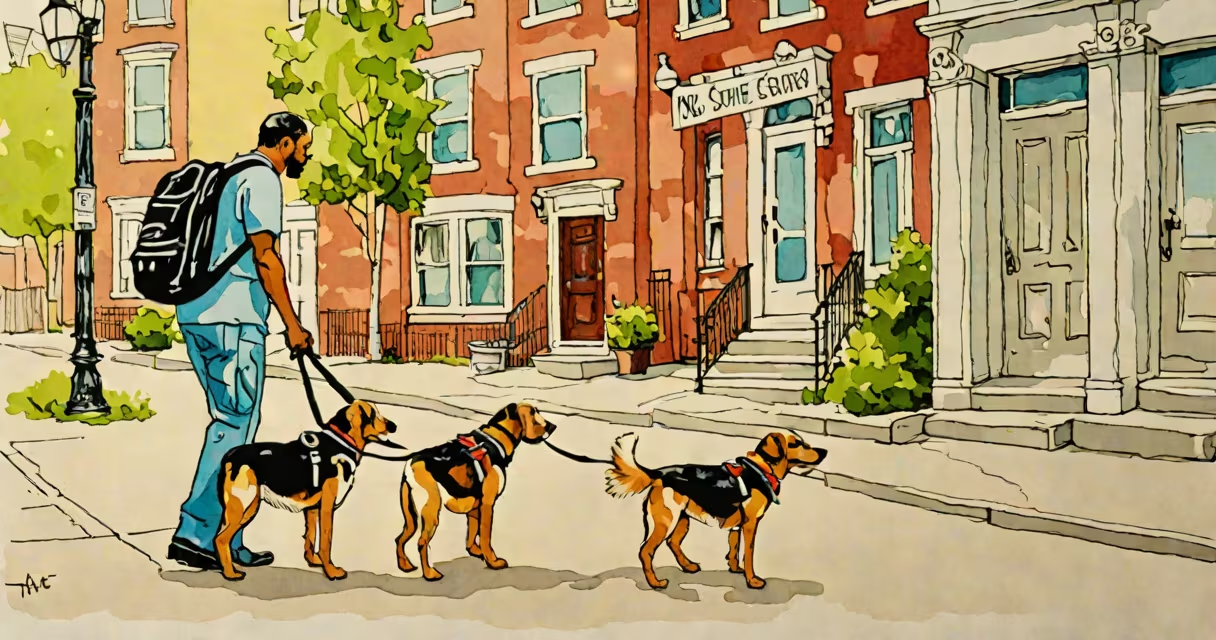
A service animal is a dog individually trained to perform tasks directly related to a person's disability, while an emotional support animal provides comfort through companionship but is not trained for specific tasks. Only service animals are granted public access rights under federal law.
Service animals are trained to assist with physical, sensory, psychiatric, or cognitive disabilities. They perform tasks such as guiding someone who is blind, alerting a person with hearing loss to sounds, retrieving dropped items, or interrupting self-harming behaviors in individuals with PTSD. Emotional support animals do not undergo task-specific training. Their role is to alleviate symptoms of mental health conditions through presence and companionship.
The Americans with Disabilities Act (ADA) defines a service animal as a dog that is trained to do work or perform tasks for an individual with a disability. The Department of Justice confirms that only dogs qualify under the ADA-no other animals, including cats, birds, or reptiles, meet the legal definition. Emotional support animals fall under different laws, primarily the Fair Housing Act (FHA), which allows them in rental housing regardless of pet policies.
The ADA governs public access rights for service animals. A service animal must be trained to perform a specific task that mitigates the handler's disability. For example, a dog may be trained to detect low blood sugar levels in a person with diabetes and alert them before a hypoglycemic episode occurs. The task must be directly related to the disability.
Emotional support animals are not covered by the ADA. They do not have automatic access to restaurants, stores, or public transportation. Instead, they are protected under the FHA, which permits reasonable accommodations in housing. Landlords must allow emotional support animals even in no-pet buildings if the tenant provides documentation from a licensed mental health professional stating the animal is necessary for their well-being.
Under the FHA, landlords cannot charge extra fees for emotional support animals, though they may require proof of the disability and the animal's therapeutic role. The U.S. Department of Housing and Urban Development (HUD) states that emotional support animals are not pets-they are medical aids. However, this protection applies only to housing, not public spaces.
| Feature | Service Animal | Emotional Support Animal |
|---|---|---|
| Legal Basis | ADA (Americans with Disabilities Act) | FHA (Fair Housing Act) |
| Public Access | Yes - businesses, transit, public venues | No - not permitted in most public places |
| Training Requirement | Task-specific training required | No formal training needed |
| Animal Types | Dogs only (per ADA) | Dogs, birds, rabbits, and other species (housing only) |
| Documentation Needed | None required by law | Letter from licensed mental health provider |
Many people assume emotional support animals have the same public access rights as service animals. This is false. A business owner can ask if a dog is a service animal, but only if the disability is not obvious. They may ask two questions: "Is the dog a service animal required because of a disability?" and "What work or task has the dog been trained to perform?" They cannot demand documentation or require the animal to wear a vest.
Some airlines still accept emotional support animals under outdated policies, but the Department of Transportation (DOT) ended this practice in 2021. Now, all animals traveling in the cabin must be pets under airline pet policies. Service animals remain exempt from pet fees and restrictions.
A common mistake is thinking that any animal can be a service animal if labeled as such. The ADA makes clear that only dogs (and in some cases miniature horses) qualify. A cat cannot be a service animal under federal law-even if it performs useful tasks. The law focuses on the animal's ability to perform specific, trained tasks, not on affection or emotional benefit.
In 2019, a woman with severe anxiety attempted to bring her emotional support parrot into a grocery store. The store staff refused entry. The woman later filed a complaint with HUD, which ruled that while she had the right to keep the bird in her apartment under the FHA, the store was not obligated to admit it. The decision reaffirmed that emotional support animals do not override public accommodation laws.
Another case involved a man with PTSD who used a service dog trained to detect panic attacks and apply pressure during episodes. He was denied boarding on a flight due to a misunderstanding by airline staff. After presenting his dog's certification and a letter from his therapist, he was allowed to travel. The DOT confirmed that service animals must be permitted on flights unless they pose a direct threat to safety.
I once observed a service dog in a coffee shop helping a customer with epilepsy. The dog lay beside the person's chair and alerted when the customer began to seize. The barista didn't interfere. The dog wore a use with a label: "Medical Alert Dog - Do Not Pet." This scene illustrates how service animals operate in public: unobtrusive, focused, and purpose-driven.
Most people confuse emotional support animals with therapy animals. Therapy animals are trained to provide comfort in settings like hospitals or schools. They are not assigned to a single individual and do not have public access rights. Emotional support animals are assigned to one person and serve a therapeutic role in private settings.
Even more subtle: a service animal is not a pet. It is a working animal with a job. Its behavior must be controlled and predictable. It must not distract or disrupt others. An emotional support animal may be affectionate, playful, or even disruptive-but it is not expected to behave professionally in public.
If you're considering either type, understand that training matters. A service animal requires months of specialized training. Emotional support animals don't need training, but their behavior still affects housing decisions. A landlord can deny a request if the animal causes damage or disturbs neighbors.