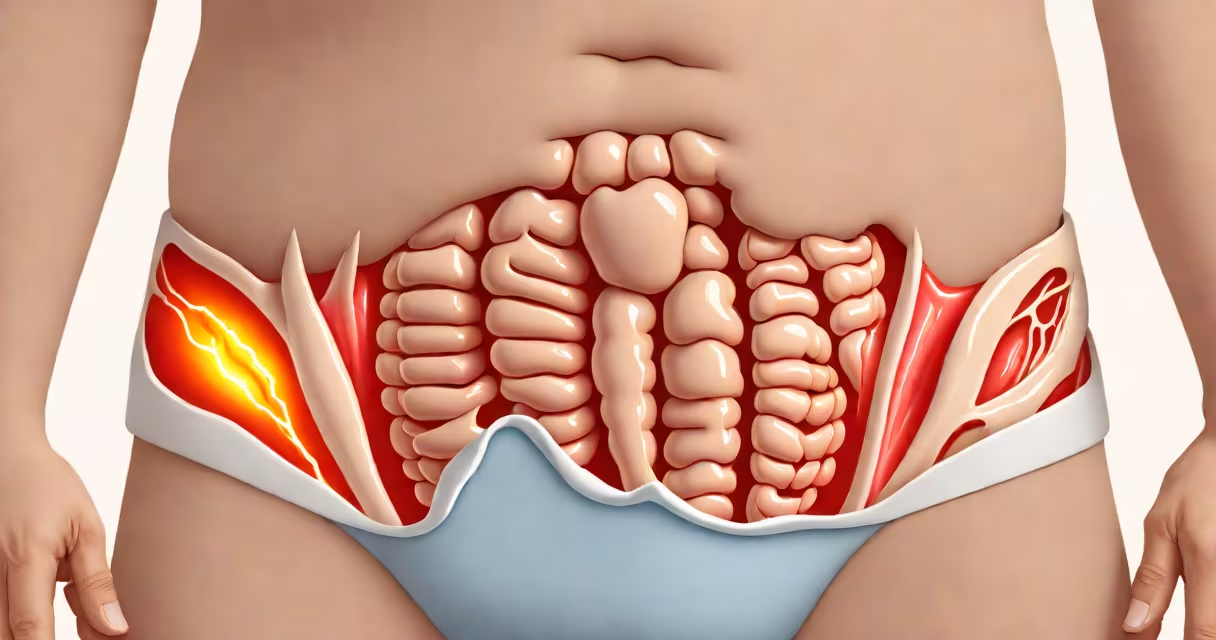
Pain in the lower part of the abdomen refers to discomfort or tenderness located between the navel and the pubic bone, often signaling issues in the intestines, reproductive organs, or urinary system. This region houses the sigmoid colon, rectum, lower small intestine, bladder, and in women, the uterus and ovaries.
Lower abdominal pain varies widely in intensity and quality-sharp, dull, cramping, or constant-and may come on suddenly or develop gradually. It's not a diagnosis but a symptom that points to underlying conditions ranging from mild gastrointestinal upset to serious medical emergencies.
According to the American College of Gastroenterology, approximately 15% of adults visiting primary care clinics report lower abdominal pain, with most cases resolving within days. However, persistent or worsening pain requires evaluation to rule out infections, inflammatory conditions, or structural problems.
The lower abdomen contains multiple organ systems that can independently cause pain. The digestive tract runs through this area, including the distal ileum, ascending and descending colon, and rectum. Irritation here leads to cramps, bloating, or changes in bowel habits.
In women, the pelvic organs-uterus, fallopian tubes, and ovaries-are central to lower abdominal pain. Conditions like endometriosis, ovarian cysts, or ectopic pregnancy often present with sharp, localized pain on one side. Men may experience pain due to testicular torsion or referred pain from the appendix or kidneys.
Urinary causes include cystitis (bladder infection) and kidney stones. A 2022 study in the Journal of Urology found that 37% of patients presenting with lower abdominal pain had urological origins, with flank pain radiating to the groin being a key indicator.
Lower abdominal pain falls into several categories based on origin:
| Type | Common Causes | Typical Pain Quality | Associated Signs |
|---|---|---|---|
| Gastrointestinal | IBS, diverticulitis, constipation, food poisoning | Crampy, intermittent | Bloating, diarrhea, constipation |
| Reproductive (female) | Menstrual cramps, endometriosis, PID, ovarian cyst rupture | Dull, sharp, cyclical | Irregular periods, abnormal discharge, pain during sex |
| Urological | Cystitis, kidney stones, ureteral obstruction | Sharp, radiating to groin | Frequent urination, blood in urine, fever |
| Abdominal wall | Strained muscles, hernias, nerve entrapment | Localized, worsens with movement | Tender spot, visible bulge (hernia) |
One non-obvious distinction: pain from a ruptured ovarian cyst is often sudden and severe, typically lasting hours to a day. It may mimic appendicitis but lacks rebound tenderness and fever. A 2021 case series in Obstetrics & Gynecology reported that 68% of women with ruptured cysts presented with unilateral lower quadrant pain and normal important signs.
Many assume lower abdominal pain stems from digestion, but it's frequently misattributed. For example, pelvic inflammatory disease (PID) often presents with vague lower abdominal pain and fatigue-symptoms easily dismissed as stress or gas. Yet PID affects 1 in 40 sexually active women under 25 and can lead to infertility if untreated.
Another common error: confusing menstrual cramps with endometriosis. While both involve cyclical pain, endometriosis causes pain that persists beyond menstruation and may worsen over time. The Endometriosis Foundation of America notes that diagnosis takes an average of 7.5 years due to symptom overlap with IBS.
I once evaluated a 28-year-old woman with chronic lower abdominal pain who had been told she had "spastic colon." After imaging revealed a 5 cm endometrioma, surgery removed the lesion and resolved her symptoms. Her pain wasn't functional-it was structural.
Not all lower abdominal pain requires urgent attention. But certain signs demand immediate evaluation:
Black stool with lower abdominal pain signals upper GI bleeding-a sign of ulcers or gastritis. Black stool and lower abdominal pain together require emergency evaluation due to risk of hemorrhage.
For women experiencing lower abdominal and groin pain, especially with swelling or heaviness, a gynecological cause such as a hernia or ovarian torsion may be involved. This combination warrants specialist assessment to avoid complications.
Healthcare providers begin with history and physical exam. They assess pain location, timing, radiation, and associated symptoms. Imaging like ultrasound or CT scan may follow if structural issues are suspected.
For persistent pain, a diagnostic laparoscopy can visualize pelvic organs and confirm endometriosis or adhesions. A 2020 review in the New England Journal of Medicine found that laparoscopy diagnosed endometriosis in 89% of symptomatic women who had normal ultrasounds.