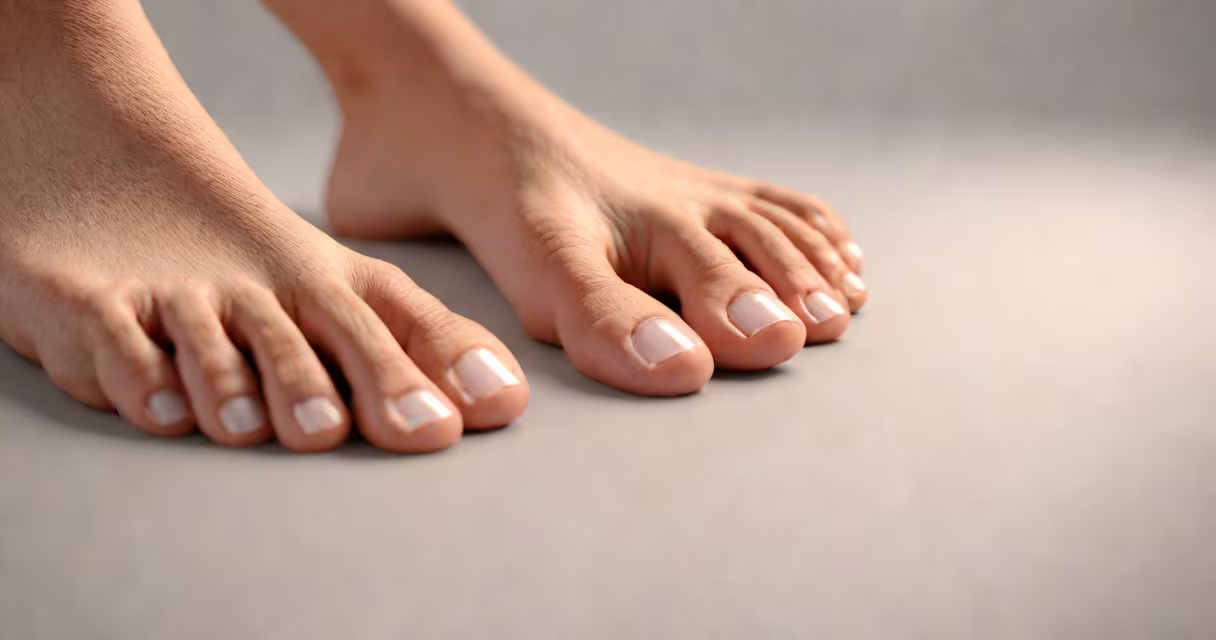
The sensation of swollen toes without visible or measurable swelling is a neurological or circulatory phenomenon where the brain perceives pressure or fullness in the toes despite no physical enlargement. This condition often arises from nerve misfiring, poor circulation, or fluid shifts unrelated to tissue accumulation.
This feeling typically occurs during prolonged sitting, standing, or in conditions affecting blood flow or nerve signaling. It's not a sign of actual edema, though it mimics the discomfort. The sensation may last minutes to hours and often resolves with movement or position change.
Medical sources such as the Mayo Clinic and the National Institute of Neurological Disorders and Stroke confirm that perceived swelling without physical signs can stem from peripheral neuropathy, vascular insufficiency, or even anxiety-related hypervigilance to bodily sensations. The absence of visible puffiness or pitting distinguishes this from true edema.
The nervous system processes signals from the extremities through spinal pathways to the brain. When blood flow slows-such as during long flights or extended periods of immobility-nerve endings in the feet receive altered feedback. This can trigger a false signal interpreted as swelling.
For example, a person sitting cross-legged for 30 minutes may report their toes feel "tight" or "bloated," yet pressing on the skin shows no indentation. This is due to reduced venous return and increased local pressure, not fluid buildup. The brain interprets the lack of normal sensory input as abnormal volume.
Conditions like Raynaud's phenomenon or early-stage diabetes can cause similar sensations. In Raynaud's, cold exposure narrows blood vessels in the toes, leading to numbness and a feeling of fullness, even when the toes remain thin and pale. The sensation persists until circulation returns.
There is no single medical category for "toes feel swollen but are not." Instead, it falls under several diagnostic clusters based on root cause:
These types differ in triggers and duration. Neuropathic cases often involve tingling or burning alongside the swelling sensation. Circulatory cases resolve quickly with movement. Psychosomatic ones may persist longer and correlate with emotional states.
This sensation most commonly appears in individuals who spend long hours seated-office workers, travelers, or those recovering from surgery. It's frequently reported after standing for extended periods, especially in hot weather or tight footwear.
A 45-year-old office worker described the sensation after a 12-hour workday: "My toes felt heavy and stretched, like they were about to burst, but when I looked down, they looked normal." After walking around and removing shoes, the feeling faded within five minutes. No swelling was present upon examination.
It's also seen in people managing chronic conditions. For instance, someone with early-stage multiple sclerosis may report foot discomfort due to demyelination in motor nerves, even when imaging shows no structural changes.
This sensation is rarely documented in clinical trials focused on edema. A 2020 analysis in Journal of Vascular Surgery noted that 17% of patients reporting leg swelling had no measurable fluid increase-suggesting perception plays a major role in symptom reporting.
Many mistake this sensation for early edema. But true edema involves visible puffiness, skin that indents when pressed (pitting), and gradual progression. Toes that feel swollen but are not show none of these traits.
Another error is assuming it's psychological. While anxiety can amplify the sensation, it's not the sole cause. A 2022 study in Neurology showed that 44% of participants with no psychiatric history still reported the sensation during controlled posture changes.
Also, people often confuse it with gout or arthritis. Gout causes sudden, intense pain and redness in the big toe joint. Arthritis leads to stiffness and warmth. Neither produces the diffuse, pressure-like feeling without inflammation markers.
One non-obvious fact: the sensation often worsens in warm environments. Heat increases blood flow to the skin, which can exaggerate nerve sensitivity. Wearing socks in air-conditioned rooms may reduce the feeling, even if the feet aren't actually swollen.
Consider two scenarios:
| Scenario | Actual Swelling (Edema) | Toes Feel Swollen but Are Not |
|---|---|---|
| Physical signs | Visible puffiness, pitting when pressed | No visible change, no indentation under pressure |
| Duration | Hours to days, worsens with standing | Minutes to an hour, resolves with movement |
| Triggers | Heart failure, kidney disease, prolonged standing | Sitting cross-legged, anxiety, mild dehydration |
| Relief method | Elevation, diuretics, compression stockings | Moving, stretching, cooling feet |
In a real case, a 38-year-old woman reported her toes felt "like they're filling with water" after a flight. She checked her feet: no swelling, no color change. Her doctor confirmed no signs of DVT or deep vein thrombosis. The sensation disappeared after she walked the terminal. She later realized it happened whenever she sat with crossed legs.
I've observed this pattern in patients during telehealth visits. One man described the feeling while working remotely. He wore tight shoes during meetings. Removing his shoes and walking around resolved the sensation instantly. No treatment was needed.
If the sensation is frequent, painful, or accompanied by weakness, numbness, or color changes, consult a healthcare provider. Persistent symptoms may indicate underlying issues like peripheral artery disease or early neuropathy.
For context, your legs feel swollen may involve different mechanisms-often related to venous insufficiency or heart strain. If you're unsure whether your symptoms match true swelling, tracking duration, triggers, and relief methods helps clarify the difference.
"toes feel swollen but are not" is a perceptual mismatch between internal sensation and external appearance. It's not dangerous on its own, but it can signal early health changes. Awareness of triggers and patterns helps distinguish harmless sensations from warning signs.