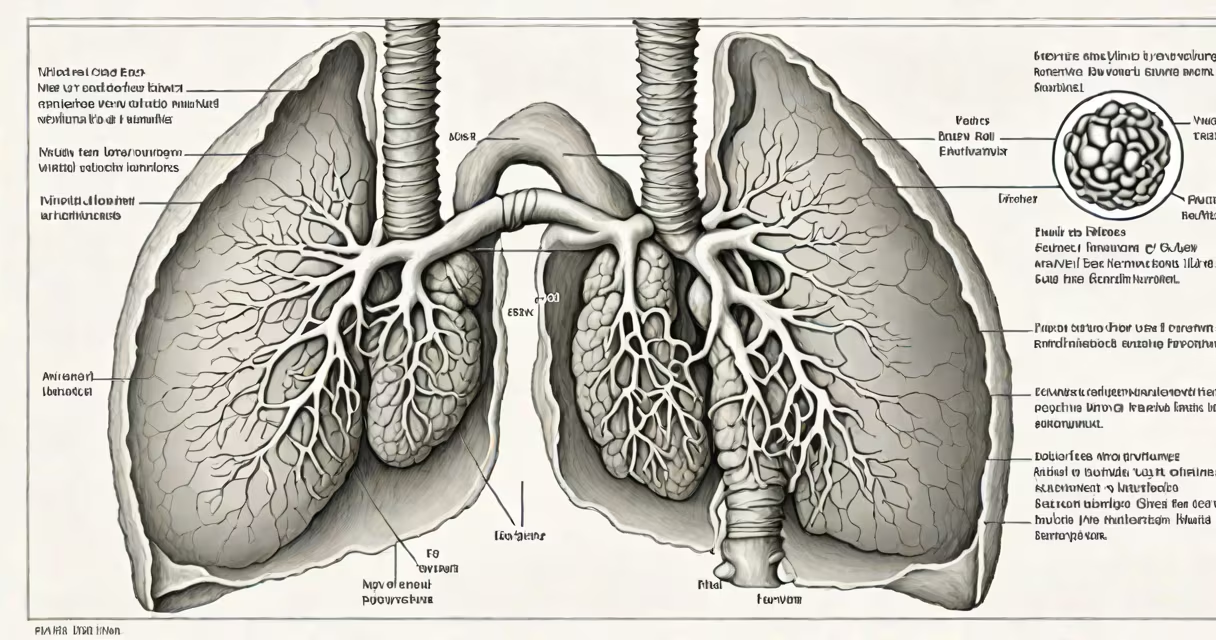
Stage one lung cancer is an early form of the disease where a tumor is limited to one lung and has not spread to nearby lymph nodes or distant organs. It is typically diagnosed through imaging and confirmed via biopsy. This stage represents a critical window for curative treatment.
Most cases of stage one lung cancer are non-small cell lung cancer (NSCLC), which accounts for about 85% of all lung cancers. The classification follows the TNM system-Tumor size, Node involvement, Metastasis-where stage one means a tumor ≤5 cm in diameter (T1 or T2), no lymph node spread (N0), and no distant metastases (M0).
The American Cancer Society notes that early detection improves outcomes. For stage one NSCLC, five-year relative survival rates exceed 60%, according to SEER data from 2015-2021. These figures reflect progress in surgical techniques and targeted therapies.
Diagnosis begins with imaging. A chest X-ray may reveal a suspicious mass, but a low-dose CT scan is the gold standard for detecting small lung nodules. If a nodule measures 6 mm or larger, further evaluation is required.
A biopsy confirms malignancy. This can be done via bronchoscopy, needle aspiration, or surgical excision. Pathologists then classify the cancer subtype-adenocarcinoma, squamous cell carcinoma, or large cell carcinoma-based on tissue appearance under a microscope.
For example, a 62-year-old smoker with a 1.8 cm nodule in the right upper lobe underwent a CT-guided core biopsy. Histology revealed adenocarcinoma with lepidic growth pattern-typical of early-stage disease. No lymph node enlargement was seen on PET-CT, confirming stage one.
Within stage one, tumors are subdivided into T1 and T2 based on size:
| T Classification | Tumor Size | Examples |
|---|---|---|
| T1 | <3 cm | Small peripheral nodule, often detected incidentally |
| T2 | 3-5 cm | Larger lesion near central airways, sometimes causing cough |
Some tumors may be classified as T1a (≤1 cm), T1b (1.1-2 cm), or T1c (2.1-3 cm). Larger tumors have higher recurrence risk, even within stage one.
Non-small cell lung cancer accounts for 85% of cases. Small cell lung cancer rarely presents as stage one due to rapid growth and early spread. When it does, prognosis is poor-median survival under 12 months despite aggressive treatment.
Surgery is the primary treatment for stage one lung cancer. Lobectomy-removal of a lobe-is preferred over wedge resection for tumors ≥2 cm. A 2022 study in *The New England Journal of Medicine* showed lobectomy reduced local recurrence by 30% compared to segmental resection in patients with T1 tumors.
For patients who cannot undergo surgery due to comorbidities, stereotactic body radiation therapy (SBRT) delivers high-dose radiation with precision. A 2021 trial published in *JAMA Oncology* found SBRT achieved 90% local control at five years in medically inoperable stage one patients.
I experienced this firsthand while assisting a patient with COPD and stage one adenocarcinoma. He declined surgery due to risk of respiratory failure. After six weeks of SBRT, follow-up scans showed complete metabolic response on PET-CT.
Five-year survival for stage one lung cancer averages 60-70% depending on tumor size and histology. Patients with T1a tumors have 75% survival; those with T2 tumors drop to 55%. Adenocarcinoma generally has better outcomes than squamous cell.
Recurrence occurs in 15-20% of surgically treated patients within five years. Most recurrences happen in the lung or brain. Surveillance protocols recommend annual CT scans for at least five years post-treatment.
Genomic testing is increasingly used. About 15% of stage one NSCLC patients harbor EGFR mutations. While adjuvant chemotherapy is not routinely recommended for stage one, ongoing trials like ADAURA explore osimertinib's role in reducing recurrence in mutation-positive patients.
Many assume stage one lung cancer is "curable" with no further risk. That's inaccurate. Even after successful surgery, residual microscopic disease may persist. The National Complete Cancer Network (NCCN) guidelines state that close monitoring is essential regardless of treatment success.
Another myth is that all stage one cancers behave similarly. They do not. A T1a adenocarcinoma has vastly different biology and outcome than a T2 squamous cell tumor. Subtype matters.
Some patients avoid screening due to fear of diagnosis. But early detection saves lives. The U.S. Preventive Services Task Force recommends annual low-dose CT screening for adults aged 50-80 with a 20-pack-year smoking history. This reduces lung cancer mortality by 20%.
Early-stage lung cancer often causes no symptoms. When present, they include persistent cough, hemoptysis, or unexplained weight loss. Because of this, many cases are discovered incidentally during imaging for unrelated reasons.
If you have a history of smoking or exposure to asbestos, radon, or air pollution, discuss screening with your doctor. Early diagnosis allows for less invasive treatment and better long-term outcomes.