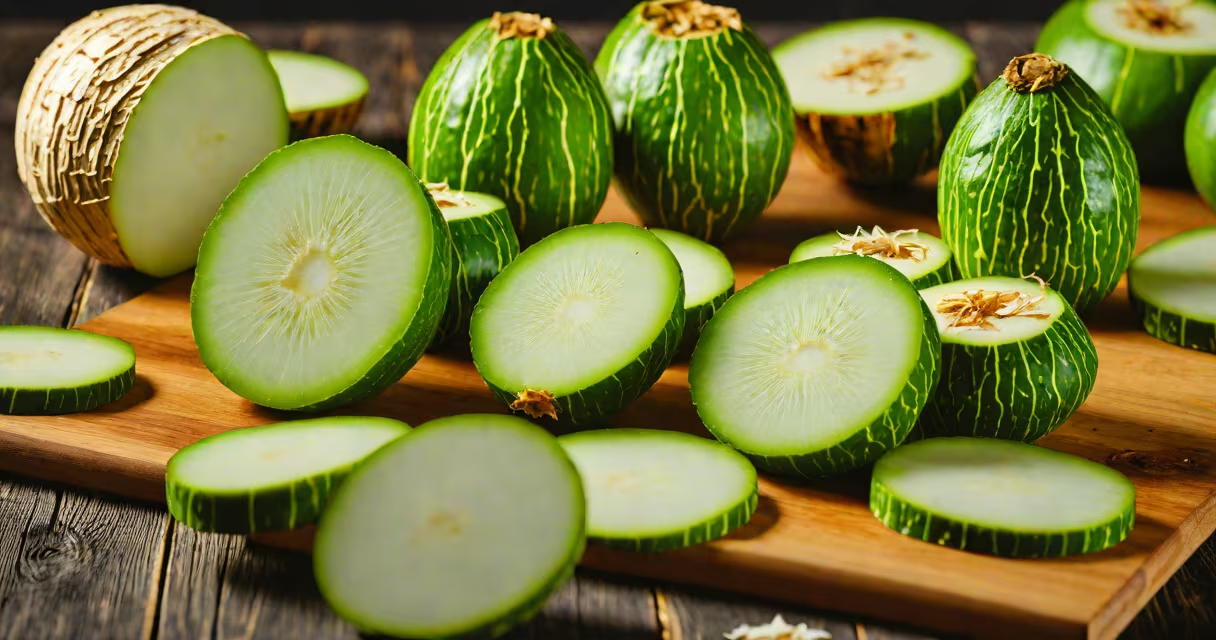
Singkamas is the Filipino name for jicama, a starchy, crisp root vegetable native to Mexico and Central America. It has a mild, slightly sweet flavor and is often eaten raw in salads or sliced as a snack.
Jicama belongs to the legume family, like peas and beans, and grows underground. Its thick, brownish skin protects the pale white flesh inside, which stays firm and juicy even when cut. It's commonly used in Filipino dishes such as *sinigang* and *kinilaw*, where it adds texture and freshness.
The name "jicama" comes from the Nahuatl word *xīcāmātli*, meaning "sweet potato." Despite the similarity in taste and appearance to potatoes, jicama is not related to them. It contains about 6 grams of carbohydrates per 100 grams, mostly in the form of resistant starch, which supports gut health.
Jicama's high water content (about 88%) and low calorie count make it ideal for hydration-focused diets. A 100-gram serving provides 38 calories, 1 gram of protein, and 8 grams of fiber. It's rich in vitamin C - one cup offers nearly 30% of the daily recommended intake.
Resistant starch in jicama acts as a prebiotic, feeding beneficial gut bacteria. According to the USDA, jicama contains no cholesterol and minimal sodium, making it heart-friendly. It's also low on the glycemic index (around 15), which helps maintain stable blood sugar levels.
When cooked, jicama softens and takes on a nutty flavor. It can be roasted, stir-fried, or added to soups. However, eating it raw preserves most of its nutrients and crunch. Always peel the skin before consuming - the outer layer contains a compound called rotenone, which is toxic in large amounts.
While most jicama sold in U.S. supermarkets is the *Pachyrhizus erosus* variety, regional differences exist. In the Philippines, farmers grow smaller, rounder versions compared to the larger, oblong ones found in Latin America.
| Type | Size | Flavor Profile | Common Use |
|---|---|---|---|
| Standard Jicama | 8-12 inches long | Mildly sweet, crisp | Salads, snacks, salsas |
| Small Filipino Singkamas | 4-6 inches diameter | More intense sweetness | Raw in kinilaw, pickled |
| Red-Fleshed Jicama | Varies | Richer, earthier notes | Roasted, baked |
Red-fleshed jicama is less common but increasingly available in specialty markets. It has higher antioxidant levels due to anthocyanins in the flesh, giving it a deeper color and slightly different taste profile.
In Filipino cuisine, singkamas is a staple in *pulot*, a dish where raw vegetables are served with vinegar, fish sauce, and chili. It's also used in *ensalada de jicama*, a salad with mango, cucumber, and lime juice. These combinations show its refreshing quality.
Latin American recipes feature jicama in *aguacates con jicama*, a fruit and vegetable medley served chilled. In Mexican street food, it appears in *tacos de jicama*, paired with grilled meats and fresh cilantro.
A non-obvious fact: jicama is not a root vegetable in the botanical sense. It's actually a tuberous root, formed from modified stem tissue. This distinction matters because tubers like jicama store energy differently than true roots like carrots or turnips.
Many people mistake jicama for yuca (cassava), daikon radish, or even water chestnuts. All four have white flesh and crunchy texture, but their origins and nutritional profiles differ.
Yuca is starchy and must be boiled or fried to remove cyanogenic glycosides. Daikon is a member of the brassica family and tastes sharp and peppery. Water chestnuts are aquatic plants with a hollow interior and a distinct crunch.
One study published in the Journal of Agricultural and Food Chemistry found that jicama contains higher levels of inulin than most root vegetables. Inulin is a soluble fiber that promotes healthy digestion and may improve insulin sensitivity. This makes jicama especially valuable for people managing prediabetes.
I once prepared a batch of jicama slaw for a family dinner using a recipe from my grandmother's *kitchen journal*. I peeled and sliced it into matchsticks, then mixed it with red onion, lime juice, and a pinch of salt. The result was crisp, tangy, and satisfying - a dish that lasted through multiple servings and sparked conversation about traditional ingredients.
Understanding the English equivalent of singkamas - jicama - opens access to global recipes, nutrition data, and culinary experimentation. exploring Latin American flavors, knowing this term ensures accurate ingredient selection.