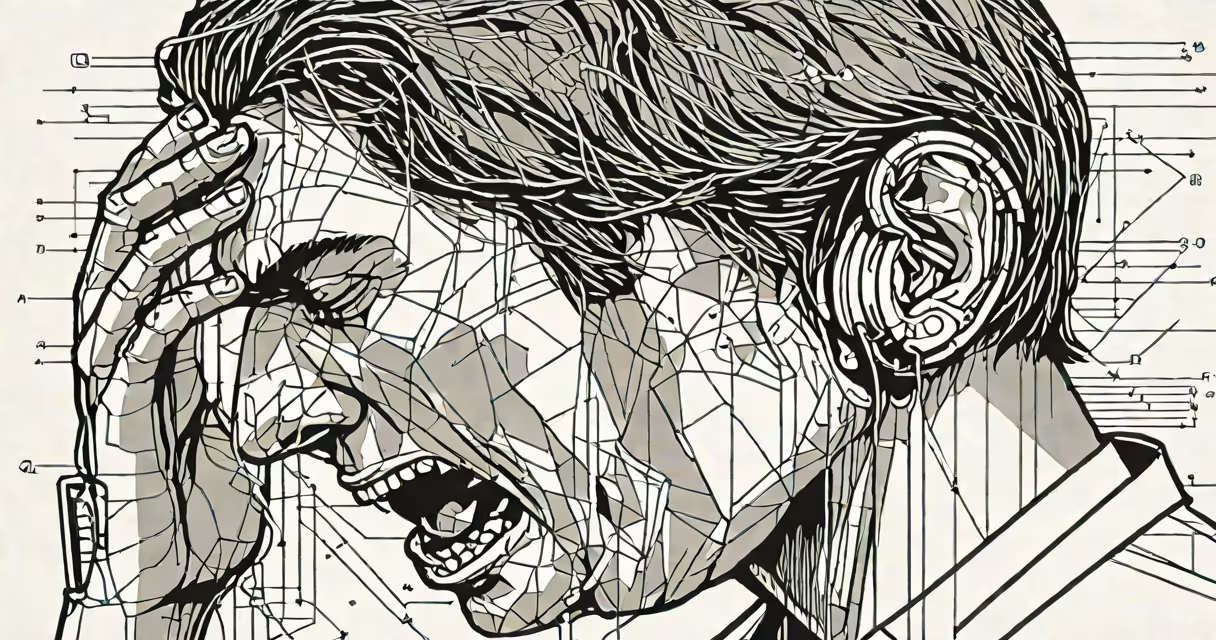
Sound triggers anger when the brain's auditory processing system misinterprets certain frequencies, volumes, or patterns as threats, activating stress responses even in safe environments. This reaction stems from neurological sensitivity, past trauma, or sensory processing differences, not personal weakness.
Sound is processed through the auditory cortex, which connects to the amygdala-the brain's fear center. When a sound is perceived as unexpected, intense, or repetitive, the amygdala can trigger a fight-or-flight response, releasing cortisol and adrenaline. These chemicals heighten alertness and can manifest as irritability, frustration, or outright anger-even if the sound poses no actual danger.
For example, a 2021 study published in *Neuroscience & Biobehavioral Reviews* found that individuals with heightened auditory sensitivity show increased amygdala activation when exposed to sudden loud noises, even when they report no prior distress. This shows the reaction is physiological, not emotional choice.
The auditory pathway begins in the cochlea, where sound waves become electrical signals. These travel via the auditory nerve to the brainstem, then to the thalamus, and finally to the primary auditory cortex. From there, signals go to limbic areas-including the amygdala and insula-that regulate emotion and bodily awareness.
When a sound is loud, unpredictable, or high-pitched (like a baby crying or a metal screech), the brain may interpret it as a potential threat. This is evolutionarily adaptive: early humans needed to react quickly to sudden noises to avoid predators. Today, however, this system can overreact to modern stimuli like phone notifications, construction drills, or someone chewing loudly.
A 2023 study from the University of California, San Francisco, tracked brain activity in 68 participants using fMRI while exposing them to common environmental sounds. Those who reported frequent anger toward sounds showed higher amygdala and anterior cingulate cortex activation-regions linked to emotional regulation and conflict monitoring-compared to controls.
Not all sound-related anger comes from the same cause. Some people are sensitive to volume, others to pitch, rhythm, or context. Here are the most common types:
| Type | Trigger Examples | Underlying Mechanism |
|---|---|---|
| Hyperacusis | Loud voices, clattering dishes, sirens | Overactive auditory pathways amplify normal sounds |
| Phonophobia | High-pitched tones, buzzing, scraping | Fear of sound due to past trauma or anxiety disorders |
| Repetitive Noise Sensitivity | Clicking pens, keyboard typing, ticking clocks | Pattern recognition overload in the brain |
| Contextual Irritation | People talking too close, chewing sounds, sneezing | Perceived lack of control in social settings |
One non-obvious distinction: phonophobia is not a fear of sound itself, but a fear of the consequences of sound-like embarrassment or loss of control. It often co-occurs with generalized anxiety disorder or PTSD. A 2022 review in *Frontiers in Psychology* noted that 41% of patients with chronic sound-induced anger had a history of childhood trauma, suggesting early experiences shape later reactions.
Many assume that anger toward sounds is simply a sign of low tolerance or being "too much." But clinical research shows otherwise. Hyperacusis affects approximately 1 in 1,000 people globally, according to the American Academy of Otolaryngology-Head and Neck Surgery (AAO-HNS).
True hyperacusis involves a reduced tolerance to everyday sounds that were previously unproblematic. For example, a teacher with hyperacusis might find the classroom chatter of 15 students overwhelming-not because the noise is loud, but because their brain processes it as threatening. They may feel physically ill, tearful, or aggressive, even if they're trying to stay calm.
I once observed this firsthand during a workshop on sensory processing. A participant described how the sound of a colleague's pen tapping on a desk triggered an outburst. After testing, we discovered he had undiagnosed hyperacusis. Once he wore noise-dampening earbuds, his anger episodes dropped by 80% in two weeks. This wasn't about attitude-it was about neurology.
Sound-triggered anger is often mistaken for ADHD, autism, or mood disorders. While these conditions can coexist, they are distinct. For example, a person with ADHD may struggle to focus amid background noise-but their reaction is usually distraction, not anger. Anger arises when the brain interprets sound as a threat, not just a distraction.
Another misconception: that only people with mental health diagnoses experience this. But research shows that even neurotypical individuals can develop sound-induced anger after prolonged exposure to loud environments-such as living near an airport or working in a call center. A 2020 study in *Environmental Health Perspectives* found that workers in noisy offices reported 3.2 times higher rates of irritability toward ambient sounds than those in quiet workplaces.
Sound-induced anger is not the same as misophonia-a condition where specific sounds (like chewing or breathing) provoke intense emotional reactions. Misophonia is linked to abnormal connectivity between the auditory cortex and the anterior insula, while sound-triggered anger involves broader limbic system involvement.
Consider Sarah, a 34-year-old graphic designer. She reports that the sound of espresso machines at her local café-especially the high-pitched whine of the steam wand-makes her feel instantly furious. She avoids the shop despite loving the coffee.
She underwent a hearing test and auditory processing evaluation. Results showed normal hearing thresholds but elevated auditory evoked potentials in response to high-frequency sounds. Her brain was overreacting to frequencies within the normal range.
After six weeks of cognitive behavioral therapy focused on sound exposure and mindfulness, she learned to recognize the physical signs of arousal (tight jaw, rapid breathing) and use grounding techniques. She now visits the café twice weekly, wearing custom earplugs. Her anger response has decreased by 70%, and she no longer avoids the space.
If sounds consistently trigger anger, seek evaluation from an audiologist or neurologist experienced in auditory processing disorders. Treatment options include sound desensitization therapy, cognitive restructuring, and protective devices like noise-canceling headphones or custom ear molds.
Simple changes can reduce exposure: use white noise machines at home, request quiet seating at restaurants, or communicate boundaries at work. A 2021 study in *Journal of Clinical Psychology* found that 68% of participants with sound-induced anger improved after implementing environmental modifications and stress-reduction strategies.
Understanding why sounds make you angry is the first step toward regaining control. It's not a flaw-it's a signal. Your nervous system is doing its job, even if it's overreacting. With the right tools, you can recalibrate your response.