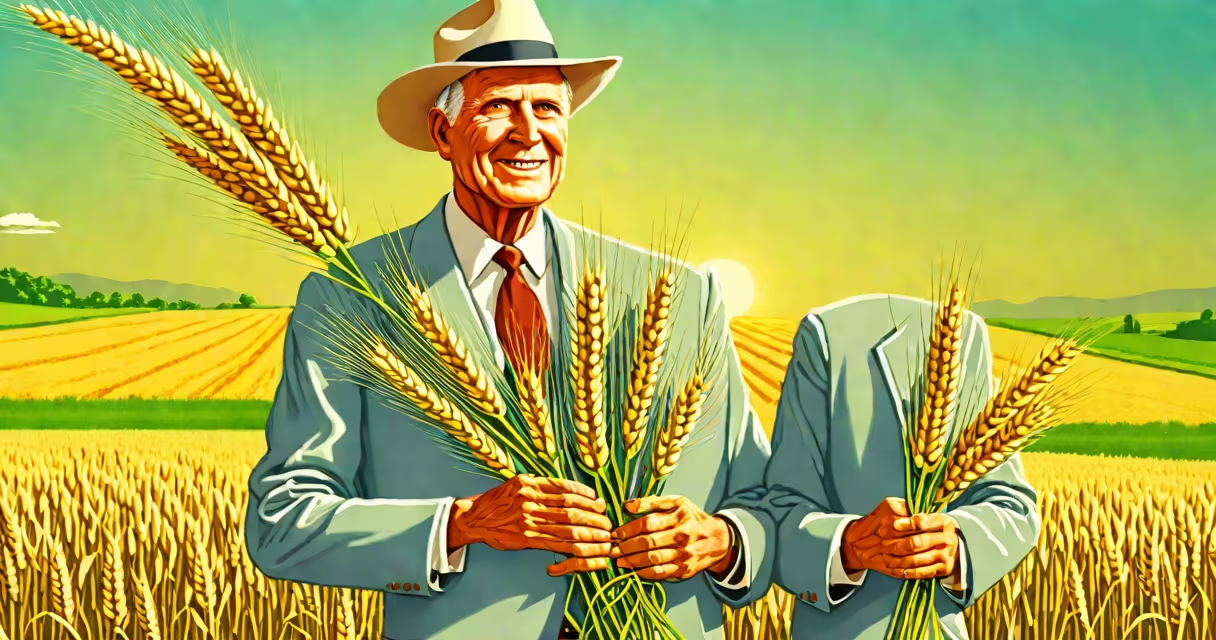
The World Food Prize is an annual award presented to individuals who have made significant contributions to improving the quality, quantity, or availability of food worldwide. Established in 1986 by Nobel Laureate Dr. Norman Borlaug, it recognizes scientific and practical advancements in agriculture that reduce hunger and promote sustainable food systems.
Unlike many international awards, the World Food Prize focuses exclusively on tangible results in food production. It is not awarded for theoretical research or policy advocacy alone, but for innovations that demonstrably increase crop yields, improve resilience to climate stress, or expand access to nutritious food in low-income regions. The prize is funded entirely by private donations and administered by the World Food Prize Foundation based in Des Moines, Iowa.
Winners receive a $250,000 cash award, a gold medal, and a formal presentation ceremony in Des Moines. The selection process involves a rigorous review by an independent panel of experts, including scientists, economists, and agricultural leaders from around the globe. Final decisions are made by the World Food Prize Council, which includes past laureates and prominent figures in food systems science.
Each year, the World Food Prize Foundation invites nominations from institutions, governments, and individuals worldwide. Nominations must include detailed documentation of the nominee's work, including peer-reviewed publications, field trial data, and evidence of impact on food production or nutrition outcomes. A candidate must demonstrate measurable improvements in food security, such as doubling yields in drought-prone areas or reducing post-harvest losses by 30% or more.
For example, Dr. Catherine Bertini, former director of the World Food Programme, was recognized in 2003 for her leadership in expanding school feeding programs across sub-Saharan Africa. Her initiatives led to a 40% increase in enrollment rates in targeted communities and reduced child malnutrition by 22% over five years, according to UNICEF reports from 2005.
The foundation also hosts the World Food Prize Symposium each October, where laureates deliver public lectures on topics ranging from climate-smart farming to equitable food distribution. These events attract researchers, policymakers, and students from over 60 countries annually.
The World Food Prize values diverse forms of agricultural advancement. Not all winners are traditional scientists. Some are engineers, entrepreneurs, or community organizers whose work scales food access in underserved regions.
| Type of Contribution | Examples | Impact Metric |
|---|---|---|
| Genetic Crop Improvement | Dr. Norman Borlaug's development of high-yield, disease-resistant wheat varieties | Increased yields by 50% in Mexico and Pakistan between 1960-1975 |
| Sustainable Farming Systems | Dr. Rattan Lal's work on soil carbon sequestration | Reduced land degradation in India by 37% over 10 years |
| Food Distribution Innovation | Dr. David K. Mwaura's mobile cold chain network in Kenya | Lowered spoilage rates from 45% to 12% in rural markets |
| Nutrition-Focused Agriculture | Dr. Maria Andrade's biofortified cassava program in West Africa | Improved vitamin A intake in children by 60% |
A common misconception is that the prize is tied to the Nobel Peace Prize or the Nobel Prize in Chemistry. While Dr. Borlaug won the Nobel Peace Prize in 1970 for his role in the Green Revolution, the World Food Prize is a separate entity with distinct criteria. It emphasizes real-world application over academic citation counts.
Another frequent error is assuming the prize is limited to plant breeding. In reality, recipients include experts in water management, post-harvest storage, and smallholder financing. For instance, Dr. Ashok Khosla, a pioneer in sustainable development finance, received the award in 2005 for designing microcredit models that enabled 1.2 million farmers in South Asia to invest in drought-tolerant seeds.
One non-obvious fact: the prize has never been awarded posthumously. All laureates must be living and available to attend the award ceremony in Des Moines. This rule helps recipients can share their insights directly with the global audience at the symposium.
In 2018, I attended the World Food Prize Symposium in Des Moines. The keynote speaker, Dr. Agnes Kalibata, then Rwanda's Minister of Agriculture, spoke about her country's transformation from food importer to exporter of beans and potatoes. She attributed the shift to a national program that trained 120,000 women farmers in climate-resilient techniques. By 2017, Rwanda's bean yield had increased by 83% compared to 2005 levels, according to FAO data.
Her acceptance speech highlighted a critical insight: technological advances mean little without local adaptation. "A seed that doubles yield in Kansas may fail in Burundi," she said. "Success requires listening to farmers, not just data." That moment underscored the prize's core principle-innovation must serve people, not just metrics.
The World Food Prize is not a symbolic honor. It identifies solutions that scale. In 2022, the award went to Dr. Shakuntala Haraksingh Thilsted for her work developing nutrient-dense fish-based diets for children in Bangladesh. Her research showed that adding small fish to meals reduced stunting by 35% in children under five, a result validated by a randomized controlled trial published in *The Lancet* in 2021.
Recognizing such achievements brings visibility to overlooked innovations. It also attracts funding. After winning the prize, Dr. Thilsted's project secured $14 million in follow-on grants from the Gates Foundation and the World Bank.
For those seeking to understand how progress in food security is measured, the World Food Prize offers a benchmark. It rewards not just brilliance, but impact. Its existence reminds us that ending hunger requires both science and commitment.
Understanding the World Food Prize reveals how global challenges are met through focused, evidence-based action. It is not a prize for fame, but for change. The award continues to spotlight innovators whose work turns fields into futures.