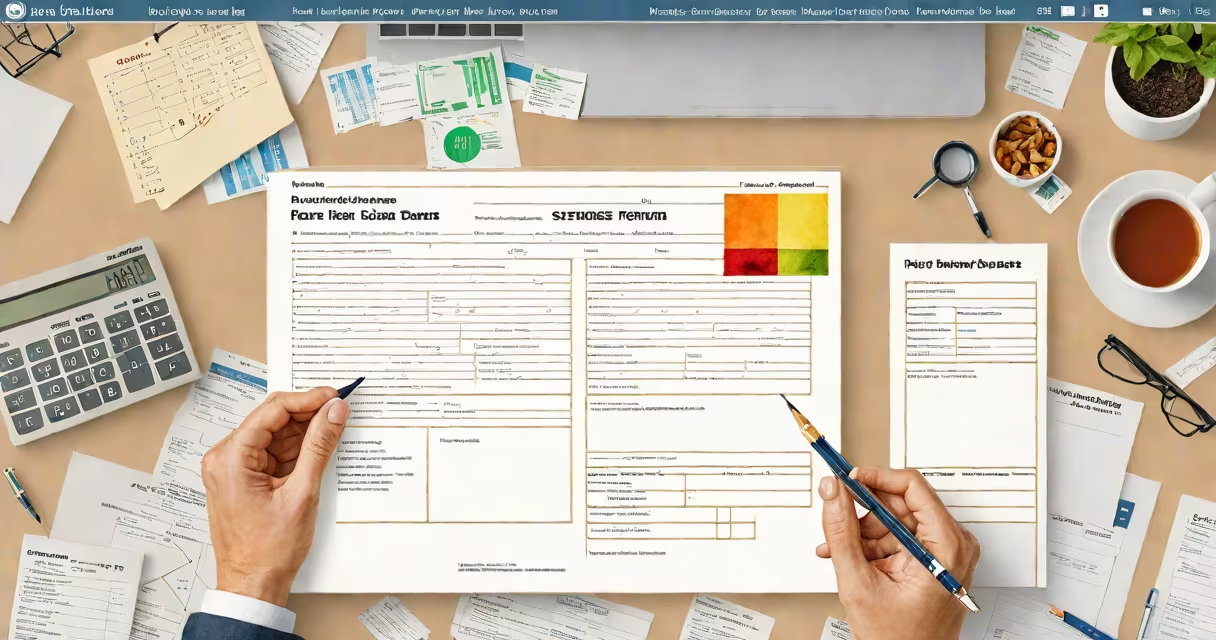
Filing business taxes online means submitting your federal tax return electronically through the IRS's e-File system using certified software or a tax professional. This process applies to sole proprietors, partnerships, S corporations, and LLCs that report income on Form 1040 Schedule C, Form 1065, or Form 1120S.
The IRS requires electronic filing for most business returns filed with a tax preparer or software provider. You can file directly via the IRS's Free File program if your income is under $73,000, or use paid platforms like TurboTax Business, H&R Block, or TaxAct. All filings must include accurate information on income, deductions, and estimated taxes.
For most small businesses, the primary form is Schedule C (Form 1040), which reports net profit or loss from self-employment. Other entities may use Form 1065 (partnerships), Form 1120 (C corporations), or Form 1120S (S corporations). Each form has specific data fields and reporting requirements tied to the business structure.
Online business tax filing begins with gathering documentation: income records, expense receipts, depreciation schedules, and prior-year tax forms. You'll need your Social Security Number (SSN) or Employer Identification Number (EIN), along with bank account details for refunds or payments.
Once you have the data, select a tax preparation platform. Free File tools allow direct submission to the IRS with no fee. Paid services offer guided workflows, error checks, and audit support. After entering data, the software validates the return against IRS rules before sending it.
The IRS confirms receipt within 24 hours. If approved, the system sends a confirmation email. Refunds typically arrive in 21 days if direct deposit is selected. Late filings incur penalties: 5% monthly interest on unpaid taxes, up to 25%, plus failure-to-file fees.
Businesses file different forms based on their legal structure. Sole proprietors use Schedule C attached to Form 1040. Partnerships file Form 1065 and issue K-1s to partners. S corporations file Form 1120S, and C corporations file Form 1120.
| Business Type | Primary Form | Deadline | Required EIN? |
|---|---|---|---|
| Sole Proprietorship | Schedule C (Form 1040) | April 15 | Yes |
| Partnership | Form 1065 | March 15 | Yes |
| S Corporation | Form 1120S | March 15 | Yes |
| C Corporation | Form 1120 | April 15 | Yes |
LLCs default to pass-through taxation unless they elect otherwise. A single-member LLC files as a sole proprietor using Schedule C. A multi-member LLC files as a partnership using Form 1065. Electing corporate status changes the filing requirement to Form 1120.
One frequent error is misclassifying workers. Independent contractors must receive Form 1099-NEC if paid $600 or more. Employing staff requires payroll taxes, Form 941, and quarterly deposits. Failing to report these leads to IRS audits and penalties.
Another mistake is claiming home office deductions without proper documentation. The IRS requires a dedicated space used exclusively for business. You can calculate the deduction using either the simplified method ($5 per square foot, max 300 sq ft) or actual expenses. Using the wrong method reduces accuracy and increases audit risk.
A non-obvious correction: many filers assume they can use personal bank accounts for business transactions. This blurs liability lines and complicates recordkeeping. The IRS treats commingled funds as unreported income. Separating accounts improves audit defense and supports deductions.
Jessica runs a freelance graphic design business under her SSN. She earned $42,000 in 2023, spent $8,200 on software, $3,100 on supplies, and $2,400 on internet and phone. Her home office occupies 120 sq ft of a 1,200 sq ft house.
She uses TurboTax Business to file. The software prompts her to enter income, then guides her through deductions. For the home office, she selects the simplified method: $5 × 120 = $600. She inputs all receipts and uploads scanned copies.
After reviewing, the software calculates her net profit: $42,000 − $8,200 − $3,100 − $2,400 − $600 = $27,700. The program adds self-employment tax (15.3% on $27,700 = $4,238.10) and federal income tax based on her filing status. She opts for direct deposit and submits the return via IRS e-File.
She receives confirmation in 18 hours. Her refund arrives in 14 days. The IRS later flagged no issues. Had she used personal funds for equipment, the IRS might have questioned the legitimacy of the deduction.
Any individual or entity with a valid SSN or EIN can file business taxes online. The IRS allows electronic submission for all business structures except those filing Form 1040-NR (nonresident aliens).
Self-employed individuals, freelancers, and small business owners qualify. Corporations and partnerships must use a licensed preparer or certified software. The IRS maintains a list of approved e-File providers on its website.
When in doubt, consult who can file taxes based on income level and filing status. If your business has employees, you must also file state payroll taxes and submit W-2s by January 31.
Always keep digital backups of your return, supporting documents, and confirmation emails. Use encrypted storage or cloud services with two-factor authentication. Avoid public Wi-Fi when uploading sensitive data.
Set calendar reminders for deadlines. The IRS extends the deadline to June 15 for military personnel deployed overseas. For others, extensions require Form 4868 and payment of estimated taxes by April 15.
I've personally filed my own business taxes online for five years using H&R Block. The software caught a missing deduction on home internet usage-$320 saved after correction. It also flagged a duplicate entry on a software subscription, preventing an overstatement of expenses.
Using certified software ensures your return meets IRS standards. Always verify the software's e-File certification through the IRS website. Unauthorized tools may delay processing or trigger rejection.
Understanding how to file business taxes online prevents penalties, maximizes deductions, and keeps your business compliant. Follow the steps, maintain records, and use trusted tools to complete the process accurately and efficiently.