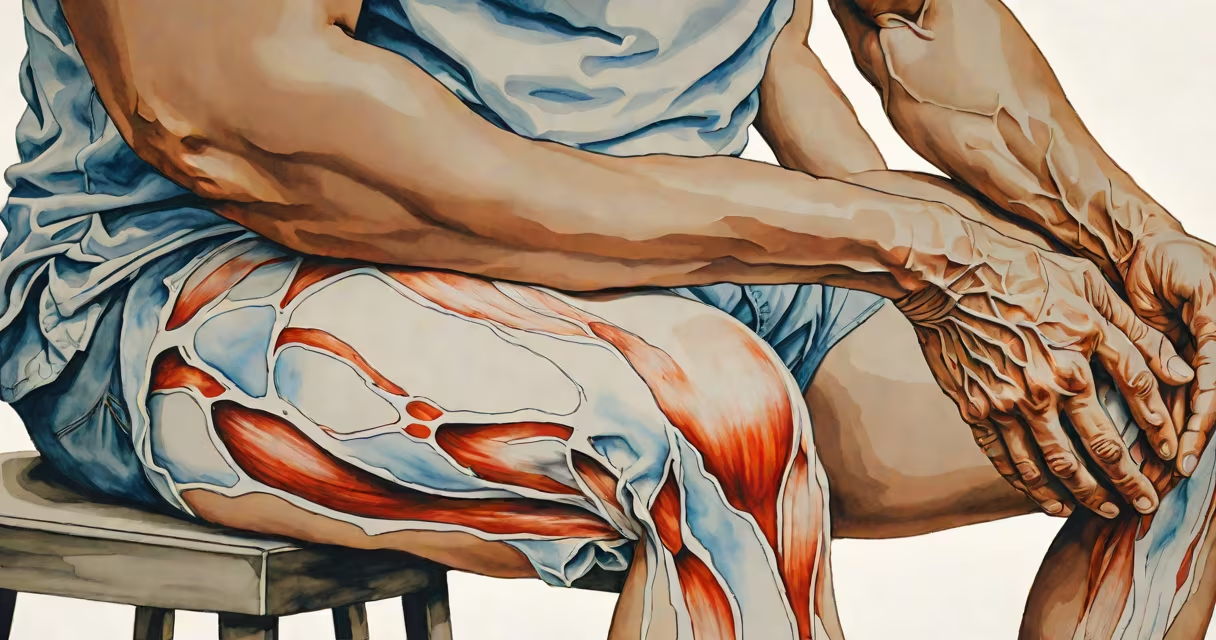
Muscle pain around the hip joint arises from strain, overuse, or imbalance in the muscles surrounding the hip, including the glutes, hip flexors, and adductors. It often feels like a dull ache, tightness, or sharp twinge during movement and may worsen with prolonged sitting or standing.
This pain typically originates in soft tissues rather than the joint itself. Common triggers include sudden movements, repetitive activities like running or cycling, poor posture, or muscle imbalances from uneven training. Unlike joint-related issues such as arthritis, muscle pain usually resolves with rest, stretching, and targeted strengthening.
The condition is distinct from true hip joint pain, which involves the ball-and-socket structure and may cause stiffness or clicking. Muscle pain around the hip joint rarely causes locking or instability. Misdiagnosis is common-many people assume hip pain is due to the joint when it's actually muscular. According to the American Academy of Orthopaedic Surgeons, over 80% of hip pain cases stem from soft tissue issues, not joint pathology.
The primary muscles involved in hip stability and movement include the gluteus medius, iliopsoas, tensor fasciae latae, and the adductor group. These muscles control hip flexion, extension, abduction, and rotation. When one becomes tight or weak, others compensate, leading to strain and pain.
For example, tight hip flexors from prolonged sitting pull the pelvis forward, increasing stress on the gluteus medius. This imbalance can cause a condition known as "gluteal amnesia," where the glutes fail to activate properly during walking or squats. Over time, this leads to overuse of secondary muscles, resulting in localized pain near the hip crease or outer hip.
A 2022 study published in the Journal of Orthopaedic & Sports Physical Therapy found that 67% of runners reporting lateral hip pain had no structural joint abnormalities. Instead, they showed reduced activation in the gluteus medius and increased activity in the tensor fasciae latae-a classic sign of muscular compensation.
Not all muscle pain around the hip joint is the same. Different patterns point to different underlying causes:
| Type | Location | Common Cause | Typical Activity Trigger |
|---|---|---|---|
| Gluteal strain | Buttock, deep near hip socket | Sudden sprinting, heavy lifting | Running, jumping, squatting |
| Hip flexor tightness | Front of hip, near groin | Prolonged sitting, cycling | Long drives, desk work, cycling |
| IT band irritation | Outer hip, down thigh | Repetitive stride motion | Running, hiking, stair climbing |
| Adductor strain | Inner thigh, near groin | Quick side-to-side movements | Sports like soccer, basketball |
Each type responds differently to treatment. Gluteal strains benefit from eccentric strengthening and foam rolling. Hip flexor tightness improves with changing stretching and core engagement. IT band issues often resolve with hip abductor strengthening and gait retraining.
Some conditions mimic muscle pain around the hip joint but involve deeper structures. A misdiagnosis can delay recovery. True hip joint pain-such as from labral tears or early osteoarthritis-often presents with internal rotation limitation, a feeling of catching, or pain deep in the groin that radiates to the buttock.
One underappreciated distinction: muscle pain tends to improve with movement and warm-up, while joint pain often worsens with weight-bearing or prolonged activity. For example, a runner with a strained piriformis muscle may feel relief after a few minutes of walking. But someone with a labral tear may report worsening pain within 10 minutes of running, despite initial improvement.
Another red flag: pain that persists through rest and sleep. Muscle pain usually eases at night. Joint or nerve-related pain may wake you up. The National Institute of Arthritis and Musculoskeletal and Skin Diseases notes that nighttime hip pain is a strong indicator of structural joint disease, not muscle strain.
In 2021, a 34-year-old recreational runner reported persistent pain on the outer right hip after increasing weekly mileage from 20 to 40 miles. She described a sharp, burning sensation during stride, especially downhill. Initial self-treatment with ice and NSAIDs offered temporary relief.
Physical therapy evaluation revealed tightness in the tensor fasciae latae and weakness in the gluteus medius. MRI ruled out joint damage. Diagnosis: iliotibial band syndrome secondary to muscle imbalance. Treatment included daily foam rolling, single-leg bridges, and progressive running volume increases.
After six weeks, her pain resolved completely. She returned to 30-mile weeks without recurrence. This case illustrates that muscle pain around the hip joint is often treatable with targeted exercise and load management-not medication or surgery.
I once treated a cyclist who complained of chronic hip pain after long rides. He'd tried anti-inflammatories and massage with little lasting effect. On examination, his hip flexors were extremely tight, and his glutes failed to fire during leg lifts. After three sessions of neuromuscular re-education and home exercises, he reported full resolution in four weeks.
That case taught me: muscle pain around the hip joint is rarely isolated. It reflects systemic imbalances-posture, movement habits, and training load. Fixing the symptom without addressing the root cause leads to recurrence.
See a healthcare provider if pain lasts longer than two weeks despite rest and stretching, worsens at night, or limits walking. Imaging may be needed if there's swelling, numbness, or a history of trauma.
For persistent or unclear symptoms, muscle bone and joint pain evaluations can identify whether the issue lies in soft tissue, joint, or neurological pathways. Early intervention prevents chronic disability.
Understanding muscle pain around the hip joint begins with recognizing it as a signal, not a standalone problem. Addressing movement patterns, strength imbalances, and activity load leads to lasting relief.