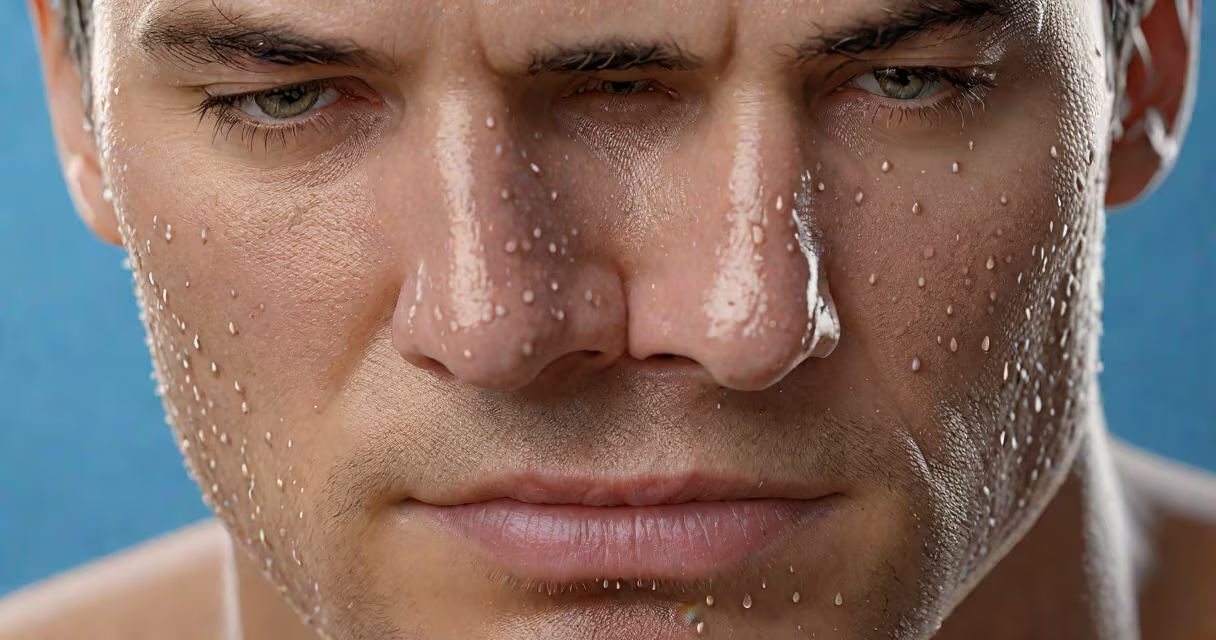
Sweating is your body's primary method for regulating internal temperature. When core heat rises, sweat glands release fluid onto the skin's surface, which cools the body as it evaporates. This process prevents overheating during exercise, high ambient temperatures, or emotional stress.
The human body contains approximately 2 to 4 million eccrine sweat glands, primarily distributed across the palms, soles, forehead, and armpits. These glands respond to signals from the hypothalamus-a region in the brain that monitors body temperature and emotional state. When activated, they secrete a clear, odorless fluid composed mostly of water, sodium, chloride, and trace minerals.
While sweating is essential for survival, excessive or inappropriate sweating may indicate an underlying condition. For example, primary focal hyperhidrosis affects 1-3% of the population and causes intense sweating in specific areas like hands or feet without apparent cause. According to the American Academy of Dermatology, this condition often begins in childhood or adolescence and can impact daily life.
Sweating occurs through a feedback loop between the nervous system and sweat glands. When body temperature increases-due to external heat, physical activity, or fever-the hypothalamus triggers sympathetic nerves to activate eccrine glands. Within seconds, sweat begins to appear on the skin surface.
Evaporation is key. As sweat evaporates, it draws heat away from the skin, lowering surface temperature. This mechanism maintains core body temperature within a narrow range (around 98.6°F or 37°C). Without sweating, the body could overheat rapidly-especially during prolonged exertion or in hot climates.
A real-world example: During a 5K run in 85°F weather, a person may lose up to 1 liter of sweat per hour. That fluid loss equates to about 580 calories of heat energy dissipated through evaporation. Failure to replace lost fluids increases risk of dehydration and heat exhaustion.
Sweat is not uniform. There are two main types: eccrine and apocrine. Eccrine sweat is produced continuously and is responsible for thermoregulation. Apocrine sweat, released in response to emotional stress, is thicker and contains proteins and lipids. When broken down by bacteria on the skin, it produces body odor.
| Type | Location | Trigger | Composition |
|---|---|---|---|
| Eccrine | Whole body (densest on palms, soles) | Heat, exercise, fever | Water, sodium, potassium, chloride |
| Apocrine | Armpits, groin, around nipples | Emotional stress, puberty | Proteins, lipids, hormones |
Stress-induced sweating differs from heat-related sweating in both location and purpose. While eccrine activation cools the body, apocrine secretion may play a role in social signaling. A 2019 study published in *Nature Human Behaviour* found that people could detect emotional states-fear or anxiety-from the scent of apocrine sweat, suggesting an evolutionary function beyond hygiene.
Many assume that sweating means the body is "toxic" or that heavy sweating indicates poor fitness. Neither is accurate. Sweating is a normal physiological response. Overweight individuals may sweat more due to increased metabolic load and insulation from fat tissue, but this doesn't reflect poor health or detoxification.
Hyperhidrosis-excessive sweating-is often misunderstood. It affects roughly 3% of Americans, according to the International Hyperhidrosis Society. People with this condition may sweat profusely even in cool environments or while resting. It's not caused by poor hygiene or lack of conditioning. Instead, it results from overactive sympathetic nerve signals to sweat glands.
One non-obvious fact: Some medications cause excessive sweating as a side effect. Antidepressants like sertraline (Zoloft), antipyretics such as acetaminophen, and certain blood pressure drugs can disrupt thermoregulation. If sweating begins suddenly after starting a new medication, consult a healthcare provider. Discontinuing the drug may resolve symptoms.
Sweating that occurs without heat or exertion-especially if accompanied by weight loss, night sweats, or fatigue-may indicate infection, hormonal imbalance, or neurological disorders. For example, tuberculosis often presents with drenching night sweats and unexplained weight loss. Similarly, menopause-related hot flashes involve sudden, intense sweating triggered by fluctuating estrogen levels.
I've observed a patient with undiagnosed diabetes who reported constant sweating during meals. Blood tests revealed fasting glucose at 180 mg/dL-diabetic range. After insulin therapy, sweating normalized. This illustrates how autonomic dysfunction can manifest through abnormal sweat patterns.
If you notice changes in your sweating pattern-such as unilateral sweating (only one side of the body), cold sweats during rest, or persistent sweating despite low activity-seek evaluation. These signs may point to rare conditions like Horner's syndrome or autonomic neuropathy.
Sweating is not a flaw-it's a important adaptation. It protects against heat injury, supports immune function via antimicrobial peptides in sweat, and aids in social communication. Recognizing normal versus abnormal patterns ensures timely care when needed.