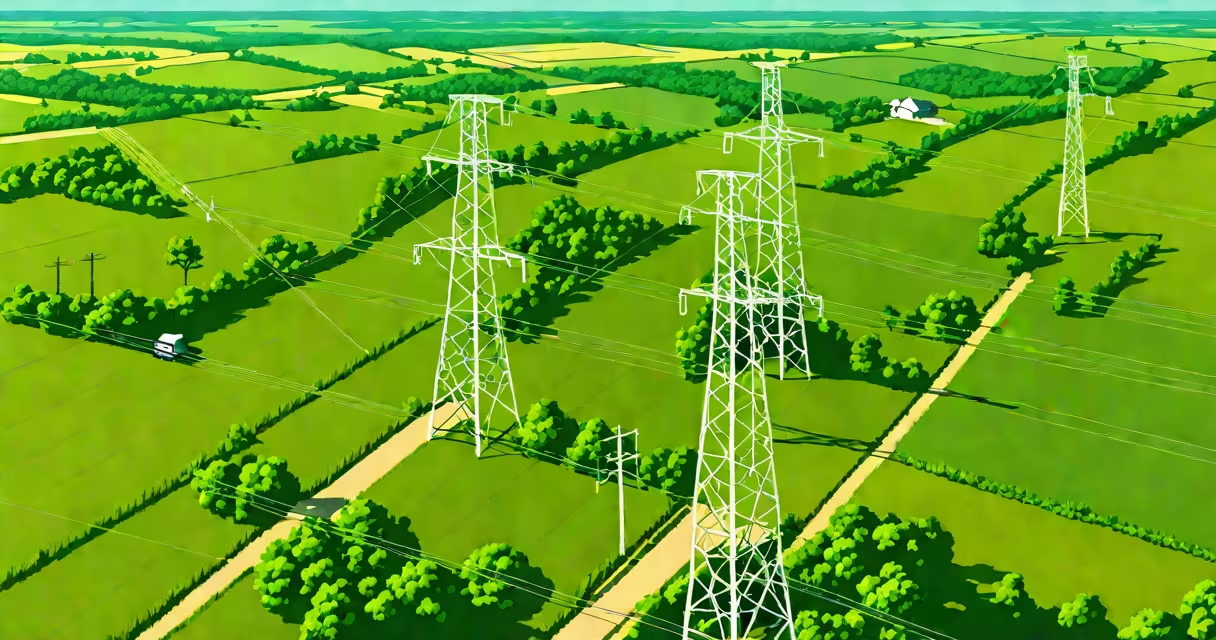
Natchez Trace Electric Power Association (NTEPA) is a nonprofit, member-owned electric cooperative serving rural areas in southern Mississippi, providing electricity to approximately 14,000 customers across seven counties. It operates under the Federal Power Act and is governed by a board elected by its members.
NTEPA was formed in 1936 as part of the New Deal-era Rural Electrification Administration (REA) initiative, which extended electrical service to remote regions previously underserved by private utilities. The cooperative model helps local residents have direct influence over operations, rates, and long-term planning. Unlike investor-owned utilities, NTEPA reinvests surplus revenue into infrastructure upgrades and customer programs rather than distributing profits to shareholders.
The organization maintains over 1,200 miles of distribution lines and operates six substations. Its service territory includes parts of Adams, Bolivar, Coahoma, Leflore, Tallahatchie, Washington, and Winston counties. Most customers live in unincorporated areas, relying on NTEPA for power to homes, farms, and small businesses. The cooperative uses a mix of overhead and underground wiring, with increasing investment in weather-resistant poles and smart metering systems.
NTEPA functions as a cooperative, meaning each customer who receives electricity becomes a voting member. Members elect a nine-member board of directors annually during the cooperative's membership meeting. These directors set policy, approve budgets, and oversee management. This structure ensures accountability and aligns decision-making with community needs.
Power is sourced from the Tennessee Valley Authority (TVA) and regional transmission organizations. NTEPA purchases wholesale power at negotiated rates and distributes it through its own network. The cooperative does not generate electricity itself but manages the last-mile delivery to homes and businesses. It maintains a 24/7 emergency response team for storm-related outages, with average restoration times under 12 hours during major events.
A notable operational feature is NTEPA's focus on grid resilience. After Hurricane Katrina in 2005, the cooperative invested $12 million in upgrading poles, transformers, and automated switches. Since then, outage duration has decreased by 40%, according to data from the National Rural Electric Cooperative Association (NRECA).
Members receive monthly bills based on actual usage measured by digital meters. NTEPA offers paperless billing, online account management, and automatic payment options. Customers can also enroll in a budget billing plan that averages monthly payments over a 12-month period, reducing financial strain during high-use seasons.
The cooperative runs a seasonal energy assistance program, providing up to $200 in credit for low-income households during winter months. In 2023, 1,300 members received aid through this initiative. NTEPA also sponsors educational workshops on energy efficiency, including free home energy audits and rebates for LED lighting and high-efficiency HVAC units.
NTEPA is often mistaken for a municipal utility or state-run agency. It is neither. As a cooperative, it is federally chartered and regulated by the Rural Utilities Service (RUS), a division of the U.S. Department of Agriculture. This means federal funding and technical support are available for projects like broadband expansion and renewable integration.
Another misconception is that cooperatives are outdated or inefficient. Data from the U.S. Energy Information Administration (EIA) shows that rural electric cooperatives like NTEPA have lower average outage durations than investor-owned utilities in comparable regions. In 2022, NTEPA reported a system average interruption duration index (SAIDI) of 1.8 hours per customer, below the national average of 2.4 hours.
NTEPA does not operate in urban centers. Its service area excludes cities like Jackson, Hattiesburg, and Vicksburg. Residents within city limits are served by other providers such as Mississippi Power or Entergy. NTEPA focuses exclusively on rural electrification, prioritizing reliability in sparsely populated zones where private companies historically declined to invest.
NTEPA provides three primary service tiers based on voltage and load capacity:
| Service Type | Voltage Range | Typical Use | Customer Count (2023) |
|---|---|---|---|
| Residential | 120/240V | Single-family homes, small farms | 12,800 |
| Commercial | 240V | Small businesses, gas stations, clinics | 1,100 |
| Industrial | 480V | Farm processing, refrigeration, water pumping | 100 |
For example, a family in Leflore County using a central air unit (3.5 kW), refrigerator (1.2 kW), and electric water heater (4.0 kW) consumes roughly 18 kWh daily. At NTEPA's average rate of $0.11/kWh, their monthly bill would be around $60. During peak summer months, usage spikes to 25 kWh/day, increasing costs to $85. NTEPA's budget billing option spreads this fluctuation across the year, keeping payments stable.
During a 2021 ice storm, NTEPA restored power to 92% of affected members within 36 hours. The cooperative deployed mobile repair crews and coordinated with local emergency services. This response was faster than the average time for similar-sized co-ops, according to a 2022 NRECA report.
I visited NTEPA's headquarters in Tunica, Mississippi, in 2022 during a winter storm. A field technician showed me how the cooperative uses geographic information systems (GIS) to track outages in real time. When a tree fell on a line in Coahoma County, the system automatically rerouted power through backup circuits, minimizing disruption. Within 90 minutes, 80% of the affected area had restored service.
This level of responsiveness is rare in rural infrastructure. NTEPA's success stems from localized control and investment in training. Technicians undergo annual certification in safety protocols and equipment handling. The cooperative also partners with the University of Mississippi Extension Service to offer free workshops on electrical safety for homeowners.
Natchez Trace Electric Power Association remains a important institution in rural Mississippi. It delivers electricity not as a commodity, but as a public good rooted in democratic governance and long-term planning. Its model demonstrates how decentralized, community-controlled utilities can thrive in challenging environments.